
888-529-0707 call 24-7 we service throughout california
Dram Shop Liability Lawyer in Riverside
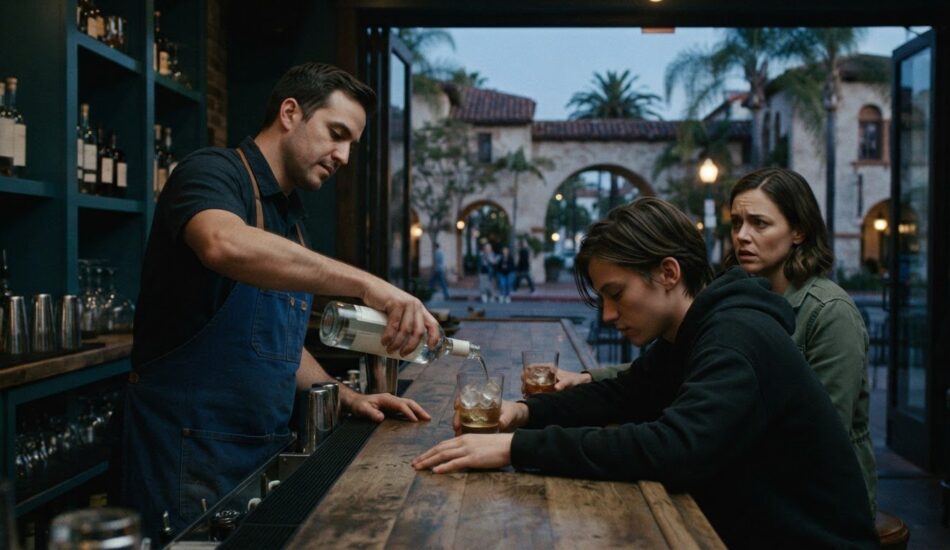
A drunk-driving crash does not automatically make a bar liable. In California, civil claims against alcohol providers are generally limited, but a business may be liable for serving a visibly impaired minor who later causes a DUI crash. A dram shop liability lawyer in Riverside can assess whether the facts support this type of claim.
It is understandable to focus first on the driver who caused the collision. But who served the driver, what staff could observe, and whether service continued may also matter. Evidence may be less obvious than a receipt or blood alcohol test. A high test result alone does not show how the person appeared inside the establishment.
This article explains when California dram shop laws may apply, what evidence can help show visible intoxication and continued service, and how damages and fault arguments may affect a case. It also explains how a personal injury attorney can assess the evidence and pursue accountability when an alcohol-related crash injures you or someone you love.
Key Takeaways
- California dram shop claims are limited, so identify whether the circumstances fit the narrow rules that may impose liability on an alcohol provider.
- To assess continued service, look beyond a post-crash alcohol test: records, witness accounts, and observations of the patron may help show what staff could see.
- Damages may reflect the harm caused, while evidence and each party’s conduct can shape arguments about responsibility.
- Preserve relevant evidence early and organize records of your injuries, treatment, and losses to support a careful review of the claim.
When Are Dram Shop Liability Laws Relevant?
In Riverside, a provider’s civil liability depends on a narrow exception, not simply on alcohol preceding an injury. When choosing a dram shop liability lawyer in Riverside, ask how they assess California law, evidence, and possible defendants. An attorney can also help organize the facts behind a claim.
Alcohol Over-Service by Local Providers
California generally does not impose civil liability on businesses for serving alcohol to adults who later cause harm. A business may be liable when it sells alcohol to a visibly impaired minor who causes a DUI crash. To evaluate a bar, nightclub, or restaurant’s role, identify who served the minor, what staff could observe, and how service connects to the crash. California Business and Professions Code section 25062(a) addresses criminal charges for providing alcohol to a visibly intoxicated person or habitual drunkard; that provision is distinct from civil liability.
Alcohol-Related Injuries and Fatalities
People injured in alcohol-related crashes may pursue claims when California law supports them. If the crash caused a death, eligible family members may consider a wrongful death claim. The driver may be at fault while a separate claim against a business is assessed. Preserve crash records, witness details, and medical documents to establish what happened and the resulting harm.
California Liability Rules and Exceptions
California generally shields individual social hosts from civil liability for serving impaired adult guests. An exception applies when a host serves alcohol to a minor who becomes intoxicated and causes an accident. The filing deadline depends on the claim and circumstances, so determine the applicable California deadline promptly. When considering representation, ask how the attorney will assess the exception, preserve evidence, and explain the fee agreement.
Compensation After Alcohol-Related Crashes
Potential compensation depends on documented injuries, related losses, and evidence connecting them to the crash. Medical records, wage documents, and proof of changed daily activities can help explain the harm. Attorney fees vary by agreement; ask whether representation is contingency-based and how the written terms apply. No specific recovery follows automatically from alcohol service or a serious injury.
Evidence of a patron’s visible intoxication and continued service
After an alcohol-related accident in Riverside, seek medical care, report the crash, and preserve related records. Write down the establishment’s name, the timeline, and witness contact details while memories are fresh. Keep receipts, payment records, photographs, and medical documents together. These details can help establish where and when the patron was served and what injuries followed.
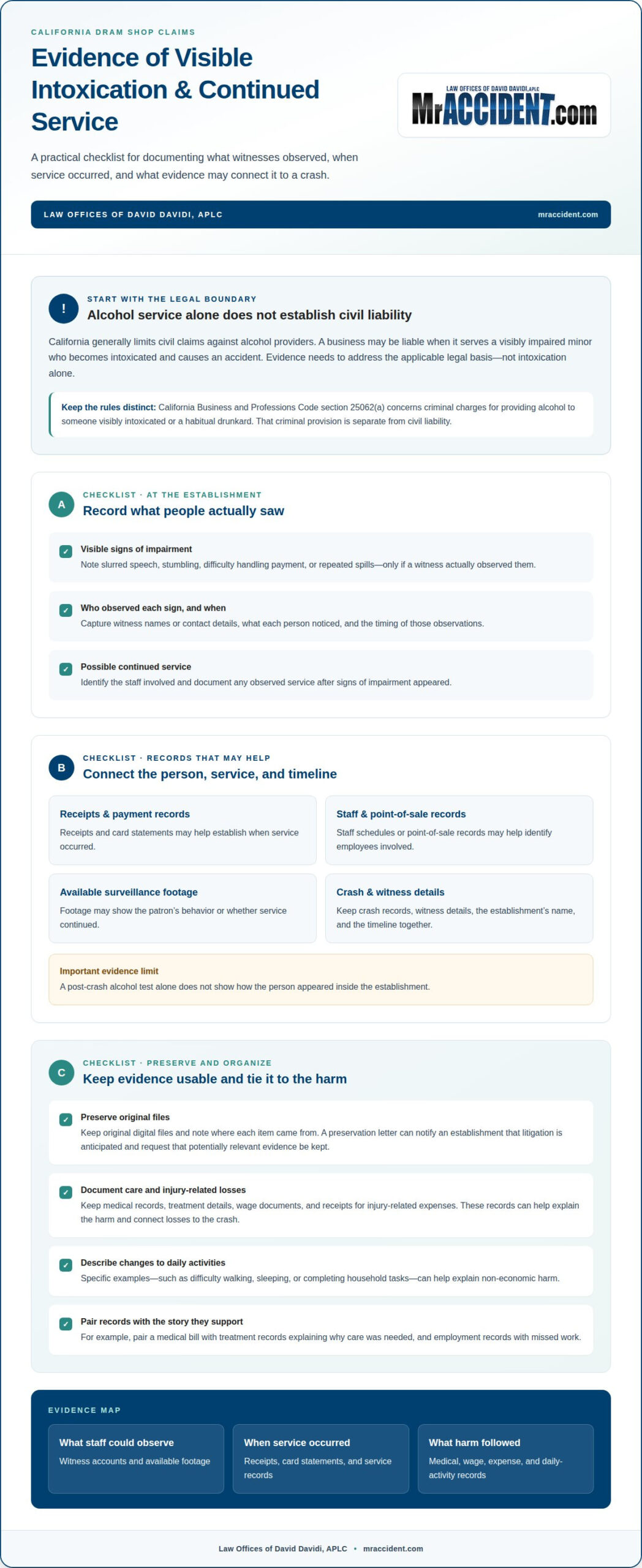
Evidence of visible intoxication may include slurred speech, stumbling, difficulty handling payment, or repeated spills, if witnesses actually observed those signs. Note who saw each sign and when. Receipts and card statements may help establish service timing, while staff schedules or point-of-sale records may identify employees involved. Available surveillance footage may show the patron’s behavior or continued service. A post-crash alcohol test alone does not show how the person appeared inside the establishment.
California Business and Professions Code section 25062(a) allows prosecutors to charge people who provide alcohol to someone visibly intoxicated or a habitual drunkard. That criminal provision is separate from civil liability. California generally limits civil claims against alcohol providers, with a specific exception involving service to minors who become intoxicated and cause an accident. Evidence should therefore address the applicable legal basis, rather than treating intoxication alone as proof that a business is liable.
To preserve evidence, keep original digital files and note where each item came from. A preservation letter can notify an establishment that litigation is anticipated and request that potentially relevant evidence be kept. Medical records can document treatment and injury; witness accounts can describe what happened before the crash. If you need help connecting crash records to your injury claim, discuss your accident evidence with an attorney.
Available compensatory and punitive damages
Compensatory damages address losses caused by an injury, not merely the fact that a driver consumed alcohol. Organize medical bills, treatment records, wage documents, and receipts for injury-related expenses. These records can explain economic losses and connect them to the crash. Non-economic harm, such as pain or changes to daily activities, can be described through treatment notes and specific examples of how the injury affects routine tasks.
Make the account of damages concrete. Pair a medical bill with the treatment record explaining why care was needed. Employment records can show missed work, while a personal account can describe difficulty walking, sleeping, or completing household tasks. Attorneys assess documented losses and how clearly the evidence links them to the accident. Keep claims about the driver and any alcohol provider tied to the applicable California law.
Punitive damages are distinct from compensation for medical care, lost income, and other losses. They are not simply an additional payment for a serious crash or injury. Any request for punitive damages needs a separate legal basis supported by evidence. Keep that issue distinct from compensatory damages, and do not treat alcohol service alone as proof that punitive damages apply.
Reported dram shop case outcomes show why another case’s recovery is not a formula for a California claim. Those outcomes do not establish the value of a Riverside case or determine what California law permits.
To prepare a clear damages summary, group documents by medical treatment, income loss, and day-to-day impact. For each claimed loss, identify the record or example that supports it. This organized account helps distinguish documented compensation from any separate punitive damages argument and keeps the focus on evidence tied to the injury.
Fault arguments and evidence in dram shop cases
Fault disputes often turn on separate questions: what the driver did, what the establishment served, and how the evidence connects service to the injury. In California, businesses may be liable when they sell alcohol to a visibly impaired minor who causes a DUI crash. A defense may dispute the minor’s age, visible impairment, service, or causal connection. Build the timeline around specific observations and records, not assumptions.
A high blood alcohol concentration measured after a crash does not establish how the person appeared inside the establishment. Compare the test result with witness accounts, receipts, service records, and any available video. Note when the patron arrived, what they ordered, and when they left. A single drink or moment may tell less than a sequence documenting service and conduct over time.
Indiana’s rules offer a contrast, not a substitute for California law. A 2023 Indiana appeals ruling, as described in the research, emphasized tracking a patron’s alcohol consumption over time rather than judging only their current condition. California claims still require analysis under California law. Don’t treat an Indiana finding or a drunk driver’s later conduct as automatic proof that a Riverside establishment is liable.
Fault arguments can also address the injured person’s actions and the driver’s responsibility. Preserve evidence that distinguishes each party’s conduct: collision records, witness statements, establishment records, and medical documentation. Injury lawyers use those details to assess whether the evidence supports a claim involving the establishment, the driver, or both. Keep claims about serving and causation tied to specific proof. If an alcohol-related crash injured you, discuss your accident evidence with an attorney.
Law Offices of David Davidi, APLC: Car Accident Legal Representation
Law Offices of David Davidi, APLC provides car accident legal representation for people injured in collisions throughout California, including Riverside. If an alcohol-related crash injured you, the firm can assess the accident evidence, document losses, and pursue a personal injury claim against responsible parties. A dram shop issue raises separate questions about an establishment’s service and California law, so keep those issues distinct when discussing your case.
Bring available crash reports, medical records, witness details, and establishment information to help explain what happened. An attorney oversees each case from start to finish, giving clients direct access to legal counsel rather than only support staff. The firm’s no-win, no-fee policy means clients pay no upfront legal fees and the firm collects a fee only if it obtains compensation.
Contact Law Offices of David Davidi, APLC to discuss your accident, or visit mraccident.com.
Move Forward With a Clear Plan
Turn scattered records into a clear account of what happened. Write a timeline while events are fresh, keep new medical and repair documents together, and note questions about the driver, the establishment, or missing evidence. This gives a dram shop liability lawyer in Riverside a practical starting point for evaluating the crash and each party’s role.
Law Offices of David Davidi, APLC represents people in car, truck, and motorcycle accident cases. If an alcohol-related collision injured you, that representation can help address the injury claim while the evidence and possible responsibility are assessed. Keep your focus on recovery and let the documents help tell the story.
Contact Law Offices of David Davidi, APLC to discuss your accident and take the next step with confidence.
Frequently Asked Questions
Who can file a dram shop claim?
A person injured in an alcohol-related crash may pursue a claim when California law supports provider liability. If the injured person died, eligible family members may have a wrongful death claim. The key issue is not simply whether alcohol was served. The circumstances of service, the injured person’s harm, and the connection between them matter. Keep documents identifying the injured party and the incident.
Can I sue the bar even if the driver was clearly the one at fault?
Potentially, but the driver’s fault alone does not establish a California claim against a bar. California generally limits civil liability for alcohol service to adults, while a business may face liability for serving a visibly impaired minor who causes a DUI crash. The driver’s responsibility and the provider’s potential liability are separate issues. Evidence must support the applicable exception, not merely show that the driver caused the collision.
Can You Sue Both the Intoxicated Driver and the Bar?
You may bring claims against both when the facts and California law support each claim. The driver’s conduct may provide a basis for a claim, while a business’s role in serving alcohol may also be relevant depending on the circumstances. Naming both parties does not automatically establish either party’s liability. Keep the allegations distinct and connect each party’s conduct to the injury with relevant evidence.
How do I prove a bar is responsible for my injuries?
Show evidence supporting the specific California basis for the bar’s liability, including whether it served a visibly impaired minor who later caused a DUI crash. Testimony or business records, for example, may help establish who was served and when. You also need evidence connecting the crash to your injury, such as collision documentation and medical records. The driver’s intoxication alone does not prove the bar’s responsibility.
What evidence is needed to prove a dram shop claim in Riverside County?
Build a case file linking the establishment, the service, the crash, and the resulting injury. Include the crash report, treatment records, receipts or payment records, witness contact information, and any available photographs. Write down the venue’s name and timeline while details are fresh. If a minor was involved, records or witness accounts establishing age may also matter to the California exception.
Can an injured person sue both the intoxicated driver and the alcohol-serving business?
Yes. An injured person can pursue claims against both parties if the facts support separate legal grounds. A driver may be accused of causing the collision, while a business claim must meet California’s limited rules for alcohol-provider liability. Evidence that a business served a visibly impaired minor may be relevant. Bringing claims against both does not mean the business is automatically responsible.

Law Offices of David Davidi, APLC is a California – based Personal Injury Law Firm, our Attorney’s provide the representation for your personal injury, accident, product liability, premises liability, and other
negligence resulting in injuries. We treat all clients and cases, large or small, with hands-on care.
Practice Area
© Copyright 2026 Law Offices of David Davidi, APLC. All rights reserved.
Digital Marketing By 