
888-529-0707 call 24-7 we service throughout california
Letter of protection for medical bills and who pays for care

Medical care can’t always wait for an injury case to settle. If you’re asking what a letter of protection for medical bills is, it’s an agreement under which a healthcare provider treats an injured person and expects payment from an anticipated settlement or judgment. The attorney agrees to direct funds toward the provider’s bill before distributing any remaining proceeds. The bill isn’t erased: you may still owe for care if the case fails or the recovery doesn’t cover the medical costs.
It’s understandable to worry about getting treatment now and facing an unaffordable bill later. A letter of protection may help bridge that gap when ordinary insurance billing is delayed or unavailable, but it also affects how settlement funds are divided. This article explains how the arrangement works, who may ultimately pay, what risks to consider, and how injured people can find providers willing to treat them under a letter of protection.
Key Takeaways
- Understand how medical bills can affect the money you receive from a settlement, and what to clarify about payment terms.
- Compare available ways to access injury care when insurance billing is delayed or unavailable.
- Learn what can help you identify providers willing to treat patients under this type of arrangement.
- See when legal representation for a car, truck, motorcycle, or pedestrian accident may help you address treatment and case-related concerns.
Medical treatment while a personal injury case is pending
After a car accident, treatment may begin before the injury case settles, with payment deferred under an agreement. This arrangement can help address care expenses while the parties pursue a recovery.
Treatment Before Settlement
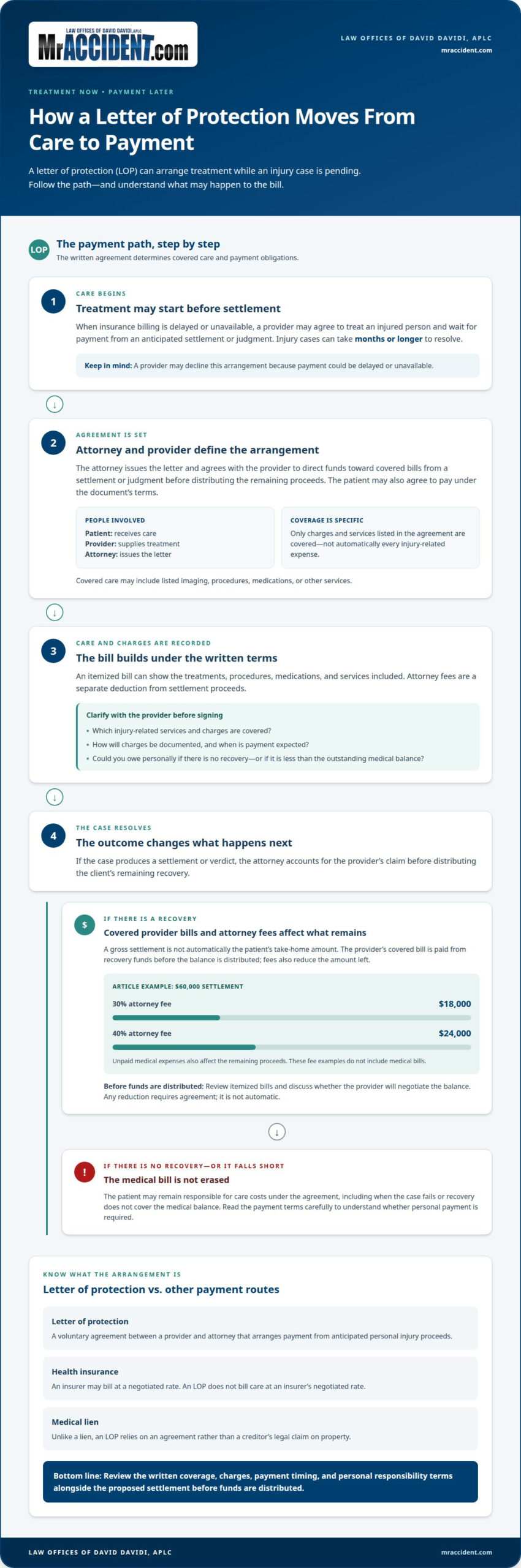
A letter of protection lets a provider treat an injured person before settlement, with payment expected from a later recovery. This can matter when waiting for a case to resolve would delay needed care. Personal injury cases can take months or longer to resolve, so the agreement can explain how bills will be handled in the meantime.
Roles in a Letter of Protection
The injured person receives care, the provider supplies treatment, and the attorney issues a letter promising payment from a settlement or judgment. The attorney and provider are parties to the agreement; the patient may also agree to pay for care under its terms. Who signs depends on the document: the attorney issues the letter, and the provider and attorney agree to its terms.
Provider Payment From a Recovery
When a case produces a settlement or verdict, the attorney pays covered provider bills from those funds before distributing the balance to the injured person. For example, a $50,000 settlement is not automatically the patient’s take-home amount: provider bills and attorney fees affect what remains. The attorney must account for the provider’s claim before releasing the client’s remaining recovery.
Risks if the Case Does Not Succeed
A letter of protection does not erase medical debt if the injury case fails or the recovery falls short of treatment costs. Under the agreement, the patient may remain responsible even if there is no settlement. Before signing, read the payment terms and determine whether they require you to pay personally if the case produces no recovery. That obligation can remain after the case ends.
What Is a Letter of Protection (LOP)?
A letter of protection is an agreement for medical treatment now, with payment expected from a later settlement or judgment. It differs from health insurance and a medical lien in who agrees to pay and how the provider’s claim is handled.
Treatment Tied to a Settlement or Judgment
A letter of protection is a voluntary agreement between a provider and an attorney that arranges payment from a patient’s anticipated personal injury proceeds. The patient can receive treatment before the accident claim resolves while the provider waits for payment. Unlike health insurance, the arrangement doesn’t bill care at an insurer’s negotiated rate. Unlike a medical lien, it relies on an agreement rather than a creditor’s legal claim on property.
Effects on Settlement Proceeds
LOP bills can reduce the money a patient ultimately receives because providers and attorney fees are paid from the recovery. For example, on a $60,000 settlement, a 30% attorney fee is $18,000; a 40% fee is $24,000. Unpaid medical expenses also affect the remaining proceeds, so the gross settlement isn’t the patient’s take-home amount.
Before accepting a settlement, the patient and attorney can review itemized bills and discuss whether the provider will negotiate the balance. Any reduction requires agreement; it isn’t automatic. If the patient and provider dispute how funds should be divided, they may need to resolve the conflict separately, and court proceedings can take months or longer.
Review the agreement’s payment terms and treatment charges alongside the proposed settlement before funds are distributed. For help understanding how accident-related legal representation can address a claim and its recovery, explore personal injury legal representation.
Access to treatment when other payment options are unavailable
Health insurance may delay or deny injury-related bills when another party may be responsible. A letter of protection can let a provider defer collection while the personal injury case proceeds.
A letter of protection covers the treatment and charges specified in the agreement, such as listed imaging, procedures, medications, or services. Payment is generally expected from settlement or judgment proceeds when the case resolves.
Care Without Upfront Payment
A letter of protection can provide a payment arrangement when insurance billing is delayed or unavailable, helping treatment proceed. After an accident, a health insurer may consider another party responsible, while that party’s insurer may not yet accept liability. A lawsuit or settlement claim can take time, so the provider’s agreement may allow care before compensation arrives. Providers may also decline this arrangement because payment could be delayed or unavailable.
Payment Expectations With a Doctor
Discuss the payment arrangement with the doctor before signing so everyone understands the obligations. Ask which injury-related services the agreement covers, how charges will be documented, and when payment is expected. An itemized bill, for example, can show the treatments, procedures, medications, and services included. Clarify whether you must pay personally if the case produces no recovery or less than the outstanding medical balance. These terms determine your responsibility.
Covered Costs and Payment Terms
The written agreement determines which provider charges are covered; it does not automatically include every expense related to an injury. The listed services and itemized charges define the medical balance, while attorney fees are a separate deduction from settlement proceeds. Payment usually comes from the case’s closing funds after resolution. If a provider bills health insurance instead, payment follows the negotiated rate agreed with the insurer, which may differ from charges under a letter of protection.
Getting a letter of protection and finding providers
Getting a letter of protection involves coordination between the injured patient, attorney, and treating provider. The provider’s willingness and the written agreement’s terms shape how care is billed.
Finding Providers Who Accept Letters
A provider who accepts a letter of protection agrees to wait for payment tied to the injury case. Some providers decline because payment may be delayed or absent if the case produces no recovery. The attorney can coordinate with the treating provider about the proposed arrangement, while the patient identifies needed care and shares relevant case information. Acceptance depends on the provider’s willingness to take on that payment risk.
Repayment and Provider Contract Rates
Health insurance and letter-of-protection billing follow different payment arrangements. When a provider bills health insurance for accident-related care, the insurer pays at its negotiated contract rate. Under a letter of protection, payment instead follows the agreement with the provider and comes from settlement or judgment proceeds. Understand which billing method applies to each service, since the amount and timing of payment can differ.
Patient, Provider, and Attorney Roles
The attorney issues the letter to the provider, and both parties agree to its payment terms. The patient receives treatment and may also agree to pay the provider from a recovery. Before care begins, review the agreement’s covered services, charges, and payment obligations. Even a successful case can leave a balance if proceeds don’t cover the full bill, so the agreement doesn’t guarantee that every charge will be paid from the recovery.
Clear coordination helps each party understand the arrangement before treatment proceeds. If an accident claim raises questions about liability, treatment bills, or recovery, discuss car accident legal representation with an attorney.
Law Offices of David Davidi, APLC: Car Accident Legal Representation
Law Offices of David Davidi, APLC represents people injured in car, truck, motorcycle, and pedestrian accidents. If you’re pursuing compensation while medical bills are accumulating, legal representation can help you understand how provider charges and a letter of protection may affect your injury claim and settlement. The firm handles personal injury cases and provides clients direct access to experienced attorneys. Its no-win, no-fee policy means legal fees are contingent on recovery, rather than paid upfront. An attorney can help assess the claim, explain how medical expenses fit into the case, and address questions about settlement disbursement. For guidance about an accident injury claim, contact Law Offices of David Davidi, APLC.
Choose Your Next Step With Confidence
Deciding whether to use a letter of protection also means weighing care needs and financial obligations as your claim moves forward. Understanding what a letter of protection for medical bills means can help you prepare. Next, compare the written terms with your treatment needs, insurance options, and plans for any remaining balance.
Keep your medical records, bills, and insurance correspondence together. Write down questions about charges, payment timing, and what you may owe if the recovery doesn’t cover the full balance. Organized records can make conversations about your treatment and claim more focused and help you make decisions with the relevant details in front of you.
If an accident caused your injuries and you want help considering your legal options, contact Law Offices of David Davidi, APLC. A thoughtful next step can help you move forward with greater clarity and confidence.
Frequently Asked Questions
What Each Party Is Responsible For?
The attorney issues the letter to the healthcare provider and agrees to direct covered recovery funds toward the bill. The provider decides whether to accept the arrangement, delivers care, and documents charges. The patient receives treatment and may agree to pay under the contract, including if proceeds are insufficient. Before treatment, compare the letter’s covered services and payment terms with the provider’s itemized billing terms.
What Happens When Your Case Settles?
When a claim settles, the attorney accounts for the provider’s agreed charges and any applicable liens before sending the remaining proceeds to the injured person. Keep the closing statement and final provider balance together to see how each deduction was calculated. Under the described arrangement, funds are released after the provider confirms in writing that payment was received. A disagreement about the balance may need to be resolved separately.
When You Do Not Have Health Insurance or Cannot Afford Treatment?
A letter of protection may offer a way to arrange planned injury care when health insurance denies or delays payment and a provider accepts deferred payment. It doesn’t replace emergency screening: under EMTALA, an emergency room must screen for life-threatening conditions, but that doesn’t require ongoing care. For non-emergency treatment, clarify which services the agreement covers and what you owe if the injury claim yields no funds.
What Is a Letter of Protection for Medical Bills?
A letter of protection for medical bills is an agreement connected to a personal injury claim: a provider treats the patient and expects payment from a future settlement or judgment. It isn’t health insurance, and it doesn’t eliminate the debt. Read who is bound, which treatment is covered, how charges are calculated, and what happens if the case ends without enough recovery.
How Does a Letter of Protection Work in a Personal Injury Case?
After an accident, an attorney may send a provider a letter agreeing that covered charges will be paid from case proceeds. The provider evaluates the arrangement and records treatment; the patient receives care and remains responsible under the agreed terms. If either party changes the scope or payment terms, record the amendment in writing and have both parties sign it. Medical records and itemized bills help connect care to the claimed injury.
What Are the Risks and Disadvantages of Using a Letter of Protection?
The main risk is personal liability: you may still owe the provider if the case is dismissed, unsuccessful, or resolves for less than the medical balance. Some agreements also require payment even if care is later found unrelated to the claim. A provider may contest disputed funds, potentially leading to separate litigation. Review the full agreement and itemized charges before accepting treatment under it.

Law Offices of David Davidi, APLC is a California – based Personal Injury Law Firm, our Attorney’s provide the representation for your personal injury, accident, product liability, premises liability, and other
negligence resulting in injuries. We treat all clients and cases, large or small, with hands-on care.
Practice Area
© Copyright 2026 Law Offices of David Davidi, APLC. All rights reserved.
Digital Marketing By 