
888-529-0707 call 24-7 we service throughout california
How Long Does a California Car Accident Claim Take?
The filing deadline may matter more than how long it takes to resolve your case. If you’re asking how long a car accident lawsuit takes in California, many cases take one to two years, while some claims settle sooner. According to the California Legislature, a person generally has two years from the accident date to file a personal injury lawsuit.
It’s understandable to want a clear timeline while you recover and deal with insurance. But settlement discussions don’t pause the filing deadline, and an insurance claim is not the same as filing a lawsuit. Understanding how these steps fit together can clarify what may affect your case and why timing matters.
This article explains California filing deadlines and how evidence gathering, accident investigations, medical recovery, and insurance negotiations can shape the process. It also explains why a case’s resolution date may differ from the deadline for protecting your right to pursue compensation.
Key Takeaways
- Case timelines depend on injury recovery, disputed fault, and how much investigation the evidence requires.
- Acting promptly to preserve records and other evidence can help protect details that may otherwise be lost.
- A lawsuit’s timeline includes more than negotiations: court procedures, discovery, and a possible trial can extend the process.
- For an injured minor, the California Legislature says the filing period generally does not begin until the minor turns 18.
What Is the Statute of Limitations for Car Accidents in California?
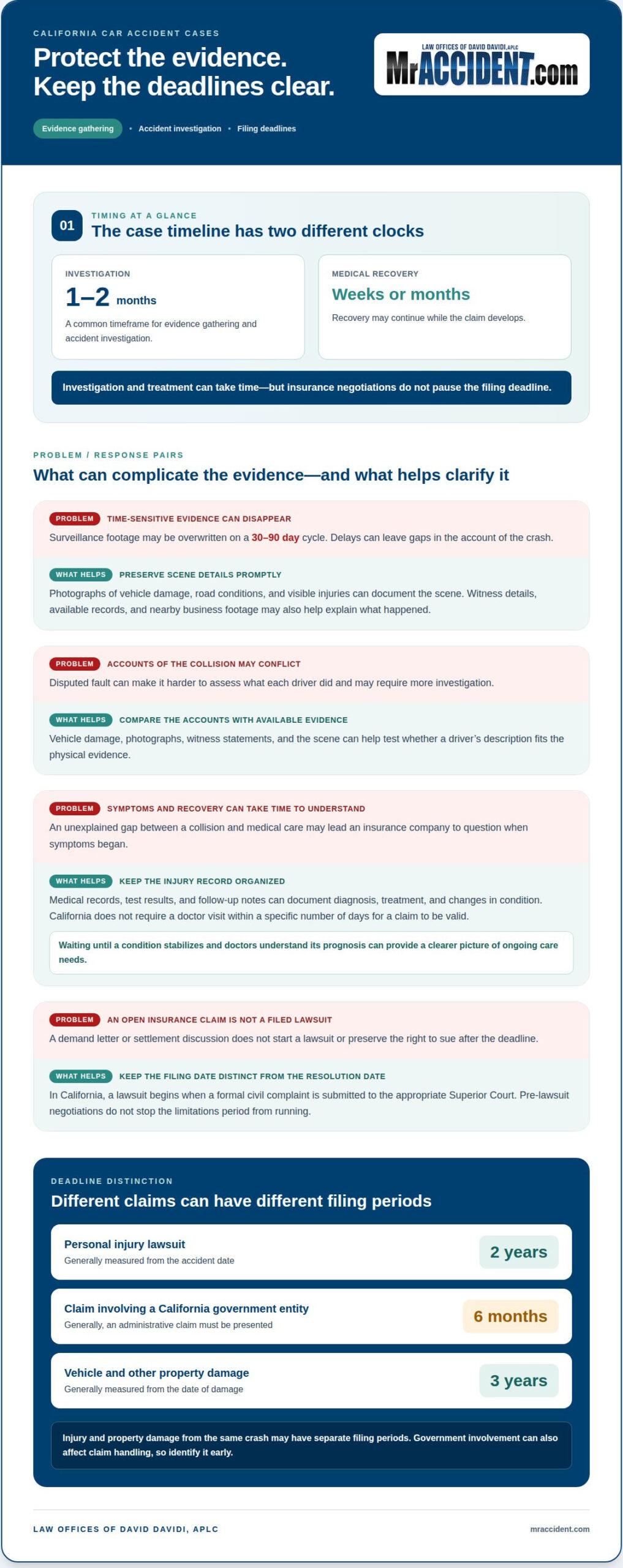
In California, an injured person generally has two years from the accident date to file a personal injury lawsuit. According to the California Legislature, this deadline applies to car accident injury claims. The statute of limitations sets the filing window, not the time needed to resolve the case.
California’s standard personal injury deadline is two years from the accident. Code of Civil Procedure § 335.1 establishes this time limit for personal injury actions. The deadline generally continues to run while medical treatment and insurance negotiations are underway. A demand letter or ongoing discussions with an insurance company don’t replace filing a lawsuit in court.
A different rule applies when a California government entity is involved. According to the California Legislature, a person generally must present an administrative claim within six months of the accident. This is separate from filing a lawsuit, so a collision involving a government vehicle or entity calls for prompt attention to the applicable deadline.
Injury severity and disputed fault can affect how long resolution takes, but they don’t extend the usual filing deadline. Minor-injury claims with clear fault may settle in 1-6 months, while cases involving severe injuries or fault disputes may take 12-24+ months to settle. Longer treatment, investigation, and negotiations can add time.
Vehicle and other property damage claims generally have a separate three-year deadline from the date of damage. This differs from the two-year personal injury deadline, even when both claims arise from the same crash. If an accident caused both an injury and vehicle damage, each claim may have its own filing period.
Keep the accident date and any government involvement in mind as the claim progresses. The California Legislature also states that pre-lawsuit insurance negotiations don’t stop the two-year personal injury statute of limitations from running. Settlement discussions may continue, but they don’t preserve the right to sue after the deadline.
Evidence gathering and accident investigation
Evidence gathering and accident investigation help an insurance company evaluate fault and injury. In California, an investigation commonly takes one to two months, while medical recovery may continue for weeks or months.
Preserving Evidence Against Delay
Evidence preservation means securing useful records and materials before they disappear or change. Surveillance footage can be overwritten on a 30- to 90-day cycle, so prompt investigation can matter after a collision. Photographs of vehicle damage, road conditions, and visible injuries can help document what the scene looked like. Witness details and available records can also help clarify what happened.
A lawyer investigating a claim can identify relevant evidence, organize records, and follow up on time-sensitive information. For example, footage from a nearby business may show the vehicles before impact, but it may not remain available indefinitely. Delays can leave gaps in the account of the crash, making it harder to assess a driver’s actions or disputed fault.
Medical Treatment and Injury Evidence
Medical records document injuries diagnosed after a collision, the treatment provided, and changes in a person’s condition. The timing and continuity of care can help connect reported symptoms to the crash and show how an injury affected daily life. California does not require an injured claimant to see a doctor within a specific number of days for a claim to be valid.
Still, an unexplained gap between the collision and medical care may lead an insurance company to question when symptoms began. Treatment records, test results, and follow-up notes can help address those questions. Waiting to settle until a condition stabilizes and doctors understand its prognosis can also provide a clearer picture of ongoing care needs.
An investigation also compares accounts of the collision with available physical evidence. Vehicle damage, photographs, witness statements, and the scene can help determine whether a driver’s description fits the evidence. If a government vehicle or entity was involved, that can affect claim handling, making early identification important.
Organized records help explain both negligence and injury, but evidence collection takes time. A lawyer can manage investigation and records while the claim develops. If you need help assessing next steps, car accident legal representation can help address the evidence and liability issues involved.
Does negotiating with insurance count as “filing a claim” under the statute of limitations?
No. An insurance claim, demand letter, or settlement discussion does not file a lawsuit in California. A lawsuit begins when someone submits a formal civil complaint to the appropriate California Superior Court. The filing clock runs from the injury date, not the insurance company’s denial. Pre-lawsuit negotiations don’t stop the limitations period, so an open claim alone does not preserve the right to pursue compensation.
Discovery in a California car accident lawsuit commonly takes several months to a year. During discovery, each side exchanges relevant information and develops evidence about liability and damages. The volume of records, disputed facts, and information needed from the parties can affect how long this stage takes. Serious injuries or disagreement about how the collision happened may require more evidence review.
After a lawsuit is filed and served, the defendant typically has about a month to respond. The case then proceeds through court schedules and litigation stages, including discovery and preparation for a possible trial. California courts aim to resolve most civil cases within one to two years of filing. Court calendars and the parties’ readiness can affect when hearings or trial dates are set.
Filing does not mean the case must go to trial. The parties may settle during litigation, ending the dispute without a trial. If they don’t settle, most California injury trials last from a few days to two weeks. Post-trial motions or an appeal can add months, so a trial verdict may not be the final step toward compensation.
An attorney can file a protective lawsuit before the deadline while settlement negotiations and medical treatment continue. A government claim has a separate initial step: it generally must be presented within six months of the accident. That administrative filing is distinct from a court lawsuit. Keep the applicable deadline in view even while an insurance company reviews the claim.
California personal injury statute of limitations
The statute of limitations sets the period for filing a personal injury lawsuit, but certain circumstances can affect when that period begins or pauses. The key distinction is between the date an injury occurred and the date a legal exception changes the filing timeline.
For an injured minor, the usual timing rule differs from an adult’s. According to the California Legislature, the statute of limitations generally does not start running until the minor turns 18. That rule can affect when a child’s personal injury case must be filed. It does not mean every related deadline follows the same schedule, especially when a government entity is involved.
Government claims follow a separate process. If a California government claim is rejected, the California Legislature says a claimant generally has six months after receiving formal written notice of rejection to file a lawsuit. Keep the rejection notice, because its date can determine the next filing period. Missing this step may affect the ability to pursue compensation in court.
Other exceptions can change how a deadline is calculated. California’s delayed discovery rule may apply when an injury wasn’t apparent at the accident scene and the injured person discovers, or reasonably should discover, it later. But developing pain alone generally doesn’t postpone the deadline if the injury was knowable at the time. Evidence about symptoms and when they appeared can matter.
Some circumstances may pause a limitation period. For example, California rules may toll certain periods during legal incapacity. If the at-fault driver leaves California, time spent out of state generally doesn’t count toward the applicable period. These exceptions depend on specific facts, not simply on how long treatment continues.
Wrongful death claims have a separate starting point: the two-year period generally runs from the family member’s death, which may occur after the collision. A legal consultation can help identify the relevant event, deadline, and records. Preserve accident and medical evidence, then map each possible filing period to its triggering date.
Law Offices of David Davidi, APLC
Law Offices of David Davidi, APLC represents people injured in California collisions and helps them understand the legal steps that can shape a claim’s timeline. Its car accident representation includes assessing filing deadlines, organizing evidence, addressing liability disputes, and handling insurance negotiations or litigation. The firm also represents people in truck, motorcycle, and pedestrian accident cases.
Consider legal guidance if you’re unsure whether negotiations protect your right to file, fault is disputed, or injuries require ongoing treatment. An attorney can explain how these circumstances affect the path forward and help manage the claim while you focus on recovery. At Law Offices of David Davidi, APLC, an attorney oversees your case from start to finish, with direct attorney involvement rather than handling by an assistant.
Contact Law Offices of David Davidi, APLC to discuss your accident and possible next steps.
Take the Next Step With Confidence
Knowing how long a car accident lawsuit takes in California is only part of planning your next move. Your next step is to understand how your circumstances shape decisions about pursuing a claim, resolving disputes, and preparing for what lies ahead. A clear conversation about your situation can help turn a complicated process into a manageable plan.
Law Offices of David Davidi, APLC can discuss your concerns and explain the legal options connected to your accident. Your case timeline depends on its circumstances, including the issues that need to be addressed and the path toward resolution. You deserve guidance that takes your questions seriously and keeps your interests in view.
Contact Law Offices of David Davidi, APLC to discuss your situation and possible next steps. You can move forward with greater clarity, one decision at a time.
Frequently Asked Questions
How long after a car accident can I file a claim in California?
For a personal injury lawsuit, you generally have two years from the accident date to file, according to the California Legislature. A vehicle or other property damage claim generally has a three-year filing period from the date of damage. These deadlines concern different types of harm, so a crash involving both injury and vehicle damage may require tracking separate dates.
Can the deadline be extended if the insurance company is still actively negotiating?
No. Ongoing settlement talks with an insurance company don’t pause the personal injury filing deadline. For example, if negotiations continue as the two-year mark approaches, an unanswered offer or promised follow-up does not itself preserve the right to sue. A written tolling agreement may pause a deadline, but the insurer is not required to offer one.
What Happens if the Deadline Passes?
Missing the applicable filing deadline generally bars recovery through a lawsuit. That may leave an injured person unable to pursue compensation in court, even if the insurance company has not resolved the claim. Some circumstances can affect how a deadline is calculated, so the triggering event and relevant documents matter. Don’t assume negotiations or continuing treatment provide extra time.
Can I still sue if the insurance company denied my claim?
Yes, a denial doesn’t automatically prevent you from filing a lawsuit. In California, the personal injury limitations period runs from the injury date, not the insurer’s denial date. A formal civil complaint filed in the appropriate Superior Court starts the lawsuit; appealing to the insurer or sending another demand letter does not. Keep the denial notice and claim correspondence for the case record.
Car Accident Settlement Timeline: How Long Will You Actually Wait?
Settlement timing depends on injury recovery, fault disputes, and the evidence needed to evaluate the claim. Straightforward cases with minor injuries and clear fault may settle in 1-6 months. Claims involving longer treatment or disputed facts may take 6-12 months, while severe injuries or contested liability can extend settlement to 12-24+ months.
How long does a California car accident lawsuit typically take?
If you’re asking how long a car accident lawsuit takes in California, many lawsuits take one to two years, and complex cases may take longer. Discovery commonly lasts several months to a year. If the case goes to trial, the trial itself may last a few days to two weeks, while court scheduling and post-trial proceedings can affect the overall timeline.

Law Offices of David Davidi, APLC is a California – based Personal Injury Law Firm, our Attorney’s provide the representation for your personal injury, accident, product liability, premises liability, and other
negligence resulting in injuries. We treat all clients and cases, large or small, with hands-on care.
Practice Area
© Copyright 2026 Law Offices of David Davidi, APLC. All rights reserved.
Digital Marketing By 