
888-529-0707 call 24-7 we service throughout california
Car Accident Settlement for a Herniated Disc in Stockton: What Affects Its Value

A herniated disc doesn’t come with a standard settlement value. For context, the listed average settlement range for car accident herniated disc injuries in the Pacific region, including California, is $225,000 to $275,000, but a car accident settlement for a herniated disc in Stockton depends on the evidence and the effects of the injury. A regional range isn’t a prediction of what any one claim will recover.
It’s understandable to want a clear number, especially when pain, treatment, and missed work are disrupting your life. A crash can cause a disc injury or aggravate a pre-existing one, and symptoms may appear later rather than immediately.
This article explains how a car accident can lead to a herniated disc and what can influence settlement value, including medical findings, treatment, lost income, fault, and available evidence. You’ll also learn why similar MRI results don’t necessarily lead to similar outcomes and how California law can affect a claim.
Key Takeaways
- Settlement value depends on how the injury affects your health, work, and daily life, not just what an MRI shows.
- Medical records, imaging, and a clear timeline of symptoms can help connect the disc injury to the crash.
- California’s pure comparative fault rule can reduce compensation in proportion to the injured person’s share of fault.
- Compare any settlement offer with the evidence of your losses and the costs or liens that may be deducted from the recovery.
Factors affecting settlement value
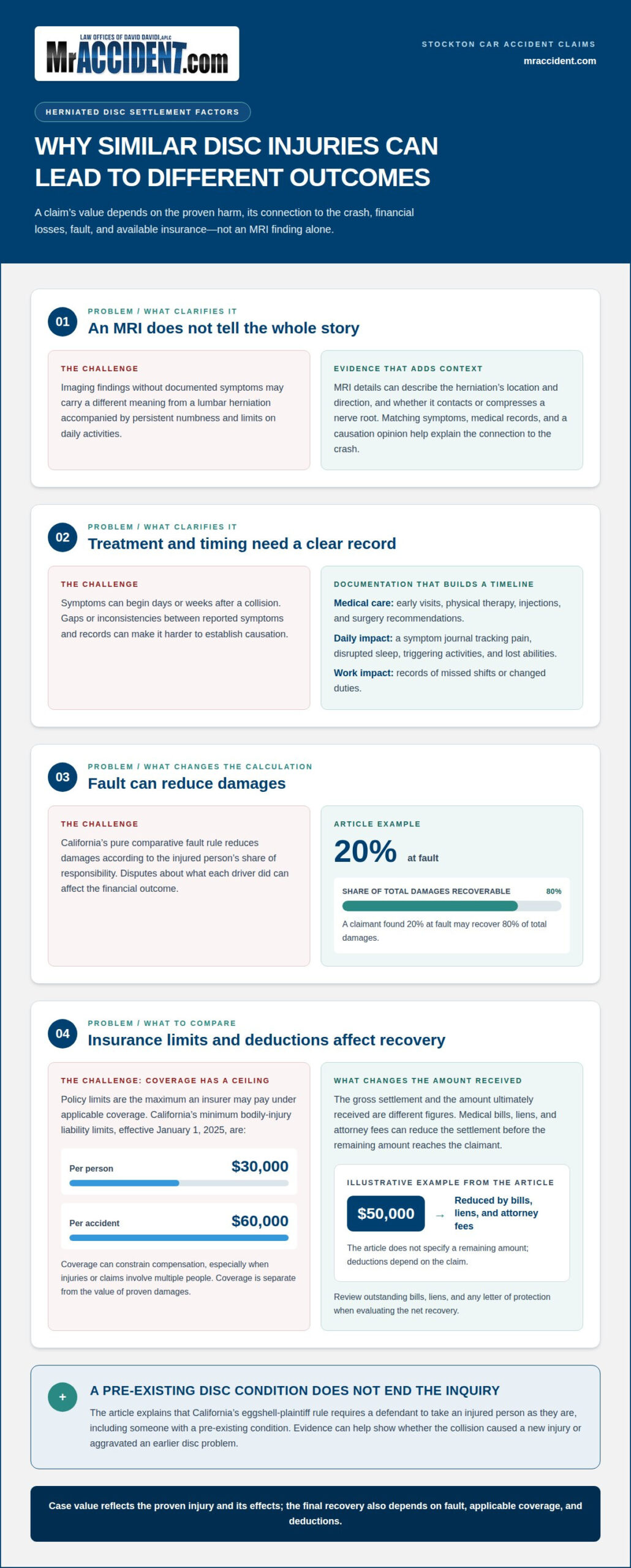
A disc claim’s value depends on injury evidence, financial losses, fault, and available insurance. For a Stockton car accident settlement for a herniated disc, these factors help explain why similar lumbar injuries can lead to different outcomes.
Case Value Considerations
Case value reflects the proven harm, its connection to the crash, and the losses it caused. A lumbar herniation with persistent numbness and limits on daily activities may be viewed differently from imaging findings without documented symptoms. Treatment records, missed work, and medical opinions help show the injury’s impact. California’s eggshell-plaintiff rule requires a defendant to take an injured person as they are, including someone with a pre-existing condition. This matters when a crash aggravates an earlier disc problem.
Comparative Negligence Effects
California’s pure comparative fault rule reduces damages according to the injured person’s share of responsibility. In Li v. Yellow Cab Co., 13 Cal.3d 804 (1975), the California Supreme Court adopted this rule. For example, a claimant found 20 percent at fault may recover 80 percent of total damages. That calculation can change the settlement amount even when the disc injury and losses are well documented. Disputes about each driver’s actions can therefore affect the case’s financial outcome.
Insurance Policy Limits
Policy limits set the maximum amount an insurer may pay under the applicable coverage. California’s minimum bodily-injury liability limits are $30,000 per person and $60,000 per accident, effective January 1, 2025. Those limits can constrain compensation available through the at-fault driver’s policy, especially when injuries or claims involve multiple people. The amount of coverage is separate from the value of proven damages. A lawyer assessing a claim considers both the documented losses and the insurance coverage that may apply.
How Is Your Herniated Disc Settlement Amount Calculated?
A claim’s value is built on medical evidence, documented losses, and the connection between the collision and injury. The final recovery also depends on bills, liens, and applicable insurance limits.
Medical Evidence and Causation
Medical evidence connects a diagnosed disc injury to symptoms and the crash. An MRI report can describe the herniation’s location, direction, and whether it contacts or compresses a nerve root. Those details matter when physical symptoms, such as numbness, match the affected area. Medical records and a causation opinion can also address whether the collision caused a new injury or aggravated an earlier condition.
Treatment Records and Claim Documentation
Treatment records show how symptoms developed and what care followed. Early medical visits, physical therapy notes, injection records, and surgery recommendations can create a timeline from the collision through ongoing treatment. Work records can document missed shifts or changed duties. Witness accounts and expert analysis can provide additional context when needed. Gaps or inconsistencies between reported symptoms and records can make causation harder to establish.
For a Stockton claim, organized documentation helps explain how the injury affects daily activities, not just what an MRI shows. A symptom journal can track pain, disrupted sleep, triggering activities, and lost abilities alongside treatment dates.
Medical Bills and Damages
Damages may include medical expenses and other losses supported by evidence. A $50,000 settlement, for example, is reduced by medical bills, liens, and attorney fees before the remaining amount reaches the claimant. Any letter of protection in the file should be reviewed with outstanding bills and liens, since settlement deductions affect the net recovery. The gross settlement and the amount ultimately received are different figures.
A claim’s timing depends on treatment, documentation, and whether the parties dispute fault or causation. Resolving medical questions and confirming losses can shape negotiations; unresolved disagreements may require further evidence. Car accident legal representation can help organize medical evidence and assess how documented damages support a claim.
Can a car accident cause a herniated disc?
Yes. A collision’s force can injure a spinal disc, and symptoms may begin after the crash rather than immediately. The injury’s location, symptoms, and timing help explain its possible connection to the collision.
Crash Forces and Disc Herniation
Spinal discs sit between vertebrae, cushioning the spine and helping absorb shock. A crash can place sudden force on the neck or back, potentially displacing disc material and causing a herniation. The injury may affect the cervical, thoracic, or lumbar spine. Lumbar herniations are described as the most common location in car accident injuries, but location alone doesn’t establish the cause.
The specific crash matters, too. A forceful impact can strain the spine even if vehicle damage appears limited. Medical evaluation can connect the reported collision mechanics with the affected area and symptoms, helping clarify whether the crash may have caused an injury or aggravated a prior problem.
Symptoms and Crash Causes
Symptoms can include pain, numbness, or tingling, depending on the affected disc and nearby nerves. A cervical injury may affect the neck, while lumbar symptoms may involve the lower back. These symptoms can interfere with movement and everyday activities, shaping treatment and recovery.
Symptoms may appear days or weeks after a collision. That delay alone doesn’t establish their cause, so a clear timeline matters. Record when pain or tingling began, what activities trigger it, and how symptoms change. A medical consultation can help evaluate persistent symptoms and identify appropriate treatment.
Proving Crash-Related Injury
Showing that a crash caused a herniated disc involves comparing the medical timeline, examination findings, and imaging with the reported collision. Doctors commonly begin with the patient’s history and a physical examination, then use imaging when appropriate. MRI testing can help assess a disc herniation, but no test can determine with 100% certainty whether a particular crash caused it.
For example, records describing symptoms after the collision can be considered alongside earlier medical history and examination findings. Documenting when symptoms began and how they changed gives clinicians useful context. If the crash aggravated a pre-existing disc condition, evidence of the earlier condition and its effects can help show what changed after the collision.
Overall herniated disc settlement ranges
The listed average settlement range for car accident herniated disc injuries in the Pacific region, including California, is $225,000 to $275,000 in 2025. There is no consistent average for a Stockton claim: outcomes differ even when MRI findings look similar. The regional range offers context, not a fixed value for an individual injury.
Across the United States, the typical car accident settlement range for a herniated disc is $30,000 to $250,000 in 2025. Illustrative ranges vary with the number of affected discs, treatment, symptoms, and documented losses.
- A mild herniation is listed at $50,000 to $150,000.
- A moderate herniation is listed at $80,000 to $200,000.
- A severe herniation requiring surgery is listed at $100,000 to $250,000.
These categories overlap because “mild,” “moderate,” and “severe” don’t capture every factor. A doctor’s findings, the course of treatment, and the effects on work and daily activities can distinguish two cases within the same category.
Jury awards provide another comparison, but they aren’t settlement averages. The listed national median jury award for herniated or ruptured disc cases is $60,000, while the average is $413,917. That gap shows how a small number of high awards can pull an average upward. An attorney can explain how evidence of suffering, medical treatment, and available coverage relates to these broad figures.
For a case-specific assessment, discuss your disc-injury claim and the evidence behind its potential value.
For a Stockton claim, the Pacific-region benchmark is $225,000 to $275,000, but individual settlements can differ substantially.
Law Offices of David Davidi, APLC: Car Accident Legal Representation
Law Offices of David Davidi, APLC represents people injured in car accidents, including those with a suspected herniated disc. When medical records, crash details, fault, or insurance coverage are disputed, legal representation can help assess how the evidence supports a claim and what losses to present.
The firm reviews injury documentation and considers how symptoms and treatment affect a claim. If the collision involved a commercial truck, motorcycle, or pedestrian, those circumstances also matter to the liability analysis. Each case requires attention to its own evidence, rather than reliance on a general settlement range.
If you have questions about a Stockton car accident injury claim, contact Law Offices of David Davidi, APLC to discuss your situation.
Take the Next Step With a Clear Plan
A car accident settlement for a herniated disc in Stockton is more than a number to negotiate. It can shape how you address ongoing care, work disruption, and the practical demands of recovery. Before deciding, focus on what you need the claim to resolve and whether the current offer accounts for those needs.
A focused legal review can help you understand the insurer’s position, identify unresolved issues, and consider what evidence may still be needed. You deserve a careful conversation about your circumstances, without pressure to accept an outcome before you’re ready. Law Offices of David Davidi, APLC handles car, truck, and motorcycle accident cases on a no-win, no-fee basis.
When you’re ready to discuss your situation, contact Law Offices of David Davidi, APLC. A thoughtful next step can help you move forward with greater confidence.
Frequently Asked Questions
How Do Lawyers Value Herniated Disc Cases?
Lawyers assess liability, documented harm, and potential sources of compensation, then consider how those factors interact. For example, a clear diagnosis may support the injury claim, while disputed responsibility for the crash affects liability. They also distinguish the gross claim value from the amount that may remain after obligations are paid. This structured review can identify evidence that strengthens a demand and unresolved issues that may complicate negotiations.
How much is a herniated disc claim worth in California?
California has no single amount that applies to every herniated disc claim. A car accident settlement for a herniated disc in Stockton depends on documented losses, injury effects, fault, and applicable coverage. Someone whose symptoms interrupt work may have different losses from someone whose activities remain unchanged. To estimate potential take-home recovery, outstanding bills, liens, and attorney fees must also be considered.
Can I still have a strong herniated disc case if I don’t get surgery?
Yes. Surgery is not required for a legitimate herniated disc claim; treatment without an operation can still support it. Records of prescribed physical therapy, follow-up visits, and persistent symptoms, for example, can help explain the care received and its purpose. Consistent medical documentation matters more than undergoing a particular procedure. A doctor’s recommendations and notes about functional limits can provide important context.
Do I Have a Case?
You may have a claim if evidence supports that another party’s conduct caused the crash and your injuries resulted in losses. Medical records, collision information, and witness accounts can help clarify what happened. California law generally sets a two-year filing limit for car accident personal injury claims, measured from the injury date. A government-related claim may follow a shorter deadline.
How Much Will I Get from a $50,000 Settlement?
Your net recovery would be lower than the gross settlement if medical bills, liens, or attorney fees remain payable. The amount depends on the obligations tied to your case and the fee agreement. Outstanding provider balances and a health-plan reimbursement claim, for instance, may affect the final distribution. Requesting a written breakdown of deductions helps you understand how settlement proceeds would be allocated.
What factors affect herniated disc settlement value in California car accident claims?
For a car accident settlement for a herniated disc in Stockton, key considerations include how well records connect the injury to the collision, symptom consistency, prior back conditions, and effects on daily life. California’s pure comparative fault rule reduces recovery by the claimant’s share of responsibility. Available insurance coverage can limit payment. Disputed accounts of the crash or inconsistent symptom reports may make an otherwise serious injury harder to prove.

Law Offices of David Davidi, APLC is a California – based Personal Injury Law Firm, our Attorney’s provide the representation for your personal injury, accident, product liability, premises liability, and other
negligence resulting in injuries. We treat all clients and cases, large or small, with hands-on care.
Practice Area
© Copyright 2026 Law Offices of David Davidi, APLC. All rights reserved.
Digital Marketing By 