
888-529-0707 call 24-7 we service throughout california
Stockton Elevator Injury Lawyer for Liability and Compensation
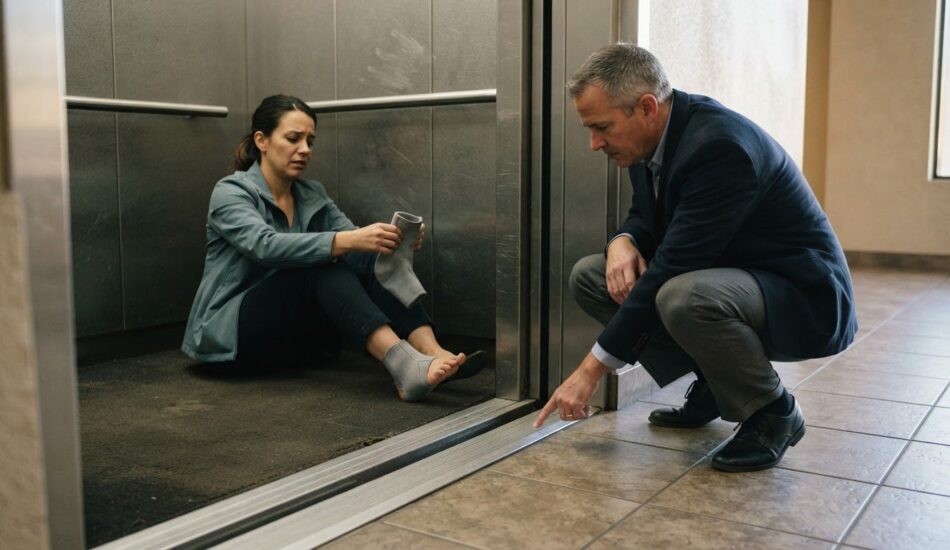
The building owner may not be the only party responsible for an elevator or escalator injury. California treats elevator riders as common-carrier passengers, with an utmost-care duty under Civil Code § 2100, and also treats escalators as common carriers; depending on what caused the accident, liability may involve a property owner or manager, a maintenance company, or an equipment manufacturer. A Stockton lawyer for escalator or elevator injuries can investigate those potential sources of liability and the losses you’ve suffered.
A sudden stop, equipment defect, or inadequate maintenance can leave you with painful injuries and questions about who is responsible. This guide explains how California’s common-carrier duties may affect an escalator or elevator injury claim, which parties could be liable, and what compensation may cover, including medical expenses, lost income, and pain and suffering.
You’ll learn how the cause of the incident and the available evidence can shape a claim. The aim is to clarify practical next steps while you focus on recovery.
Key Takeaways
- Learn how the cause of an elevator or escalator accident can point to different potentially responsible parties.
- Understand how California’s common-carrier duties may shape the liability analysis.
- See which injury-related losses, including future care and lost earning potential, may factor into compensation.
- Find out how maintenance records, prior complaints, and expert analysis can help clarify what happened.
Who’s Responsible for Elevator and Escalator Accidents and Injuries?
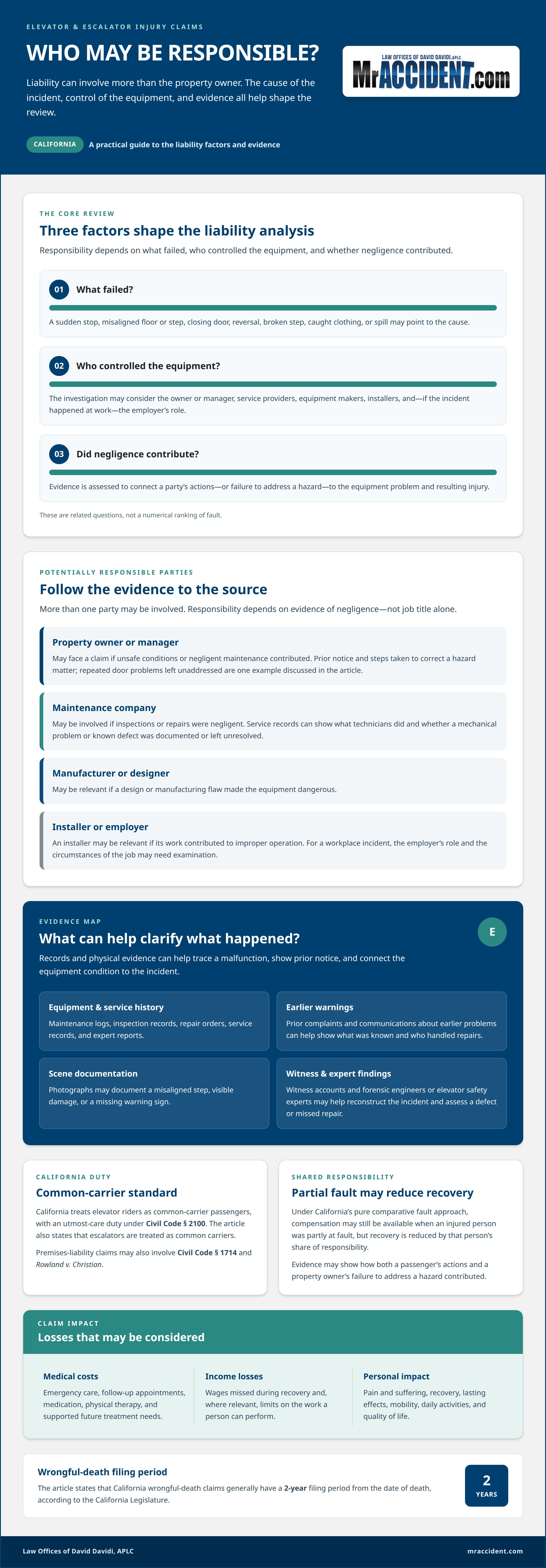
Responsibility depends on what failed, who controlled the equipment, and whether negligence contributed. An elevator injury claim may involve several parties, not just the property owner.
Accident Causes and Settings
Elevator and escalator injuries can happen in apartment buildings, offices, hotels, shopping centers, and other properties. A sudden elevator stop, a misaligned floor, or a closing door can injure a passenger. Escalator incidents may involve a sudden halt, reversal, broken step, or clothing caught between steps. Spills on floors or steps can also cause falls.
To investigate the cause, a Stockton lawyer for escalator or elevator injuries may preserve evidence from the scene and seek maintenance records. Photos can document a misaligned step, visible damage, or a missing warning sign. Forensic engineers or elevator safety experts can examine equipment failures and help reconstruct how the incident occurred.
Premises Liability Claims
California elevator injury claims commonly involve premises liability. Under the framework associated with Civil Code § 1714 and Rowland v. Christian, a property owner or manager may face liability when unsafe conditions or negligent maintenance contribute to an injury. A maintenance company, manufacturer, or installer may also be involved if its work or equipment contributed to the hazard.
When choosing legal representation, consider whether the lawyer can investigate equipment failures, identify potentially responsible parties, and work with expert analysis. A lawyer can also help organize incident details and communicate with the appropriate California safety regulator. The reporting process depends on the incident and equipment involved.
Partial Fault and Compensation
You may still recover compensation if you were partly at fault for an escalator injury in California. Under pure comparative fault, your recovery is reduced by your share of responsibility. For example, the evidence might show that both a passenger’s actions and a property owner’s failure to address a hazard contributed to a fall.
Evidence can help clarify each party’s role. Maintenance logs, witness accounts, photographs, and expert findings may show whether a defect or unsafe condition contributed. If an injury results in death, California wrongful-death claims generally have a 2-year filing period from the date of death, according to the California Legislature.
Potentially liable property owners, maintenance companies, manufacturers, installers, and employers
A Stockton elevator injury may involve more than one responsible party. A property owner, maintenance company, or manufacturer may be liable if negligence contributed to the malfunction. The evidence and each party’s control over the equipment help determine who may be responsible.
Owners and managers may face claims if they failed to maintain an elevator or escalator safely. For example, a building manager who knew about repeated door problems but failed to address them may have contributed to a serious injury. The investigation considers the owner’s role, prior notice of the hazard, and steps taken to correct it.
A maintenance company may be responsible if its inspections or repairs were negligent. Service records can show what work technicians performed and whether they documented a mechanical problem. If a repair failed to address a known defect, those details may help connect the company’s conduct to the incident.
Designers and manufacturers may be liable if a flaw in the equipment’s design or manufacture made it dangerous. An installer may also be relevant if its work contributed to improper operation. If the incident happened at work, the employer’s role and the circumstances of the job may need examination. Responsibility depends on evidence of negligence, not job title alone.
Preserving records early can help trace a malfunction. Relevant evidence may include maintenance logs, prior complaints, repair orders, inspection records, and expert reports. Keep copies of communications about earlier problems and document who handled repairs. A forensic expert can compare the equipment’s condition with its service history and assess whether a defect or missed repair contributed.
For a Stockton claim, a careful liability review links each party’s actions to the equipment failure and resulting harm. Discuss the potential liability with an attorney who can assess the available evidence.
Compensation for medical bills, lost wages, and future losses
Compensation for an elevator or escalator injury depends on documented losses and how the injury affects daily life. A personal injury claim may include current expenses, income losses, and future needs.
Medical Expenses and Lost Income
Medical damages may include emergency care, follow-up appointments, medication, and physical therapy. Records showing treatment after a fall can help connect expenses to the incident. Keep bills, treatment records, and receipts together so the claim reflects the costs incurred.
Lost income may include wages missed during recovery. Pay records and employer documentation can help show time away from work. If an injury limits the work you can perform, that impact may also matter when assessing damages.
Future Losses and Injury Compensation
Some injuries require continued treatment after the initial hospital visit. A claim may account for expected medical care, therapy, and other injury-related expenses when supported by evidence. The assessment should consider how the injury affects mobility, daily activities, and quality of life.
Personal injury compensation may also address pain and suffering. The nature of the injury, the recovery process, and lasting effects all help shape this part of a claim. A personal injury lawyer can review treatment records and income information to develop a clear picture of your losses.
Workplace and Third-Party Claims
If an elevator injury happens at work, workers’ compensation and a third-party personal injury claim raise different questions. Workers’ compensation concerns the work-related injury. A third-party claim examines whether another party, such as a property owner or maintenance company, contributed through negligence.
For example, an employee injured by an elevator malfunction at a customer’s building may have facts involving both the workplace and outside parties. An attorney can assess the circumstances, identify who controlled or maintained the equipment, and evaluate possible claim paths.
To support a claim, organize treatment records, wage documents, and evidence of future care needs. These details help show how an equipment failure affected your finances and recovery, and what losses the evidence may support.
California common-carrier duties for elevators and escalators
California’s common-carrier rule adds an important legal consideration to elevator and escalator injury claims. It can affect how a court evaluates the care owed to riders and whether unsafe operation caused harm.
Under California Civil Code § 2100, elevator riders treated as common carriers are owed the utmost care for their safe transportation. The elevator rule is associated with Vandagriff v. J.C. Penney Co. (1957) 228 F.2d 464. California also considers escalators common carriers for safely transporting people. These duties make the equipment’s operation and the responsible parties’ conduct central to a claim.
That standard does not establish liability on its own. The evidence must still connect a failure to use the required care with the injury. For example, a sudden stop may raise questions about equipment operation, maintenance, and what the operator knew. A claim may also involve premises liability if a property owner’s conduct contributed to the unsafe condition.
Common-carrier and premises-liability issues can overlap. Common-carrier analysis focuses on the duty associated with transporting passengers. Premises liability may examine a property owner’s responsibility for unsafe conditions. If a malfunction involves a contractor’s repair or a manufacturer’s equipment, the investigation may consider those parties’ conduct too.
For a California claim, an attorney can examine how the incident happened, who controlled the elevator or escalator, and whether the evidence supports a breach of duty. Records, witness accounts, and technical analysis can help explain whether a failure caused the injury and identify the parties involved. Those details also help assess whether documented losses may support a claim.
A consultation can help clarify how these legal duties relate to your circumstances. Discuss your elevator or escalator injury claim and the evidence that may support it.
Law Offices of David Davidi, APLC
Law Offices of David Davidi, APLC represents people injured in accidents and can help you understand how the facts may relate to liability, evidence, and potential compensation. If an elevator or escalator injury has left you unsure who may be responsible or how to document your losses, legal guidance can help clarify the issues and identify information relevant to a personal injury claim.
The firm represents people in accident cases, including car, truck, motorcycle, and pedestrian accidents. If your injury circumstances involve another type of incident as well, explain how it happened and what losses followed. Clear details can help frame the legal questions and next steps.
If you’d like to discuss your situation, contact Law Offices of David Davidi, APLC.
Take the Next Step Toward Clarity
After an unexpected injury, it can be hard to know what to do next. A Stockton lawyer for escalator or elevator injuries can help you consider how the incident affects your legal options and what information may be useful to discuss. You don’t need every detail organized before starting the conversation. A clear account of what happened and how the injury affected you can help frame the important questions.
Law Offices of David Davidi, APLC can listen to your concerns and discuss a path forward. If you’re ready to talk through your situation, contact Law Offices of David Davidi, APLC. Taking that step can help make the next decision feel more manageable.
Frequently Asked Questions
Who Can Be Held Liable?
Potentially liable parties include a property owner or manager, an elevator maintenance company, an installer, or an equipment manufacturer. For example, a contractor’s repair records could help show whether faulty work contributed to a later malfunction. Liability analysis considers each party’s role, control over the equipment, and connection between their conduct and the injury. More than one party may be involved.
How long do I have to file a claim?
For many California personal injury claims, the general filing period is two years from the injury, according to the California Legislature. A claim involving a California public entity has a shorter six-month deadline. These are distinct deadlines, so identifying whether a public agency owns or manages the property is important. Preserve incident and treatment records promptly while determining which filing period applies.
What types of damages can I recover?
Damages in an elevator or escalator injury claim may include medical expenses, lost income, future treatment costs, and losses related to pain and reduced quality of life. For example, a claim might document missed work alongside continuing therapy needs. Keep records connecting expenses and daily limitations to the injury. The damages sought depend on the losses supported by evidence.
Are California elevators really considered common carriers?
Yes. California treats elevator riders as common-carrier passengers and associates their utmost-care duty with Civil Code § 2100 and Vandagriff v. J.C. Penney Co. Escalators are also considered common carriers for safely transporting people. This classification informs the duty-of-care analysis, but it does not automatically establish that a property owner or another party caused an injury.
How long do I have to file a California elevator accident lawsuit?
Generally, a California personal injury lawsuit must be filed within two years of the injury, according to the California Legislature. Claims involving a California public entity have a six-month deadline. An important early step is identifying whether a government entity owns or controls the location, since that can affect the applicable deadline. Wrongful-death claims have a separate two-year period measured from the date of death.
How much does an elevator accident lawyer cost?
Law Offices of David Davidi, APLC handles cases on a No Win No Fee basis, with legal fees calculated as a percentage of the recovery. You pay no upfront legal fees, and the firm collects a fee only if it recovers compensation through settlement or trial judgment. The firm also offers a free initial consultation to discuss the incident and explain the fee arrangement.

Law Offices of David Davidi, APLC is a California – based Personal Injury Law Firm, our Attorney’s provide the representation for your personal injury, accident, product liability, premises liability, and other
negligence resulting in injuries. We treat all clients and cases, large or small, with hands-on care.
Practice Area
© Copyright 2026 Law Offices of David Davidi, APLC. All rights reserved.
Digital Marketing By 