
888-529-0707 call 24-7 we service throughout california
Fresno Car Accident Evidence Checklist: What to Save First
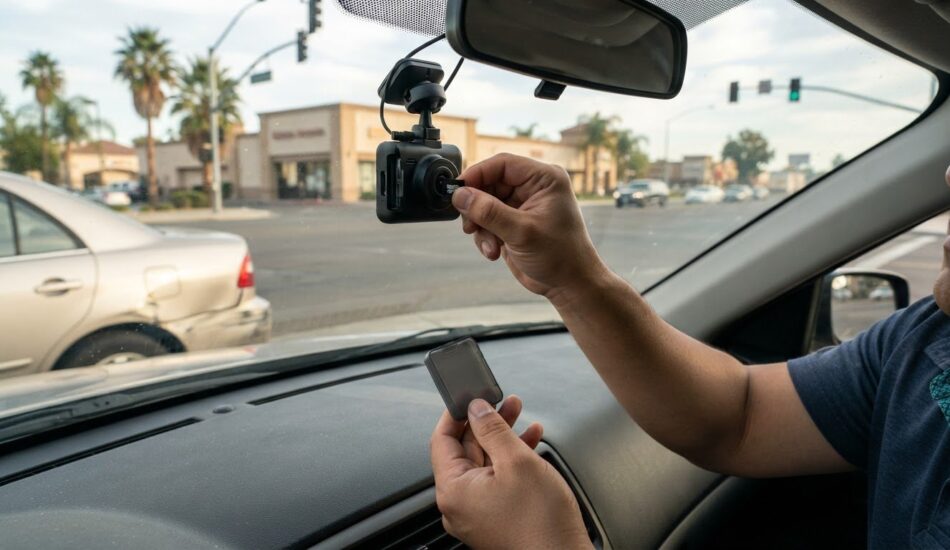
Evidence that could clarify a Fresno crash may disappear before fault is clear. Nearby camera footage may be overwritten within days or weeks, depending on the system’s retention policy. A Fresno car accident evidence checklist helps you prioritize what to preserve, from photos and witness details to original dashcam footage.
It’s understandable to feel overwhelmed after a collision, especially if you’re hurt or still in shock. You don’t have to collect everything at the scene to preserve useful evidence. This guide explains what to save first, how to obtain a police or traffic collision report, and how to organize photos, videos, and medical records if an insurer requests them. It also explains how different evidence can clarify what happened, connect the crash to an injury, and indicate whether responsibility may be shared. Start with what you can safely preserve, then keep your records organized as the claim develops.
Key Takeaways
- If injuries or shock prevent scene documentation, prioritize safety and ask willing witnesses for contact details when you can.
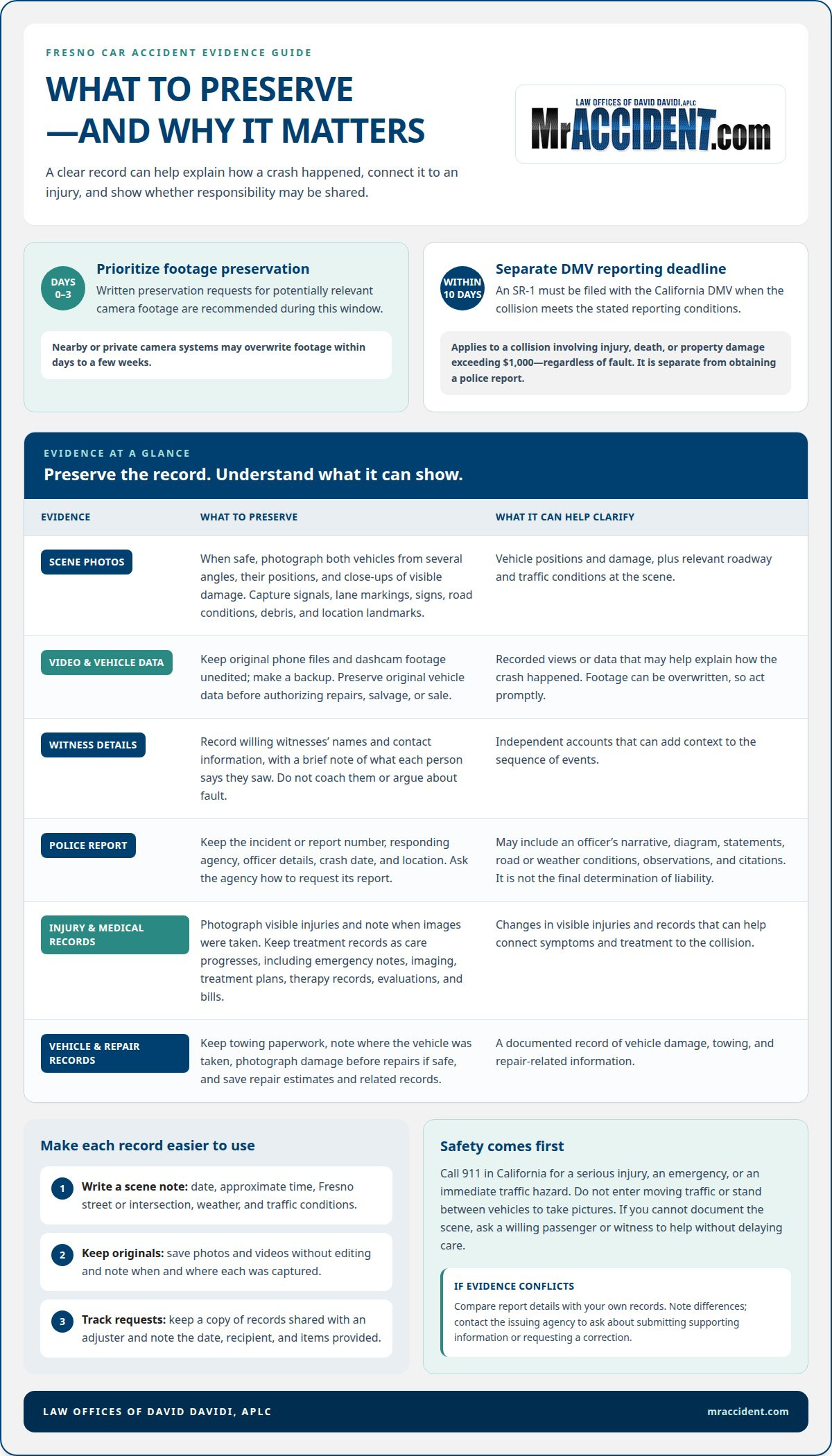
- Ask responding officers how to obtain the incident number and report. According to the California Department of Motor Vehicles, an SR-1 must be filed within 10 days after a collision involving injury, death, or property damage exceeding $1,000, regardless of fault.
- Photograph visible injuries and seek medical care; organize records before deciding what to share with an insurance adjuster.
- Photos, reports, witness accounts, and vehicle data can help explain how a crash happened, connect it to injuries, and show whether fault may be shared.
What if injuries or shock make it impossible to collect all the evidence at the scene?
Medical care comes first. If someone is seriously injured, there’s an emergency, or traffic creates an immediate hazard, call 911 in California. Don’t enter moving traffic or stand between vehicles to take pictures. If you can’t document the scene, ask a willing passenger or witness to help, without delaying care.
What photos and videos should I take at a Fresno crash scene? When it’s safe, photograph both vehicles from several angles, including their positions and close-ups of visible damage. Capture traffic signals, lane markings, nearby signs, road conditions, debris, and landmarks that identify the location. Record the approximate time and exact location, then save the original dashcam footage and make a backup.
Witness details can preserve independent accounts. Ask willing witnesses for their names and contact information, and briefly note what each person says they saw. Don’t coach them or argue about fault. Carefully record license plates and vehicle identifiers, along with the responding officer’s information and any incident number you receive.
- Write a scene note: Record the date, approximate time, Fresno street or intersection, weather, and traffic conditions.
- Keep original files: Save phone photos and videos without editing them, and note when and where each was captured.
- Track witnesses: Keep each person’s contact details beside their brief account of what they saw.
How can I preserve vehicle damage, repair estimates, and electronic evidence after a crash? Keep towing paperwork, note where the vehicle was taken, and photograph the damage before repairs, if it’s safe. Save repair estimates and related records. Preserve original dashcam or vehicle data before authorizing repairs, salvage, or sale.
When should I contact a Fresno car accident attorney about preserving evidence? Contact one promptly if footage, vehicle data, or another important record may be lost, or if fault is disputed. Written preservation requests for potentially relevant camera footage are recommended during days 0-3 after a crash, while private systems may overwrite footage within days to a few weeks.
Obtaining police and traffic collision reports
If police responded to your Fresno collision, ask the officer for the incident number and instructions for obtaining the report. If possible, record the officer’s name or identifying information, the responding agency, and any report number before leaving. These details can help you locate the right record later and give adjusters a reference for matching your claim documents.
A California police department or the California Highway Patrol may prepare a written traffic collision report, often using the CHP 555 form. Ask the responding agency how to request its report and what information it needs to locate the collision. Reports commonly become available within days to a couple of weeks. Keep your photos, witness details, and correspondence organized while you wait.
- Save the report number: Keep it with the crash date, location, and officer details so you can identify the right collision.
- Review the contents: A report may include a narrative, diagram, statements, road or weather conditions, observations, and citations issued at the scene.
- Compare records carefully: Check names, vehicle details, and the described sequence against your own records; note any differences for follow-up.
A police report can explain what the officer observed, but it isn’t the final determination of liability. A citation or diagram is one piece of evidence; photos, witness statements, and other records can provide context. If information appears inaccurate, contact the issuing agency to ask about its process for submitting supporting information or requesting a correction.
California also has a separate DMV reporting requirement. According to the California Department of Motor Vehicles, a person must file an SR-1 with the DMV within 10 days after a collision involving an injury, a death, or property damage exceeding $1,000, regardless of fault. The California Department of Motor Vehicles states that the property-damage threshold is exceeding $1,000. This DMV filing is distinct from obtaining a police report, so don’t treat one as a substitute for the other.
If report details conflict with other evidence or you need help understanding how they affect a claim, car accident legal representation can help assess the records.
Should photos, videos, and medical records be shared directly with the insurance adjuster right away?
First, address safety and injuries. Call 911 for an emergency, serious injury, or immediate traffic hazard in California. After a head impact or violent jolt, seek urgent medical attention for worsening headache, repeated vomiting, seizures, slurred speech, or difficulty waking. Injuries can appear hours or days after a crash, so arrange medical care even if you initially feel fine.
Photograph visible injuries when you can, then take clear images as bruising, swelling, or other marks change. Preserve the original files and note when each photo was taken. Keep medical records as treatment progresses, including emergency department notes, imaging, treatment plans, physical therapy records, specialist evaluations, and bills. These records can help connect reported symptoms and treatment to the collision.
Don’t treat an adjuster’s request as a reason to send every record immediately. Keep an organized copy of what you provide, note the date and recipient, and identify the specific photos, videos, or medical records requested. Before sharing files, review them for accuracy and relevance. Keep original evidence unchanged and send copies where possible, so your own records remain intact.
- Photographs: Preserve original injury images and note the date and body area shown.
- Medical records: Group visit notes, imaging, treatment plans, and bills by provider and date.
- Claim communications: Save the adjuster’s requests and record which documents you sent.
California’s standard personal injury claims generally must be filed within two years, according to the California State Legislature. A deadline can affect whether a claim may proceed, so don’t let record gathering delay attention to filing timelines. Organized documentation can also help address disputes about the nature, timing, and treatment of injuries.
Evidence of fault, causation, and shared liability
A useful accident claim must show more than a collision happened. Evidence should help explain what each driver did, how the crash occurred, and how it caused the claimed injuries. In California, the substantial factor test described in CACI 430 asks whether conduct contributed more than a remote or trivial amount to an injury. That makes the connection between conduct and harm central to a fault analysis.
Build a clear timeline using separate records. A traffic signal photo, witness statement, vehicle damage pattern, and surveillance footage may support or challenge an account of who moved first. Note what each item shows and when it was collected. A police report can provide observations and citations, but it isn’t the final determination of liability. A license plate identifies a vehicle; by itself, it doesn’t establish fault.
Electronic evidence may add detail that photographs can’t show. Many vehicles built since the mid-2010s record pre-crash speed, braking, throttle, and steering input through an event data recorder. Commercial truck data may also capture speed, braking, acceleration, GPS location, and driver inputs. Hours-of-service records, maintenance logs, or cargo information may matter when fatigue, a mechanical issue, or improperly secured cargo is at issue. Because data can be overwritten or vehicles returned to service, prompt preservation can matter.
- Separate cause from damage: Match vehicle damage and crash-scene evidence with medical records documenting the injury.
- Test each account: Compare driver statements with witness accounts, video, and available vehicle data.
- Assess shared conduct: Preserve evidence about each driver’s actions, including facts that may not support your position.
Shared liability is possible when evidence points to contributing conduct by more than one person. The percentage assigned to each party can affect a settlement, so an attorney can evaluate conflicting records and identify evidence that needs preservation. If fault or causation is disputed, get help assessing your accident claim evidence.
Law Offices of David Davidi, APLC
Law Offices of David Davidi, APLC represents people injured in car accidents and helps assess how evidence supports an injury claim. If footage may be overwritten, vehicle data is at risk, or an insurer disputes fault or causation, legal guidance can help identify relevant records and preserve them. The firm provides direct access to attorneys throughout the case and represents people in car, truck, motorcycle, and pedestrian accident claims.
Bring the records you have, such as the collision report, photos, witness details, medical documentation, and insurer correspondence. Missing evidence doesn’t prevent a discussion of the records that remain and the questions they raise. The firm works on a no-win, no-fee basis, with no upfront legal fees.
If you’d like help reviewing evidence from your Fresno crash, contact Law Offices of David Davidi, APLC for a free consultation.
Make your next step a clear one
A Fresno car accident evidence checklist is most useful when every item has a purpose. As you organize your records, note what each piece may help establish and where it came from. Keep firsthand observations separate from assumptions, and preserve details that could explain differences between accounts. This can make a complicated file easier to understand and help identify which questions still need answers.
You don’t need a perfect record before seeking guidance. If you’re uncertain how to handle conflicting evidence or what to do next, a conversation can help you consider your options. Contact Law Offices of David Davidi, APLC to discuss your situation and the evidence you have. Take the next step at a pace that feels manageable, knowing that asking for help can bring more clarity to a difficult moment.
Frequently Asked Questions
How long does surveillance footage typically last before it’s deleted?
Private camera footage may be overwritten within days to a few weeks, depending on the system’s retention settings. If a nearby business or home may have recorded the crash, send a written preservation request promptly. Identify the location and a focused time range, such as 6:00-8:00 p.m., rather than asking for an entire day. Save a copy of the request and any reply.
So You’ve Had an Accident, What’s Next?
After a collision, first address immediate danger and injuries, then follow a simple sequence: call 911 for an emergency, serious injury, or immediate traffic hazard; cooperate with responding police; and notify your own insurer promptly. Ask the insurer for a claim number and keep the adjuster’s contact details. If you’re too shaken to manage calls, ask someone you trust to help record whom you contacted and when.
Someone Just Crashed Into Me: What Do I Do in California?
Stay at the scene and exchange contact and insurance information when it’s safe. Avoid arguing about fault or admitting responsibility before the facts are clear. If police respond, provide a factual account and ask how to obtain the incident number. Don’t move an injured person unless immediate danger, such as fire or explosion, requires it. If traffic or injury creates an emergency, call 911.
What Counts as Useful Evidence at the Scene of a Car Crash?
Useful evidence helps address a specific disputed point, such as which vehicle entered an intersection first or whether a driver had room to stop. A timestamped camera recording may clarify timing, while a witness account may describe what happened just before impact. Evidence is more informative when details align across independent records. Preserve the original material and note what question each item may help answer.
What if I didn’t take photos at the scene?
You can still build a useful record without photos from the scene. Write down what you remember, including the route, intersection, traffic direction, and events immediately before impact. Contact witnesses while their memories are fresh, and promptly ask nearby property owners to preserve relevant footage. Keep repair and towing paperwork, and save later images of vehicle damage or visible injuries with their dates. Don’t edit original files.
What evidence should I collect after a car accident in Fresno, California?
For a Fresno collision, keep records that connect the crash, injury, and financial effects: the report number, witness contacts, medical visit dates, treatment bills, towing documents, repair estimates, and insurer correspondence. Add a short note explaining where each item came from and when you received it. This Fresno car accident evidence checklist can help organize separate records for later review.

Law Offices of David Davidi, APLC is a California – based Personal Injury Law Firm, our Attorney’s provide the representation for your personal injury, accident, product liability, premises liability, and other
negligence resulting in injuries. We treat all clients and cases, large or small, with hands-on care.
Practice Area
© Copyright 2026 Law Offices of David Davidi, APLC. All rights reserved.
Digital Marketing By 