
888-529-0707 call 24-7 we service throughout california
How to Prove a Wrongful Death Claim in Visalia
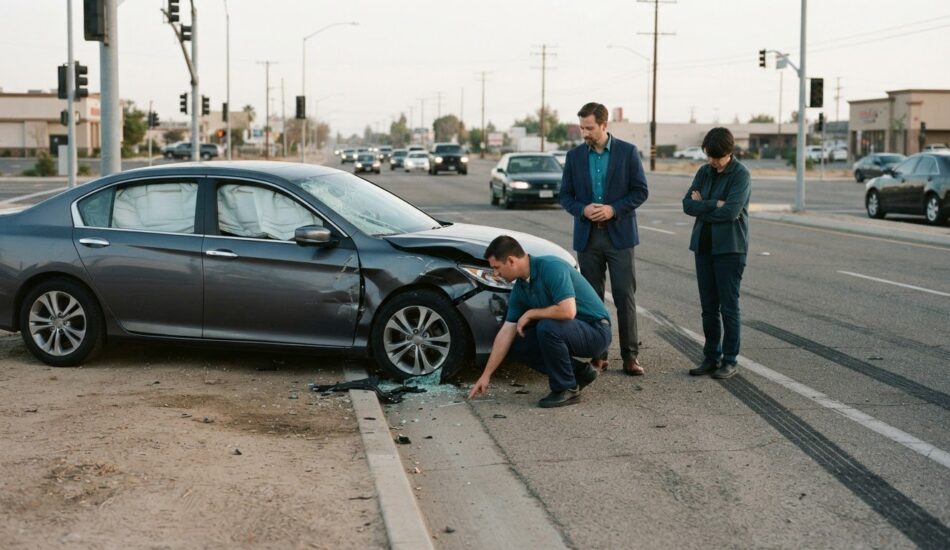
A fatal crash is not the only event that can lead to a wrongful death claim in Visalia. Understanding how to prove a wrongful death claim in Visalia means showing that the defendant owed the person a duty of care, failed to meet it, and caused the death, while supporting the family’s losses with evidence. Evidence may include incident reports, medical records, digital files, witness accounts, and records showing financial support or household contributions.
After a sudden loss, it can be difficult to know which documents or details matter. The evidence depends on how the death occurred: a vehicle collision, unsafe property, a defective product, or another negligent act may require different records and witnesses. The central question is whether the evidence connects the responsible party’s conduct to the death and the family’s resulting losses.
This guide explains what evidence can establish that connection, who may bring a wrongful death claim under California law, and how liability and damages are assessed. It also covers examples of accidents that may support a claim, helping families understand what to consider next.
Key Takeaways
- See how records, witness accounts, and other evidence can help connect negligent conduct to a loved one’s death.
- Learn which surviving relatives may be eligible to bring a California wrongful death claim and why filing deadlines matter.
- Understand how shared fault and a family’s financial and personal losses can factor into liability and settlement review.
- Explore how vehicle collisions, unsafe property, defective products, and other incidents may give rise to a wrongful death claim.
How Do You Prove Wrongful Death?
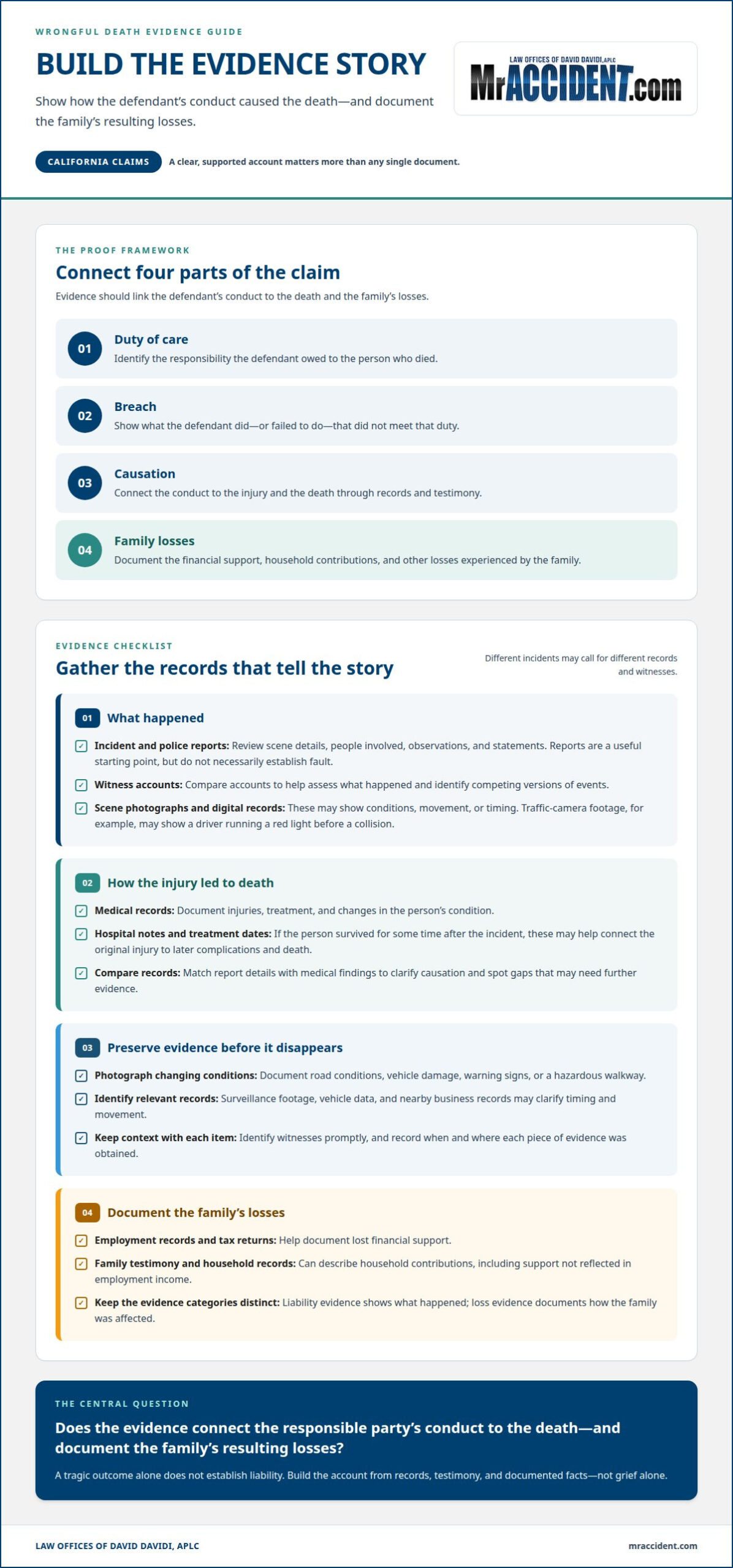
A California wrongful death claim requires evidence connecting a defendant’s conduct to the death. The proof usually establishes a duty, breach, causation, and the family’s resulting losses. For families asking how to prove a wrongful death claim in Visalia, the evidence must tell a clear, supported story.
Evidence of Negligence
Negligence evidence must show the defendant’s duty, breach, and conduct that caused the death. A tragic outcome alone does not establish liability. An attorney can compare witness accounts, scene photographs, and digital records. Traffic-camera footage, for example, may show a driver running a red light before a collision. Together, these details can establish a timeline and help assess competing accounts. Liability depends on evidence of what happened and how it caused the death.
Police Reports and Medical Records
Police reports record details investigators gathered at the scene, including the location, people involved, observations, and statements. They are a useful starting point, but do not necessarily establish fault. Medical records document injuries, treatment, and changes in the person’s condition. If the person survived for some time after the incident, hospital notes may help connect the original injury to later complications and death. Comparing report details with treatment dates and medical findings can clarify causation and identify gaps that need further evidence.
Accident Investigation and Evidence Preservation
An accident investigation can preserve evidence before the scene changes or records disappear. Photographs may document road conditions, vehicle damage, warning signs, or a hazardous walkway. Surveillance footage, vehicle data, and nearby business records may clarify timing and movement. Identify witnesses promptly, since memories fade and contact details can become harder to find. A wrongful death lawyer can help preserve relevant evidence and seek records while their context is clear. Record when and where each item was obtained.
Documentation and Burden of Proof
Documentation helps connect negligence to the death. The plaintiff must show that the defendant’s negligence caused the loved one’s death. To prove a wrongful death claim in Visalia, link the conduct, injury, and death through records and testimony rather than relying on grief alone. Keep incident reports, medical files, and witness details organized. Employment records, tax returns, and family testimony can document lost support and household contributions. Clear documentation helps distinguish evidence of liability from evidence of the family’s losses.
Who may bring a wrongful death claim in California
California wrongful death is a civil action alleging that another party’s wrongful act caused a person’s death. California Code of Civil Procedure § 377.60 identifies eligible claimants, including a surviving spouse or domestic partner and the deceased person’s children. A personal representative may also bring an action. The statute matters because a close relationship alone doesn’t automatically establish eligibility.
If no spouse, domestic partner, or child survives, other people may qualify under the law’s succession rules. This can include someone legally entitled to inherit, such as a financial dependent or successor. California Legislature states that wrongful death lawsuits generally must be filed within two years after the loved one’s death. Missing that deadline can bar the lawsuit, so filing timing matters.
Medical malpractice claims still require proof that the provider’s wrongful conduct caused the death; the medical setting doesn’t change who may qualify under § 377.60. Claims involving a California government entity have an additional step: California Legislature states that a government tort claim generally must be filed within six months. That claim deadline is separate from the general wrongful death lawsuit deadline.
A wrongful death action may proceed alongside a survival action. Under California Code of Civil Procedure § 377.30, the estate may pursue losses the deceased experienced between injury and death. The wrongful death claim instead addresses eligible family members’ own losses, so the actions cover distinct harm.
Recoverable wrongful death damages may include funeral and burial expenses, medical bills related to the injury before death, lost financial support, and loss of companionship or guidance. Records of household contributions can show the deceased person’s support, even without employment income. These damages address the family’s losses, not the deceased person’s pain before death.
Attorney fees depend on the agreed arrangement. In a contingency arrangement, fees are tied to recovery rather than paid upfront; the written agreement explains the terms. Consultation costs depend on the attorney’s stated terms, so establish the cost before the meeting. A California wrongful death legal review can help clarify eligibility, deadlines, and which losses belong in each action.
Review of liability and settlement valuation
Settlement evaluation considers how clearly the evidence shows that the defendant caused the death, as well as the surviving family members’ losses. In California, a defendant’s partial fault does not automatically bar a wrongful death claim. The deceased person’s share of fault reduces damages in proportion to that person’s responsibility. For example, evidence that both a driver and another party contributed to a fatal collision can affect the amount of damages.
Compensation is assessed based on documented financial and personal losses. Relevant considerations may include expected financial support, funeral and burial expenses, medical costs related to the injury before death, and loss of companionship or guidance. Records and testimony can explain the deceased person’s role, including household services and emotional support. California wrongful death cases have no cap on non-economic damages.
Settlement distribution should reflect each eligible family member’s own losses. A surviving spouse, children, or other eligible claimants may have different relationships and losses to document. Valuation therefore considers evidence of each person’s lost support, companionship, and guidance, rather than assuming every family member experienced the same loss.
Insurance companies assess liability and damages based on the available evidence, while the family’s legal representative evaluates whether an offer accounts for documented losses. A low offer may overlook financial support or household contributions. Clear records can help show what an offer covers, what it leaves out, and which disputed facts may affect negotiations.
In a typical Visalia case, filing and discovery may occur during months 3-12. Negotiations or mediation may follow during months 12-18. If no settlement is reached, a case may move to trial after 18 months. Discovery can develop evidence about fault, damages, and disputed accounts, giving both sides more information to assess resolution or trial.
Examples of accidents leading to wrongful death claims
A fatal accident may support a wrongful death lawsuit when another party’s wrongful conduct caused the death. Examples include vehicle collisions, medical malpractice, occupational hazards, defective products, unsafe premises, elder-care or daycare incidents, nursing-home neglect, and criminal violence. Each situation raises different questions. A vehicle case may focus on the driver’s conduct, while a premises case may depend on the dangerous condition and who controlled the property.
After a traffic collision in Visalia, investigators may examine the vehicles, road conditions, witness accounts, and available digital records. A fatal truck, motorcycle, pedestrian, or bicycle accident may require different evidence to explain how the crash occurred. A witness account may clarify a driver’s actions, while vehicle damage may help reconstruct the impact. The central issue is whether the evidence connects the defendant’s conduct to the death.
Medical malpractice and care-related death cases require close attention to events before the death. In a hospital, medical records may show the treatment provided, changes in the patient’s condition, and when complications arose. In a nursing-home or daycare incident, records and witness accounts may help establish what care was provided and when. A defective product claim may instead focus on the product and how its alleged defect contributed to the fatal accident.
Workplace hazards and criminal violence may also give rise to civil claims. For an occupational incident, an investigation may examine the worksite, equipment, and circumstances of the fatal injury. A criminal investigation can proceed separately from a civil wrongful death lawsuit. A consultation with a wrongful death attorney can help families understand how the specific circumstances shape the evidence and liability. No accident label alone proves fault; the evidence must connect conduct, causation, and the family’s losses.
If a loved one died in an accident, discuss the circumstances of the death and the evidence that may support a claim.
Law Offices of David Davidi, APLC: Wrongful Death Legal Representation
Law Offices of David Davidi, APLC represents families pursuing wrongful death claims after a preventable loss. If you’re unsure whether the evidence connects another party’s conduct to your loved one’s death, legal guidance can help clarify the issues and possible next steps.
The firm also represents families in fatal car, truck, and motorcycle accident cases. Its attorneys can assess liability evidence, review documented family losses, and explain how a claim may proceed. The firm works on a no-win, no-fee basis, so it receives payment only if it recovers compensation.
Consider reaching out if you need help understanding who may file a claim, preserving evidence, or evaluating a settlement offer. You don’t need to have every answer before starting a conversation. Contact Law Offices of David Davidi, APLC to discuss your family’s situation.
Take the Next Step With Clarity
Deciding what to do after a loss can feel difficult, especially while your family is grieving. Understanding how to prove a wrongful death claim in Visalia can help clarify what needs attention as you consider your next steps. A conversation with a wrongful death attorney can help connect the circumstances of the death to the legal questions your family faces.
Law Offices of David Davidi, APLC represents families in wrongful death matters. When a death involves a collision, the firm also handles car, truck, and motorcycle accident claims. You can discuss what happened, the documents or questions you have, and which legal options may apply. You don’t need to organize every detail before asking for guidance.
Contact Law Offices of David Davidi, APLC to talk through your family’s situation. Taking one considered step can help you move forward with greater clarity and support.
Frequently Asked Questions
What Compensation Can Your Family Recover?
Your family may seek compensation for losses caused by the death, including lost financial support, funeral and burial expenses, and medical expenses related to the fatal injury. A claim may also address the deceased person’s household services, guidance, and companionship. For example, evidence of regular caregiving or household responsibilities can show contributions that income records alone do not capture.
What damages are available?
California wrongful death damages may include economic losses, such as expected financial support, and non-economic losses, such as lost companionship and guidance. Household services may matter even if the deceased person was not employed. California wrongful death cases have no cap on non-economic damages. Punitive damages may be available when evidence shows the responsible party acted maliciously, fraudulently, or oppressively.
What if my loved one survived for several days before passing?
A separate survival action may address losses the deceased experienced between injury and death. California Code of Civil Procedure § 377.30 provides for this action on behalf of the estate. For example, records from the days between a crash and death may document treatment and expenses. The survival action is distinct from wrongful death damages, which address losses suffered by eligible surviving family members.
What if my loved one was partially at fault for the accident?
Partial fault does not automatically prevent a California wrongful death claim. Under California’s pure comparative negligence rule, damages are reduced in proportion to the deceased person’s share of fault. For example, if evidence shows that the deceased person and another party both contributed to a collision, the factfinder assesses each party’s responsibility. The claim may still proceed with damages adjusted according to that allocation.
What elements must be proven in a California wrongful death claim?
A negligence-based claim must show that the defendant owed the deceased a duty of care, breached that duty, and caused the death and resulting losses to eligible survivors. For example, evidence might connect a driver’s unsafe conduct to a fatal crash and document the family’s resulting losses. Each element matters: proof that a death occurred does not, by itself, establish that the defendant caused it.
Who is eligible to file a wrongful death lawsuit in California?
California Code of Civil Procedure § 377.60 governs who may bring a wrongful death action. Eligible people can include a surviving spouse or domestic partner, children, and, in certain circumstances, other relatives or heirs entitled to inherit. A personal representative may also bring the action. Eligibility depends on the survivor’s legal relationship to the deceased, not simply on being a close friend or loved one.

Law Offices of David Davidi, APLC is a California – based Personal Injury Law Firm, our Attorney’s provide the representation for your personal injury, accident, product liability, premises liability, and other
negligence resulting in injuries. We treat all clients and cases, large or small, with hands-on care.
Practice Area
© Copyright 2026 Law Offices of David Davidi, APLC. All rights reserved.
Digital Marketing By 