
888-529-0707 call 24-7 we service throughout california
Bakersfield Attorney for Falling Merchandise Injury Claims
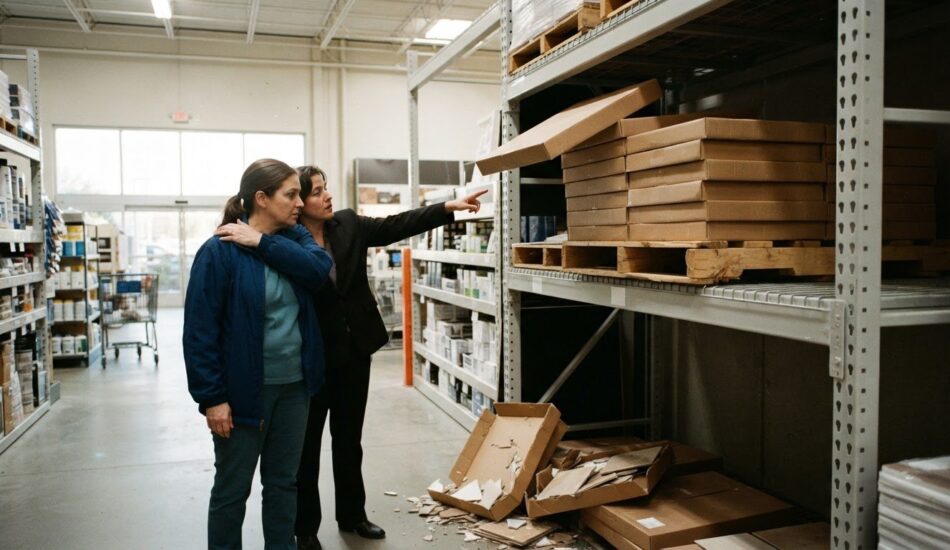
A falling product can cause more than a brief scare. If unsafe storage leads to an injury, a claim may seek compensation for medical costs, lost wages, and other related damages. A Bakersfield attorney for falling merchandise in a store can assess whether the store may be responsible and what losses the evidence supports.
After an incident, getting medical care and understanding what happened come first. Evidence about how merchandise was stacked and stored, and whether the store inspected the area, can help show whether the display was unsafe.
This article explains which damages may be recoverable, what evidence can support a falling-merchandise claim, and what steps to take after an incident in a Bakersfield store.
Key Takeaways
- California personal injury lawsuits generally have a two-year filing deadline, according to the California Legislature; claims involving public entities have a different presentation deadline.
- Potential compensation may include medical costs, lost wages, and other damages related to the injury.
- Photos of the scene, witness details, and records about how merchandise was stacked or inspected can help show whether storage was unsafe.
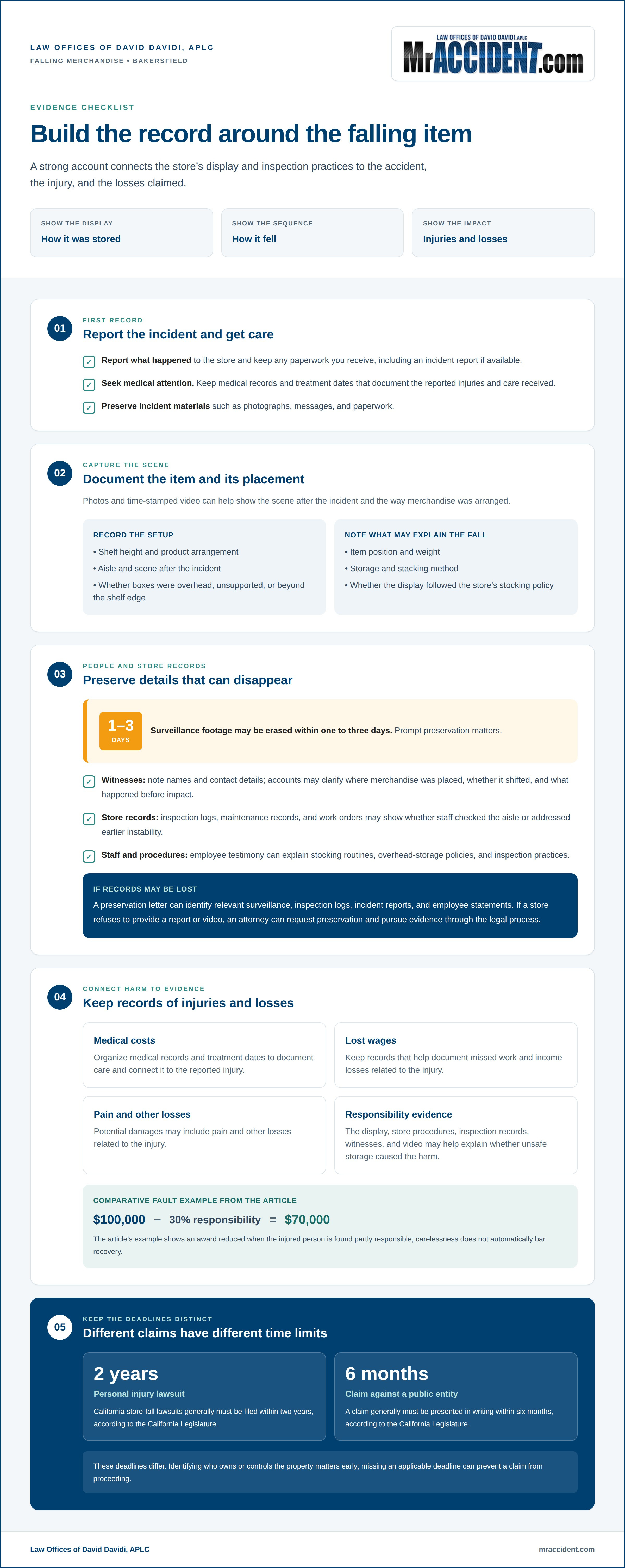
- Report the incident, seek medical attention, and preserve evidence promptly, especially surveillance footage that may not be kept for long.
What Damages Are Recoverable in a Bakersfield Premises Liability Case?
California premises liability claims may seek medical costs, lost wages, pain, and other injury-related losses. Under California Civil Code Section 1714, property owners, lessees, and people controlling property must use ordinary care to keep premises reasonably safe for foreseeable visitors. If a poorly secured carton falls from an overhead shelf, liability depends on whether reasonable care could have prevented the injury and whether the evidence connects unsafe storage to the harm.
California personal injury lawsuits after store falls generally must be filed within two years, according to the California Legislature. A claim against a California public entity generally must be presented in writing within six months, also according to the California Legislature. These deadlines differ, so identifying who owns or controls the property matters early. Missing an applicable deadline can prevent a claim from proceeding.
Store notice and reasonable inspection practices can shape liability. A customer generally must show the store knew or should have known about a hazard it did not create. If store staff stacked merchandise unsafely, separate proof of notice may not be needed. If someone else created the hazard, inspection logs, employee testimony, or surveillance may help show how long it existed. A missed inspection may support an inference that staff had time to discover and address the danger.
An injured person’s own carelessness can reduce compensation, but doesn’t automatically bar recovery. For example, a $100,000 jury award becomes $70,000 if the injured person is found 30 percent responsible. The recoverable amount also depends on documented losses, injury effects, and evidence tying the store’s conduct to those losses. There is no single average settlement for falling-merchandise cases; the injury, medical costs, lost income, and strength of liability evidence all matter.
Choose a Bakersfield premises liability attorney who can evaluate storage practices, inspection records, notice, and comparative fault. The attorney should explain how these facts may affect damages and deadlines, and identify evidence that could support or weaken the claim.
Evidence about product stacking and overhead storage
An item’s position, weight, and storage method can help explain why it fell. A lawyer can investigate the display and seek to preserve records that might otherwise disappear.
Witness and Store Inspection Records
Witness accounts can clarify where merchandise was placed, whether it shifted, and what happened just before impact. An attorney can gather names, contact details, and statements while memories are fresh. Store inspection logs, maintenance records, and work orders may show whether staff checked the aisle or addressed earlier instability. Employee testimony can provide context about stocking routines and overhead-storage policies.
Incident Reports and Store Video
If a store refuses to provide an incident report or video, an attorney can request that the records be preserved and pursue evidence through the legal process. A preservation letter can identify relevant surveillance, inspection logs, incident reports, and employee statements. Some stores may erase surveillance footage within one to three days, so prompt action matters.
Photos and time-stamped video can document shelf height, product arrangement, the aisle, and the scene after the incident. Evidence may also show whether boxes were stacked overhead, left unsupported, or placed beyond the shelf edge. The store’s stocking policy can help determine whether the display followed its own procedures. An attorney can compare these details with witness accounts and inspection records.
A lawyer can organize medical records and treatment dates to connect the falling merchandise with the reported injuries. Clear records help explain the care received and the losses claimed. Preserve photographs, messages, and paperwork from the incident. Include details about a nearby sidewalk only if they relate to where the fall occurred.
Questions about evidence preservation differ from questions about a free consultation; no consultation terms should be assumed. For help assessing records and preservation needs, discuss evidence preservation with a lawyer.
Falling merchandise and store premises liability
A merchandise injury claim turns on the store’s conduct, the falling item, and the resulting harm. In California, premises liability may apply when a failure to use reasonable care creates a hazard that injures someone.
Proving a Falling Merchandise Injury Claim
To establish a California claim, the injured person must connect the store’s lack of reasonable care to the accident and resulting injury. For example, a carton balanced on an unstable display may support a negligence claim if that arrangement caused it to fall. The claim also requires evidence of actual harm, such as treatment records or missed work. A witness may help explain where the merchandise was positioned and how it fell.
Improperly Stacked or Secured Merchandise
A store may be liable if merchandise was improperly stacked or secured and that unsafe arrangement caused an injury. A heavy item placed above customer reach, for example, may create a foreseeable hazard if it could slide from its shelf. The key question is whether reasonable care would have prevented the danger. The shelf, stacking method, item placement, and store procedures can help show how the display became unsafe.
Attorney Help for Falling Merchandise Injuries
An attorney can assess how the store controlled the premises, whether another party contributed, and what evidence connects the display to the injury. Responsibility may be shared if multiple parties played a role. During a consultation, discuss the item’s location, the sequence of events, injuries, and available witnesses. Specify whether the fall happened inside an aisle or near parking, since the location helps identify who controlled the area.
Compensation depends on proving that the store’s lack of reasonable care caused harm, not simply that merchandise fell. If the store created the hazard, a customer generally does not need separate proof that the store had notice. If someone else created it, evidence that the store knew or should have discovered it may matter. These facts can distinguish an unavoidable accident from a preventable premises liability failure.
Bakersfield attorney for injuries caused by falling merchandise in a store
A Bakersfield attorney for falling merchandise in a store can assess how the incident happened and who may be responsible. In Bakersfield, a store operator, property owner, or another party may have played a role. An investigation connects each party’s control or conduct to the falling item and the injury. This can distinguish a store-storage claim from a product defect or another cause.
An attorney’s initial steps typically include reviewing the incident account, available photographs, medical records, and communications with the store. These details can establish the timeline, the item involved, and the reported harm. The attorney can also identify gaps, such as missing information about who stocked the display or controlled the aisle. Clear records help shape a focused claim.
More than one party may be responsible. For example, a store may control the sales floor while another business handles stocking or product delivery. An attorney can investigate each party’s role and whether its conduct contributed to the accident. If the product itself may have failed, the attorney can assess whether a separate product-liability issue is relevant.
Preparing a claim also means organizing documented losses and explaining how they relate to the incident. Medical records can describe the injury and treatment, while employment records may help show missed work. An attorney can evaluate liability evidence, damages, and possible comparative responsibility before discussing the claim’s direction. Some falling-merchandise claims may resolve through negotiation or mediation rather than trial.
For an injured shopper, choosing counsel means looking for a clear explanation of the investigation, the evidence needed, and the next decisions. Ask how the attorney will assess potentially responsible parties, preserve the claim’s timeline, and communicate case developments. A focused discussion can help clarify whether the available facts support moving forward. Discuss your falling-merchandise injury claim to consider the next step.
Law Offices of David Davidi, APLC: Slip and Fall Legal Representation
Law Offices of David Davidi, APLC represents people injured in store falls, including incidents involving falling merchandise. Turn to the firm for help assessing whether unsafe storage, inadequate inspection, or another party’s conduct contributed to your injury.
An attorney can review the incident details, available records, medical documentation, and potential damages. This can clarify what evidence may support a premises liability claim and which parties may share responsibility. An attorney oversees each case from start to finish, giving you direct access to legal counsel. The firm works on a No Win No Fee basis.
If falling merchandise injured you, contact Law Offices of David Davidi, APLC to discuss your situation.
Take the Next Step Toward Clarity
Deciding what to do after a store injury can feel difficult, especially while you are managing its effects. A conversation with a Bakersfield attorney for falling merchandise in a store can help you understand how the incident may be evaluated and what information could guide your next decision. You do not need to have every detail organized before discussing your options.
Law Offices of David Davidi, APLC also represents people in car, truck, and motorcycle accident cases. For a falling-merchandise injury, the focus is on understanding your circumstances and the legal questions they raise. The facts of each case shape the appropriate next steps.
If you’re ready to discuss what happened, contact Law Offices of David Davidi, APLC. Taking that first step can help you move forward with greater clarity and support.
Frequently Asked Questions
Does Comparative Fault Prevent Recovery?
No. California’s comparative-fault rule reduces compensation according to the injured person’s share of responsibility, but does not automatically prevent recovery. For example, if evidence shows a shopper ignored a clear warning sign, that may affect the amount recoverable. The store’s conduct and the shopper’s actions are considered together, so partial fault does not by itself end the claim.
How Is Notice of a Dangerous Condition Proven?
Notice may be shown by evidence that store staff knew about the danger or had a reasonable opportunity to discover it. A worker’s report about an unstable display, earlier complaints, or an inspection record may help establish that knowledge. If the store or its employee created the hazard, separate proof that the store had notice generally is not required.
How Serious Are Fall and Property Injuries?
The seriousness of an injury depends on its effects, not simply how the fall looked. A shopper may feel little pain at first, then notice symptoms that interfere with walking, working, or daily tasks. Seek medical attention after a fall, even if the injury seems minor. Medical records can document reported symptoms, treatment, and changes in the condition over time.
How Long Do Stores Keep Surveillance Footage?
Some retail stores may erase surveillance footage within one to three days after an accident. Retention practices vary, so footage from the aisle or nearby entrance could disappear quickly. A prompt preservation request can identify the incident date, approximate time, and relevant camera locations. This can help distinguish useful footage from recordings of unrelated areas.
What Is California Store Liability for Falling Merchandise Injuries?
A California store may be liable when a failure to use reasonable care creates a merchandise hazard that injures a customer. A product stacked where it could slide into an aisle, for instance, may raise questions about how staff arranged or secured it. The claim focuses on the store’s control, the unsafe condition, causation, and the injury. Other parties may also share responsibility.
How Long Do I Have to File a Store Injury Lawsuit in California?
A California personal injury lawsuit after a store fall generally must be filed within two years, according to the California Legislature. Claims against a California public entity generally require written presentation within six months, also according to the California Legislature. The responsible property owner affects which deadline applies. Identify who controlled the location promptly, since the public-entity timeline is shorter.

Law Offices of David Davidi, APLC is a California – based Personal Injury Law Firm, our Attorney’s provide the representation for your personal injury, accident, product liability, premises liability, and other
negligence resulting in injuries. We treat all clients and cases, large or small, with hands-on care.
Practice Area
© Copyright 2026 Law Offices of David Davidi, APLC. All rights reserved.
Digital Marketing By 