
888-529-0707 call 24-7 we service throughout california
Independent Medical Examination for Injury Claims: Why It Happens
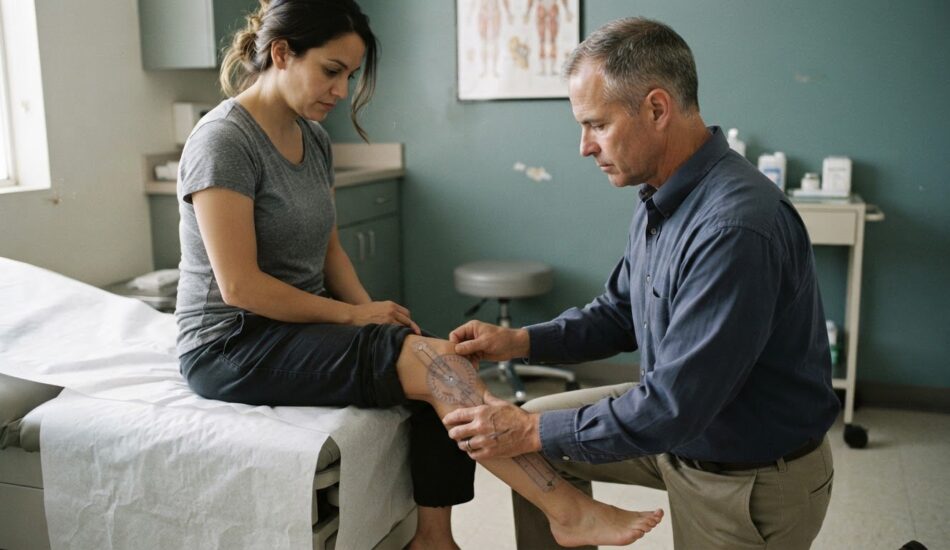
An independent medical examination for an injury claim is an assessment requested to evaluate reported injuries. The examiner may review records, ask about the incident, examine you, and prepare a report. This doctor acts as a consultant, not your treating physician, so the appointment does not replace ongoing care.
An independent medical examination for an injury claim can feel different from a treatment visit. Its purpose is to assess information related to the claim, and the examiner’s report may affect how your injuries are evaluated. Whether you must attend depends on the circumstances, including any applicable court order or insurance policy.
This guide explains why insurers and defendants request examinations, how records and prior statements may inform the review, and what the doctor may ask. It also explains how attendance requirements can vary, so you can understand the process and prepare for the decisions that may follow.
Key Takeaways
- An IME is an evaluation for the claim, not a plan for ongoing treatment, and its report may influence how injuries are assessed.
- Insurers and defendants may request an examination to evaluate the reported injuries, their causes, and the treatment received.
- Medical records and earlier statements can shape the examiner’s review, so consistency about your injuries and history matters.
- Whether you must attend depends on the claim and any applicable order or policy. In California, the California Legislature states that a plaintiff should not have to travel more than 75 miles from home for an examination.
What Is an Independent Medical Exam?
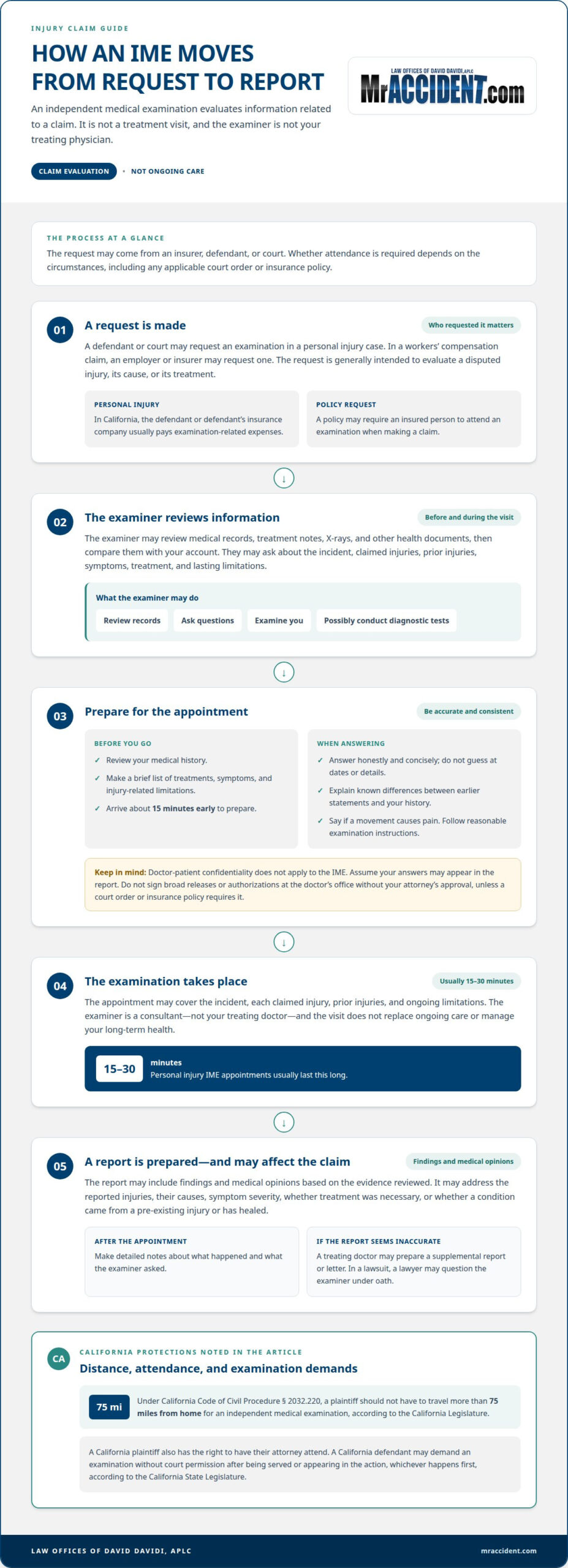
An independent medical exam, or IME, is an evaluation related to an injury claim. The examiner acts as a consultant, not your treating doctor, and does not manage your long-term health. In a car accident claim, the doctor may review accident-related records, ask about the crash and your injuries, examine you, and prepare a report. The report may include findings and medical opinions based on the evidence reviewed.
The appointment may cover the incident, each claimed injury, prior injuries, and lasting limitations. The examiner may ask whether an earlier injury fully healed or whether you expect future treatment. Answer honestly and concisely. Describe your history and current limits without minimizing symptoms or adding unrelated details. If a movement causes pain during the examination, say so. Personal injury IME appointments usually last 15 to 30 minutes, and arriving about 15 minutes early can give you time to prepare.
Before the appointment, review your medical history and make a brief list of treatments, symptoms, and injury-related limitations. Follow reasonable examination instructions, but do not sign broad releases or authorizations at the doctor’s office without your attorney’s approval, unless a court order or insurance policy requires it. Doctor-patient confidentiality does not apply to the IME, so assume your answers may appear in the report. Afterward, make detailed notes about what happened and what the examiner asked.
California plaintiffs have specific protections. Under California Code of Civil Procedure § 2032.220, a plaintiff should not have to travel more than 75 miles from home for an independent medical examination, according to the California Legislature. A plaintiff in California also has the right to have their attorney attend. A California defendant may demand an examination without court permission after being served or appearing in the action, whichever happens first, according to the California State Legislature. If the report contains inaccurate or biased opinions, those findings may be challenged through the legal process.
Why insurers and defendants request an independent medical examination
An insurer or defendant may request an examination to evaluate reported injuries and medical opinions. The reason for the request can affect who selects the examiner, who pays, and how the report may be used.
Who Requests an IME
In a personal injury case, the defendant or the court may request an examination of an injured plaintiff. In a workers’ compensation claim, an employer or insurer may request an IME. The requesting party generally seeks information to evaluate a disputed injury, its cause, or its treatment. Knowing who requested the exam helps you understand its purpose and whose position the report may address.
In California personal injury cases, the defendant or the defendant’s insurance company usually pays for the examination and related expenses. The defendant may choose a qualified, impartial specialist in the relevant medical field. If the parties disagree about the physician, a court may decide who will conduct the examination. The examiner’s opinion can become part of a dispute over the injuries and claimed compensation.
Policy Requirements for Examinations
An insurance policy may require an insured person to attend an examination when making a claim. In some states, an insurer may rely on that requirement when evaluating a questionable claim. A policy-based request differs from an examination sought during a lawsuit, so the basis for the request matters. An attorney can review how the policy applies to the claim and explain the potential consequences of refusing.
Insurers and defendants may also request an IME to challenge a treating doctor’s opinion. The examiner may dispute whether the accident caused the injury, whether symptoms are as severe as reported, or whether treatment was necessary. A report can also argue that a condition came from a pre-existing injury or has healed. If an insurer’s request or an IME report raises concerns, personal injury claim legal support can help you understand the issues involved.
Reviewing medical records and prior statements
An IME doctor may assess more than what you describe during the appointment. The review can include medical records, treatment notes, X-rays, and other documents about your health. The examiner may compare those materials with your account and conduct another examination or diagnostic tests. This broader review helps shape the assessment, so records of earlier injuries or ongoing symptoms may matter alongside care received after the incident.
The examiner may also compare prior statements with your medical history. For example, an initial treatment note might describe pain in one area, while a later claim includes another injury. That difference may prompt questions about when symptoms began or how they changed. Answer honestly and explain the circumstances behind any difference if you know them. Do not guess at dates or details, or change an accurate account just to make statements appear consistent.
The examiner’s report may include findings, medical opinions, and conclusions about claimed injuries based on the available evidence. If records omit relevant treatment or an opinion appears to misunderstand a note or X-ray, an attorney can assess the issue. Your treating doctor may prepare a supplemental report or letter addressing errors or inaccurate opinions. In a lawsuit, your lawyer may question the IME doctor under oath about the examination and the basis for the assessment.
If you are considering recording the medical exam or bringing someone with you, discuss the arrangements with your lawyer beforehand. An attorney may be allowed to attend, and state law can affect your rights during an examination. Do not assume that recording or bringing a companion is permitted in every situation. Ask about the examination terms before the appointment so you understand who may be present and how observations can be made.
Am I Required to See an IME Doctor?
Whether you must attend depends on the claim, the applicable insurance policy, and whether a court has ordered an examination. In California, the legal basis for the request matters because it affects how you should respond.
When Attendance May Be Required
An injured claimant may have to attend if a court orders an examination or an applicable policy requires cooperation. In a personal injury lawsuit, the defense can request an examination, and a judge may approve it when injuries are disputed. The physician’s assessment may address injuries connected to an accident, so understanding the basis for the request helps you prepare and respond appropriately.
Policy and Court Examination Requirements
A court-related request differs from an insurer’s request during claim negotiations. In litigation, a defendant can typically seek an IME through a formal motion; a judge may approve the request and set limits if you object. An insurance policy may also require an insured claimant to attend. Before deciding how to respond, have an attorney explain whether the request relies on a policy term or the court process.
Refusing or Rescheduling an IME
Refusing an examination can have consequences, depending on its legal basis. During insurance negotiations, a claimant generally is not legally compelled to attend, but refusal may give the insurer grounds to delay or deny the claim. Failing to comply with a court-ordered examination can lead to sanctions, including exclusion of evidence or dismissal of a claim. If you need to reschedule, promptly notify your attorney and the requesting party. Do not assume the appointment has changed.
State Rules for IMEs
IME rules vary by state, claim type, insurance policy, and court procedure. In California, a defendant may demand an examination without court permission after being served or appearing in the action, whichever happens first, according to the California State Legislature. Other details can depend on the proceedings and the injuries at issue. If an accident-related request raises questions about attendance or limits, discuss your personal injury claim with legal counsel.
Law Offices of David Davidi, APLC
Law Offices of David Davidi, APLC represents people injured in accidents and can help assess how an IME report fits into a personal injury claim. If an examiner’s conclusions conflict with your treatment history or describe your injuries differently, legal guidance can help you understand the issues and consider how to respond. The firm handles car, truck, motorcycle, and pedestrian accident claims.
Consider speaking with an attorney if you have received an examination request, have questions about attending, or believe the report misstates your condition. The firm’s attorneys provide direct access to legal counsel, so you can discuss your concerns with someone handling the legal matter rather than treating the report as an isolated medical document.
Contact Law Offices of David Davidi, APLC to discuss your accident claim and questions about an IME.
Keep Your Next Move Focused on Your Claim
An independent medical examination for an injury claim is one part of a broader legal process, not the full measure of what you experienced. Consider how the assessment fits with the evidence, your recovery, and the decisions ahead. A report can raise questions, but you do not have to interpret its legal significance alone.
If the examination has affected settlement discussions or left you uncertain about your options, focused legal advice can help you understand the path forward. Law Offices of David Davidi, APLC can discuss your accident claim and the role an IME may play, helping you make informed decisions with your circumstances in view.
Contact Law Offices of David Davidi, APLC to discuss your claim and consider your next step with confidence.
Frequently Asked Questions
Can You Record the Exam or Bring Someone With You?
Do not assume you can record an IME or bring a companion without addressing it beforehand. In California, a plaintiff has the right to have their attorney attend. Rules and examination terms can differ elsewhere, so discuss your plans with your lawyer before the appointment. Clarify who will be present and whether recording is permitted rather than starting a recording without agreement.
Do You Have to Attend an IME?
It depends on whether a court order or an applicable insurance policy requires attendance. For example, a person negotiating an insurance claim may not be legally compelled to attend, while a court can order an examination during litigation. An examination may not be ordered when someone claims physical injuries but seeks damages only for vehicle damage. Identify the basis for the request before deciding how to respond.
How Do You Choose an IME Facility?
You may not choose the facility, but your attorney can discuss the examination location and the doctor’s specialty with the opposing side. The specialty should relate to the injury being assessed. For example, a claim involving a shoulder injury may call for an examiner qualified to assess that area. In California, the defendant may select a qualified, impartial specialist relevant to the medical issue.
How Will Your IME Be Used?
The report may be used as evidence when evaluating your claimed injuries and compensation. For example, the defense may rely on the examiner’s opinion when disputing whether an accident caused an injury or whether treatment was necessary. In California personal injury cases, the defense must provide the report to you or your attorney without unreasonable delay. Your treating doctor can then consider its conclusions alongside your care.
How Do You Dispute IME Findings or Challenge the Results?
Start by identifying a specific error, such as a report overlooking an imaging result or mischaracterizing a symptom. Your treating doctor can prepare a supplemental report or letter addressing inaccurate opinions. In a lawsuit, your attorney can question the examiner under oath about the examination and the reasoning behind the conclusions. Tying specific disagreements to medical evidence gives your response a clearer focus.
How Long Does an IME Usually Take?
An IME appointment in a personal injury case usually lasts 15 to 30 minutes. The examiner may use that time to ask about your injuries, review relevant information, and conduct an examination. The scope of the assessment, including the injuries being evaluated, affects what the appointment covers. Allow time to arrive and get settled, and describe any pain you experience during the examination.

Law Offices of David Davidi, APLC is a California – based Personal Injury Law Firm, our Attorney’s provide the representation for your personal injury, accident, product liability, premises liability, and other
negligence resulting in injuries. We treat all clients and cases, large or small, with hands-on care.
Practice Area
© Copyright 2026 Law Offices of David Davidi, APLC. All rights reserved.
Digital Marketing By 