
888-529-0707 call 24-7 we service throughout california
Suing for a Whiplash Injury in Merced: Damages You Can Seek

A whiplash injury can be real even when symptoms don’t appear right away. Whiplash involves soft-tissue injuries to the neck, and a person suing for a whiplash injury in Merced may seek compensation for medical expenses, lost income, and non-economic harm such as pain and suffering. According to California Legislative Information, an injured person usually has 2 years from the date of injury to file a personal injury lawsuit.
If your symptoms or their effect on work and daily life became clearer after the crash, it can be difficult to know what your claim may involve. This article explains the damages that may be available, why medical records and symptom notes matter, and how California’s fault rules can affect compensation.
You’ll also learn what whiplash is, what factors may make a lawsuit worth considering, and how a claim can move from gathering evidence and negotiating to court, if necessary.
Key Takeaways
- Whiplash affects the neck’s soft tissues, and symptoms can appear after the crash. Learn what to document as you seek care.
- Potential damages may include medical expenses and lost income, as well as pain and other non-economic harms.
- Fault can affect how much compensation you may recover; California’s comparative negligence rule can reduce damages based on your share of responsibility.
- Available insurance coverage matters when the at-fault driver has no insurance or not enough. Understand how evidence, negotiation, and possible litigation fit into a claim.
Personal Injury Lawsuit: What Damages Are Available to Whiplash Victims?
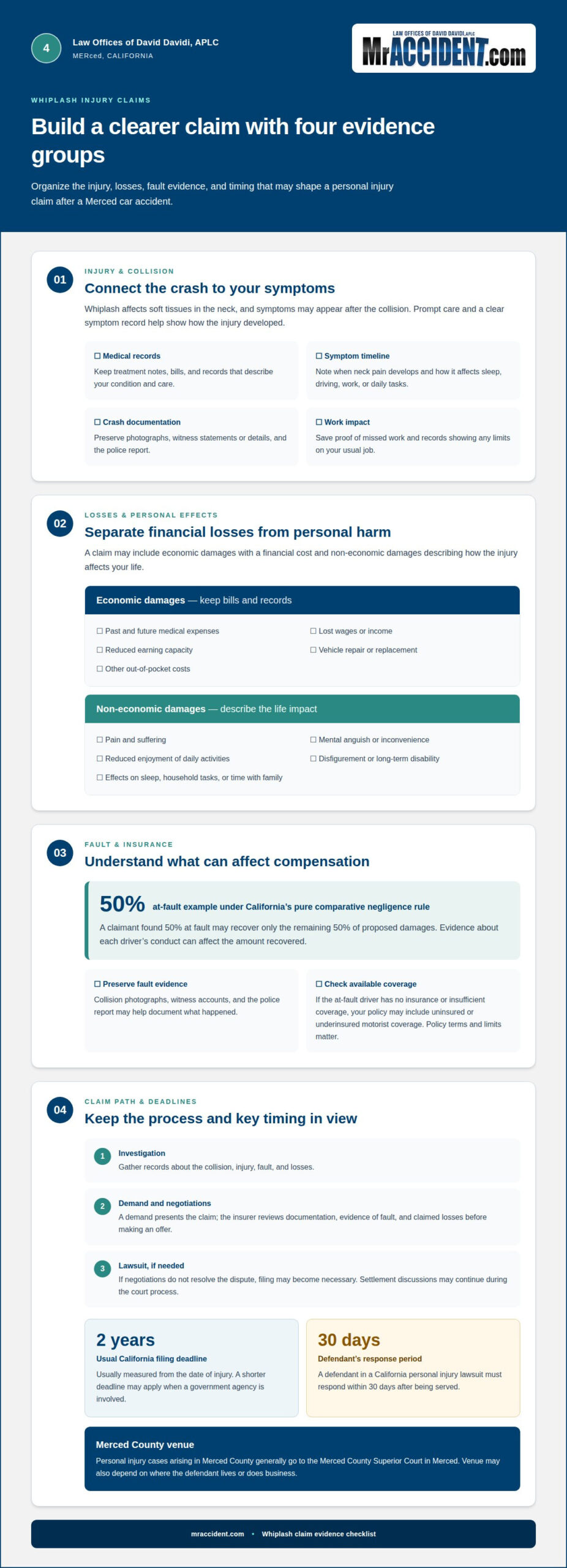
After a car accident in Merced, you may have a personal injury claim if another driver’s negligence caused the crash and your whiplash. Evidence should connect the collision to the injury and your losses. Useful records can include medical notes, photographs, witness statements, and a police report. Seek medical care promptly and record symptoms as they develop, including pain that affects sleep, driving, or work.
Damages may cover financial losses and personal harm. Economic damages can include medical expenses, lost wages, reduced earning capacity, vehicle damage, and other out-of-pocket costs. Non-economic damages may include pain and suffering, mental anguish, inconvenience, and reduced enjoyment of daily activities. Treatment records and proof of missed work, for example, can show how an injury affected your health and income.
A whiplash insurance claim commonly moves from investigation to a demand for payment, followed by settlement negotiations. The insurer may review medical documentation, evidence of fault, and the claimed losses before making an offer. If negotiations don’t resolve the dispute, filing a lawsuit may become necessary. In California, a defendant in a personal injury lawsuit must respond within 30 days after being served, according to California Legislative Information.
California’s usual deadline to file a personal injury lawsuit is two years from the date of injury, according to California Legislative Information. Claims involving a government agency have a shorter deadline. Since missing the applicable deadline can affect your right to sue, identify the crash date and potential defendant early.
California follows pure comparative negligence. If a claimant is found 50% at fault, the claimant may recover only the remaining 50% of proposed damages, according to the California Supreme Court. Evidence about driver conduct can therefore influence the amount recovered, even if the injured person shares responsibility.
Personal injury cases arising in Merced County generally go to the Merced County Superior Court in Merced. Venue may also depend on where the defendant lives or does business. Filing a lawsuit starts the court process, but settlement discussions may continue as the parties address the evidence and damages.
Economic and non-economic personal injury damages
A whiplash claim can include economic damages for financial losses and non-economic damages for personal effects. After a car accident, organize bills, pay records, and treatment information so each claimed loss connects to the collision. An insurer may assess whether the records support the requested amount and show that the crash caused the injury.
Economic damages may include past and future medical expenses, lost wages, reduced earning capacity, vehicle repair or replacement, and other out-of-pocket costs. For example, a worker who misses shifts during treatment can use employer and wage records to document lost income. If neck symptoms limit the person’s ability to do their usual job, evidence of those restrictions may help explain reduced earning capacity.
Non-economic damages address harms without a direct bill, including pain and suffering, mental anguish, inconvenience, disfigurement, or long-term disability. A treatment timeline can show how symptoms affected sleep, household tasks, or time with family. These details provide context for the injury’s impact, beyond the diagnosis alone. A compensation request should distinguish documented expenses from these personal effects.
Fault can change the amount recovered. Under California’s pure comparative negligence rule, a claimant found 50% at fault may recover only the remaining 50% of proposed damages, according to the California Supreme Court. Evidence about how each driver acted in a collision can therefore affect the result, even when another driver also contributed.
Timing matters. In California, an injured person usually has 2 years from the date of injury to file a personal injury lawsuit, according to California Legislative Information. A lawyer can assess the applicable deadline and organize evidence before filing. If a government agency is involved, a shorter claim deadline may apply. An early review of the crash date, injury records, and responsible parties can help preserve options. For help evaluating a car accident injury claim, consider car accident legal representation.
Settlement from Whiplash Injury Due to a Car Accident | Should I Sue for Whiplash?
A whiplash claim may involve negotiations with the at-fault driver’s insurer, your own insurer, or both. The evidence, available insurance coverage, and effects on your ability to work or manage daily tasks can shape what happens next.
Evidence Gathering and Insurance Negotiations
After a Merced collision, preserve scene photographs, witness details, the police report, medical records, and bills. Note the dates of neck symptoms and treatment, and save proof of missed work. An injury lawyer can use these records to present the negligence argument and document losses in a demand to the insurer. Clear documentation also helps assess whether an offer addresses the claimed harm.
If the at-fault driver is uninsured or has insufficient coverage, review your policy for uninsured or underinsured motorist coverage. These provisions may offer a way to seek compensation through your insurer when the other driver’s coverage is absent or inadequate. The policy terms, available limits, and evidence of fault all shape the claim.
Adjusters and Recorded Statements
An insurance adjuster investigates the claim for the insurer and evaluates information about the crash, injury, and requested settlement. The adjuster may ask for a recorded statement early in the process. Before responding, understand the scope of the questions, stick to what you remember, and don’t guess about speed, distance, or symptoms. Separate what you recall firsthand from assumptions, particularly if pain developed after the collision.
Settlement Offers, Settlements, and Trials
Compare an offer with your documented treatment, lost wages, continuing symptoms, and the effect on daily activities. An early payment may leave future losses unresolved if treatment continues. A settlement ends the covered claim under its terms, so understand which claims it releases before accepting. Most auto accident claims settle without going to court, but trial remains an option if negotiations do not resolve the dispute.
Before deciding whether to sue, consider the strength of the evidence, available coverage, and whether the offer accounts for the injury’s documented effects. A car accident lawyer can help evaluate these factors and explain the settlement process.
Whiplash definition and neck soft tissue injuries
The National Institute of Neurological Disorders and Stroke describes whiplash as a neck soft-tissue injury. The term covers injury to the tissues supporting the neck, not just a brief ache after a collision. Rear-end collisions are the most common type of car accident associated with whiplash. A crash can cause whiplash at speeds of 12 miles per hour or less, so vehicle damage alone doesn’t establish whether someone suffered a neck injury.
Symptoms may not appear until days after an accident. Neck pain or stiffness can develop later, so note when each symptom begins and how it changes. Whiplash symptoms can persist for months or more. Seek medical care after a crash, describe your symptoms clearly, and keep your treating doctor informed as they develop.
A practical record links the collision to the injury over time. Note the crash date, first symptoms, later changes, and how symptoms affect everyday tasks. For example, record whether neck discomfort makes it difficult to turn your head while driving or do your usual work. Share these details with your doctor so your medical record reflects the effects you report.
For a California personal injury claim, medical documentation can help show the injury and how it developed. Keep appointment records, treatment instructions, and notes about ongoing symptoms together. Your doctor’s records and your timeline serve different purposes: one documents medical care, while the other captures changes between appointments. Together, they may help explain why symptoms appeared after the collision.
Liability is a separate question from diagnosis. A neck soft-tissue injury does not, by itself, establish which driver caused the accident; evidence about the collision helps address fault. If symptoms began days later or continue for months, organize the dates and records before discussing the claim. Talk with an attorney about a crash-related neck injury and how its documentation may support your next steps.
Law Offices of David Davidi, APLC
Law Offices of David Davidi, APLC represents people injured in whiplash crashes in the Merced area. An attorney oversees each case from start to finish and reviews how the collision happened, the available evidence, your medical records, and the losses you seek to recover. The firm takes on a limited number of cases to provide client-focused representation, helping clarify questions about liability, insurance negotiations, and whether a lawsuit may be appropriate.
If an insurer disputes fault, questions your injury, or offers an amount that does not reflect documented losses, legal guidance can help you understand your options. The firm represents people injured in car, truck, motorcycle, and pedestrian accidents. Discuss the crash and your injury records with an attorney to consider how to proceed.
Contact Law Offices of David Davidi, APLC to discuss your whiplash injury claim.
Choose a Clear Next Step for Your Claim
Deciding whether suing for a whiplash injury in Merced makes sense depends on how the evidence, liability, insurance coverage, and your ongoing needs fit together. Consider what questions remain: Is fault disputed? Does the proposed settlement account for the claim? Could unresolved symptoms affect your next steps? These are useful points to discuss with an attorney, especially if negotiations have stalled or an insurer challenges your claim.
Law Offices of David Davidi, APLC represents people injured in car, truck, and motorcycle accidents. An attorney can discuss your circumstances and explain the legal options relevant to your situation. You don’t need to have every answer before starting the conversation.
Contact Law Offices of David Davidi, APLC to talk through your next step and move forward with greater clarity.
Frequently Asked Questions
What Is Whiplash?
Whiplash is a neck soft-tissue injury associated with a forceful, rapid movement of the head and neck. The term describes an injury, not how severe a collision looked or how much a vehicle was damaged. Symptoms may emerge days after a crash, so a gap between the collision and discomfort doesn’t by itself explain the injury’s cause. Medical evaluation helps document symptoms and care.
How Much Compensation is Available for These Cases?
Compensation depends on the losses supported by evidence, the injury’s effects, available insurance coverage, and each driver’s share of fault. A claim involving continuing treatment and documented time away from work, for example, presents different losses from one involving brief care and no wage disruption. Assess documented financial losses separately from personal effects, and consider how the evidence connects each loss to the collision.
What evidence is needed to prove a whiplash injury claim in California?
Useful evidence links the collision, neck symptoms, treatment, and resulting losses. Build a dated timeline showing when symptoms began, how their impact changed, and when you received medical care. Keep treatment instructions, appointment records, insurer correspondence, and proof of missed work. If a witness saw the crash or its immediate aftermath, save their contact details and note what they observed.
How are whiplash damages calculated, including medical bills, lost wages, and pain and suffering?
Damages are assessed by identifying documented expenses and income losses, then evaluating the injury’s personal effects. Medical bills and wage records help quantify financial losses; evidence of work restrictions can explain reduced earning capacity. Pain and suffering has no bill attached, so records describing changes to sleep, routines, and daily activities provide context. Any share of fault attributed to the claimant can also reduce recoverable damages.
What is the average settlement for a whiplash injury claim in California?
A single average settlement figure cannot reliably predict the outcome of a particular California claim. Relevant factors include treatment needs, documented symptoms, lost income, effects on daily life, evidence of fault, and available insurance limits. A short course of care and a claim involving continuing symptoms raise different considerations. Review the evidence and claimed losses together rather than treating an average as an estimate for your case.
What should I do after a car accident in Merced to protect a whiplash claim?
After a Merced crash, seek medical care promptly and describe your symptoms clearly, even if they seem minor at first. Preserve photographs, the police report, witness information, and medical records. Keep a dated symptom and treatment timeline, save insurer messages, and retain receipts or work records related to the injury. When describing the collision or your symptoms, avoid guessing about details you don’t remember.

Law Offices of David Davidi, APLC is a California – based Personal Injury Law Firm, our Attorney’s provide the representation for your personal injury, accident, product liability, premises liability, and other
negligence resulting in injuries. We treat all clients and cases, large or small, with hands-on care.
Practice Area
© Copyright 2026 Law Offices of David Davidi, APLC. All rights reserved.
Digital Marketing By 