
888-529-0707 call 24-7 we service throughout california
How to Handle Medical Bill Collections After an Accident

Being not at fault doesn’t automatically keep accident-related medical bills out of collections. Knowing how to handle medical bill collections after an accident starts with reading the collection letter, identifying the bill and the amount claimed, and responding promptly. According to the Consumer Financial Protection Bureau, disputing a debt in writing within 30 days after a collector first contacts you can require the collector to pause most collection activity until it verifies the debt.
A pending injury claim may not stop collection efforts, so a collection letter can be stressful even when you expect an insurer to pay. Before responding, identify which coverage may apply and check whether the bill was processed correctly.
This guide explains why accident bills can reach collections, what to know about Michigan payer priority, and what details to review in a collection letter. You’ll also learn how to dispute a bill you believe is inaccurate and when legal help with an accident claim may make sense.
Key Takeaways
- Learn why an accident claim may not stop a medical bill from reaching collections and what records can help clarify the balance.
- Understand how Michigan’s payer priority can affect which coverage is considered for accident-related treatment.
- Know what details to look for in a collection letter before deciding how to respond.
- See when legal help with an accident claim may be useful if billing and collection issues remain unresolved.
How medical collections affect credit while waiting
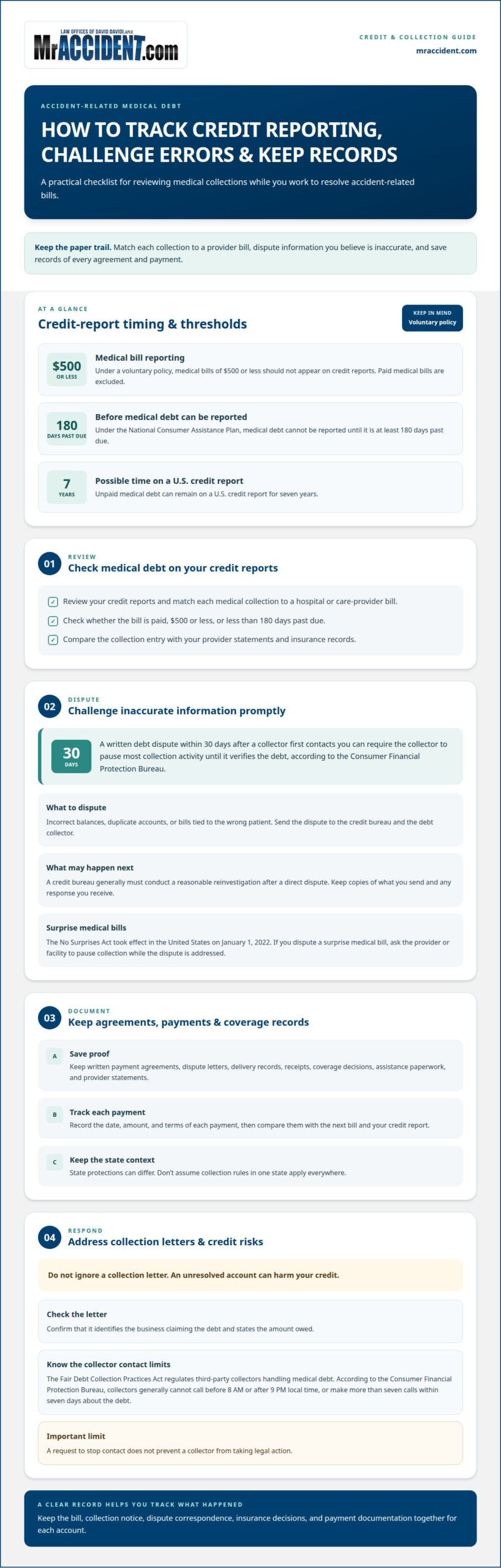
Use these steps to track credit reporting, challenge billing errors, and keep records while you work to resolve accident-related medical debt.
-
Check Medical Debt on Credit Reports
Review your credit reports and match each medical collection to a hospital or care provider bill. Under a voluntary policy, medical bills of $500 or less should not appear on credit reports, and paid medical bills are excluded. Medical debt cannot be reported until it is at least 180 days past due under the National Consumer Assistance Plan. Unpaid medical debt can remain on a U.S. credit report for seven years.
-
Dispute Inaccurate Credit Information
Dispute incorrect balances, duplicate accounts, or bills tied to the wrong patient with the credit bureau and the debt collector. A credit bureau generally must conduct a reasonable reinvestigation after a direct dispute. In the United States, a written debt dispute within 30 days after a collector first contacts you can require the collector to stop most collection activity until it verifies the debt, according to the Consumer Financial Protection Bureau. The No Surprises Act took effect in the United States on January 1, 2022, according to the U.S. Department of Health and Human Services. If you dispute a surprise medical bill, ask the provider or facility to pause collection while the dispute is addressed.
-
Document Agreements and Protect Credit
Save written payment agreements, dispute letters, delivery records, and receipts. Record the date, amount, and terms of each payment, then compare them with the next bill and credit report. State protections can differ, so don’t assume collection rules in one state apply everywhere. Keep coverage decisions and assistance paperwork with the provider’s statements; these records help explain why a charge remains unpaid while an insurer reviews it.
-
Address Collection Letters and Credit Risks
Respond to a collection letter instead of ignoring it; an unresolved account can harm your credit. The Fair Debt Collection Practices Act regulates third-party collectors handling medical debt. Check that the letter identifies the business claiming the debt and the amount owed. Collectors generally can’t call before 8 AM or after 9 PM local time, or make more than seven calls within seven days about the debt, according to the Consumer Financial Protection Bureau. A request to stop contact doesn’t prevent a collector from taking legal action.
Why are my medical bills in collections when the accident was not my fault?
Fault for a crash and responsibility for an unpaid medical bill are separate issues. A pending injury claim doesn’t automatically pause billing or collection activity, including for accident-related care in California.
-
Organize Accident-Related Documents
Gather each medical bill, explanation of benefits, insurance policy, and collection notice. Match every charge to the treatment date and the insurer’s decision. Keep lien notices and any letter of protection with the related account. These documents can show whether a provider expects payment from insurance or a future settlement. Flag charges that appear unpaid despite an insurer’s payment record, and keep copies of everything you send.
-
Check Available Insurance Coverage
If the provider lacks your insurance details, ask it to bill your health insurance or MedPay. An at-fault driver’s bodily injury insurer ordinarily doesn’t pay each bill as it arrives. Instead, it may pay a negotiated lump sum when the injury claim settles. Review policy documents and explanations of benefits to see which coverage was applied, denied, or left pending. This helps distinguish a billing delay from a balance that still needs attention.
-
Understand Why Bills Reach Collections
Medical providers may send unpaid balances to collections after 90 to 180 days, depending on their practices. A pending claim doesn’t automatically stop collection activity on an otherwise valid debt. Meanwhile, the liability insurer may still be evaluating the injury claim, and settlement payment may come later. That timing gap can leave a provider account unpaid even when another party may ultimately bear responsibility for the accident.
-
Take Steps to Prevent Collections
Contact the provider’s billing office when a balance appears unpaid. Ask it to submit the bill to applicable coverage, correct billing errors, or discuss a payment plan. If payment is expected from a future settlement, ask whether the provider will consider a medical lien or letter of protection, and keep any agreement in writing. If collection demands are entangled with an unresolved crash claim, car accident legal representation may help address the injury claim.
Payer priority in Michigan, including PIP, health insurance, workers’ compensation, and MedPay
For an accident in California, available coverage depends on the policies and circumstances involved. Health insurance, auto benefits such as MedPay, and workers’ compensation may each be relevant.
-
Use Insurance for Initial Medical Costs
Review your auto and health insurance documents to identify benefits that may apply to treatment. If you were injured at work, include workers’ compensation claim information in your records. The at-fault driver’s insurer may not pay provider bills as they arrive, so don’t rely on that claim alone to address current charges. Keep explanations of benefits and denial notices to track what each insurer has processed.
-
Ask Providers to Bill Insurance or MedPay
Give the medical provider your health insurance, auto policy, or MedPay details if they weren’t available when care began. Ask for an updated statement after billing, then compare it with the insurer’s explanation of benefits. If a balance remains, ask which coverage was billed and what the insurer decided. This may reveal a missing policy detail or a processing issue to dispute.
- Make a payer list for each treatment bill. Note whether the charge has been sent to health insurance, MedPay, workers’ compensation, Medicare, Medicaid, or another applicable benefit plan. Coverage depends on the accident and each plan’s terms, so don’t assume every benefit applies to every bill. Use provider statements and insurer responses to track each charge and identify any unresolved balance.
- If you don’t have applicable auto coverage or health insurance, ask providers about a payment plan or local financial assistance. A provider may agree to a medical lien and wait for payment from a later settlement. An attorney can explain options involving insurance claims and liens when collection issues remain unresolved. Keep lien documents and payment terms with the related account so the arrangement is clear.
Reviewing a medical bill collection letter
Read the notice carefully, identify the medical debt and collector, then decide whether to pay or dispute the amount. To handle medical bill collections after an accident, first separate the collection issue from the injury claim.
-
Examine the Collection Letter
Identify the business seeking payment, the amount requested, and the medical provider or account involved. Federal law regulates how third-party debt collectors collect medical debt, and the notice must identify the business claiming the debt and the amount owed. Compare these details with your hospital bill, insurance statements, and payment records. Note any mismatch, duplicate charge, or unfamiliar treatment before responding.
-
Determine a Response to the Collection Bill
Contact the collection agency named in the letter to ask about the account and explain any billing issue. If the amount differs from your provider statement, dispute the specific error in writing and keep a copy. The Consumer Financial Protection Bureau says a written dispute within 30 days of the collector’s first contact can require most collection activity to pause until verification. Knowing how to handle medical bill collections after an accident also means responding to the debt itself, not assuming a pending claim stops collection.
- Compare the notice with your claim documents before paying. Check whether the insurer processed the treatment, whether the provider received payment, and whether a balance remains. For example, an explanation of benefits may show an adjustment that the collection amount doesn’t reflect. Send relevant records with a written dispute and keep proof of delivery. If the collector verifies the debt, compare its response with the original billing documents before deciding what to do next.
- Keep a dated record of calls, letters, and any payment agreement. If you agree to pay, request the terms in writing and save receipts alongside the account file. A collection letter can affect your credit and accident claims, so address errors promptly rather than setting it aside. If collection pressure complicates an injury claim, get help with accident-related collection issues.
Law Offices of David Davidi, APLC
The Law Offices of David Davidi, APLC can help you understand how collection issues relate to an unresolved accident claim. If a provider is seeking payment while insurance or settlement questions remain open, an attorney can review the claim, explain your legal options, and help address medical liens or collection communications.
The firm represents people injured in car, truck, motorcycle, and pedestrian accidents. Bring the collection letter and relevant billing or insurance records to explain what remains disputed and how it relates to your injury claim. This legal support can be useful when collection demands continue despite efforts to clarify coverage or payment responsibility.
Contact Law Offices of David Davidi, APLC to discuss your accident-related medical bill concerns.
Take the Next Step With a Clear Plan
A collection notice can make an injury claim harder to manage, but it doesn’t have to determine what happens next. A practical plan for handling medical bill collections after an accident starts by identifying what needs attention first: the bill, a coverage decision, collection activity, or the underlying claim. Keep your records together and address each question in sequence.
If collection demands are complicating your recovery or making it difficult to address your accident claim, legal guidance can help you understand your options and decide on a next step. You don’t have to sort through every issue alone.
Contact Law Offices of David Davidi, APLC to discuss your situation. Taking one informed step can help you move forward with greater clarity and confidence.
Frequently Asked Questions
Can debt collectors legally pursue me while my injury claim is pending?
Yes. A pending injury claim doesn’t automatically prevent collection activity on a valid medical debt. A collector may continue seeking payment and could sue before the claim settles. If the debt or amount is wrong, dispute it in writing within the applicable response period and keep copies of your letter and supporting records. A claim against another driver and a provider’s billing account are separate matters.
Should I use health insurance if someone else caused the accident?
Often, health insurance can help address treatment costs while you pursue an injury claim against the responsible party. The liability insurer may not pay bills as they arrive, so waiting for a settlement could leave provider accounts unresolved. Review your plan’s explanation of benefits and any payment or reimbursement terms. Keep records showing which charges your insurer processed, denied, or left for you to address.
What happens if I don’t pay my medical bill?
An unpaid bill may remain with the provider or be referred to a collection agency. A medical provider may also sue to collect a debt, and a collector can take legal action even if you ask it to stop communicating. If you can’t pay the stated balance, contact the provider’s billing office to discuss a payment arrangement or financial assistance before the account progresses further.
Can I file a complaint against a debt collection company?
Yes. If you believe a collector used improper conduct, preserve the notice, call records, messages, and your written responses. You can submit a complaint to the Consumer Financial Protection Bureau describing what happened, when it occurred, and the resolution you sought. Keep the complaint record with your account documents. A complaint doesn’t replace a written dispute about whether the medical debt is accurate.
Can I ignore the collection letter?
No. Ignoring the notice can leave an incorrect balance unchallenged and allow collection efforts to continue. Read the letter, identify the collector and account, then respond if you dispute the debt or need clarification. Keep a copy of your response and its delivery record. Don’t overlook court papers: a lawsuit has its own deadlines, and a collection letter isn’t a substitute for responding to them.
Does insurance cover all medical costs?
No. Coverage depends on the specific policy, treatment, and claim decision, so a patient may still owe part of a bill. For example, an insurer may process some charges while denying others or applying policy terms that leave a balance. Compare provider statements with explanations of benefits, and ask the insurer to explain a denial or unpaid amount. Auto coverage, health insurance, and workers’ compensation may apply differently.

Law Offices of David Davidi, APLC is a California – based Personal Injury Law Firm, our Attorney’s provide the representation for your personal injury, accident, product liability, premises liability, and other
negligence resulting in injuries. We treat all clients and cases, large or small, with hands-on care.
Practice Area
© Copyright 2026 Law Offices of David Davidi, APLC. All rights reserved.
Digital Marketing By 