
888-529-0707 call 24-7 we service throughout california
Delayed Pain After a Car Accident in Tulare: What to Do

Feeling fine right after a crash doesn’t mean you’re uninjured. Delayed pain after a car accident in Tulare can become noticeable hours, days, or even weeks later, and the body’s stress response may temporarily mask pain. Adrenaline’s pain-masking effect may take up to an hour to wear off, so pay attention to new or worsening symptoms even if you initially felt okay.
It’s understandable to wonder whether a symptom that appears later is connected to the collision. This article explains why pain can be delayed, when to seek medical evaluation, and how to keep clear records of symptoms and treatment. You’ll also learn why a gap in care may prompt questions about an insurance claim, and how explaining the delay and documenting what happened can clarify the timeline of your injury.
Key Takeaways
- Joint pain can appear after a collision, so note new or worsening discomfort and discuss it with a healthcare provider.
- Describe when symptoms began, how they change, and how they affect daily activities during a medical evaluation.
- Keep treatment records and a symptom timeline; a gap in care can prompt questions about how an injury relates to the crash.
- Adrenaline may temporarily mask pain, so feeling okay at first doesn’t mean you should ignore symptoms that appear later.
Delayed Pain After a California Car Accident: What to Do
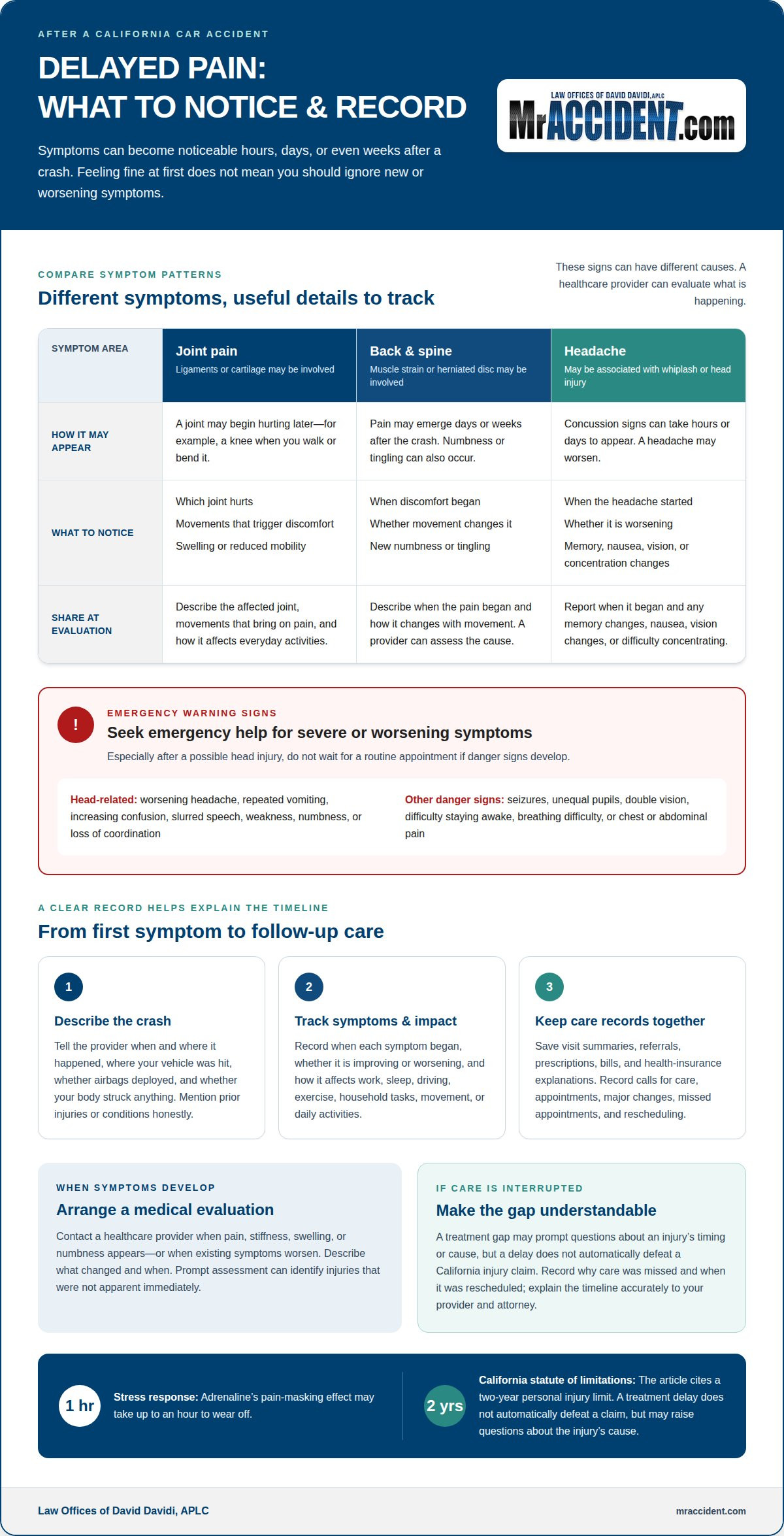
After a California collision, delayed symptoms can include joint pain, headaches, and back pain. Seek emergency help for severe or worsening symptoms, especially after a possible head injury.
Joint Pain and Soft-Tissue Injuries
Joint pain is discomfort around a joint that may involve injured ligaments or cartilage. A sudden impact can strain or damage these tissues, even when pain isn’t immediate. For example, a knee may start hurting later when you walk or bend it. Note which joint hurts, what movements trigger discomfort, and whether swelling or reduced mobility develops. Share these changes during medical evaluation, as they can help explain how the injury affects everyday activities.
Delayed Back Pain and Spinal Injuries
Back pain that emerges days or weeks after a crash may involve a muscle strain or herniated disc. Spinal injuries can also cause pain, numbness, or tingling, so don’t dismiss new symptoms as ordinary soreness. A healthcare provider can evaluate the cause and recommend care. Record when the discomfort began and whether it changes with movement. Prompt assessment is important because untreated spinal injuries can lead to lasting problems.
Headaches may be associated with whiplash, concussion, traumatic brain injury, or other serious conditions. Concussion signs can take hours or days to appear. Tell a healthcare provider when the headache started and whether it is worsening. Also report memory changes, nausea, vision changes, or difficulty concentrating. These details can help the provider assess whether the crash caused a head injury and decide what evaluation is appropriate.
After a possible head injury, seek emergency care for a worsening headache, repeated vomiting, increasing confusion, slurred speech, weakness, numbness, or loss of coordination. Seizures, unequal pupils, double vision, and difficulty staying awake are also danger signs. Severe or worsening confusion, weakness, breathing difficulty, or chest or abdominal pain also calls for emergency help.
California’s personal injury statute of limitations is two years, according to the California Legislature. A treatment delay doesn’t automatically defeat a California claim, but it can raise questions about the injury’s cause. Medical records and a clear symptom timeline can help document when pain appeared and what care followed.
Medical evaluation and treatment documentation
If discomfort develops after a crash, arrange a medical evaluation and describe the collision clearly. Keeping a record of symptoms and care can help establish how your condition changed over time. Delayed pain after a car accident in Tulare deserves attention, even if you felt well at the scene.
Seeking Evaluation as Discomfort Develops
Medical evaluation means having a healthcare provider assess new symptoms and their possible cause. Contact a provider when pain, stiffness, swelling, or numbness appears, or when existing symptoms worsen. For example, note if shoulder discomfort began later and now limits lifting. If you experience delayed pain after a car accident in Tulare, explain when each symptom started and whether it is mild, severe, or changing. Prompt attention can identify injuries that weren’t apparent immediately.
Early Evaluation and Care
Early evaluation is medical assessment soon after symptoms begin, followed by care recommended for your condition. It gives a provider an opportunity to assess symptoms and decide whether further treatment is needed. Early intervention may reduce recovery time and improve outcomes. If a treatment plan is recommended, attend appointments when reasonably possible. If you miss care, record why and reschedule rather than leaving the gap unexplained.
Give the provider a specific account of the crash: when and where it happened, where your vehicle was hit, whether airbags deployed, and whether your body struck anything. Then describe when each symptom began and whether it’s improving or worsening. Mention prior injuries or conditions honestly, and explain how symptoms affect work, sleep, driving, exercise, or household tasks. These details help the provider assess your physical symptoms in context.
Keep a timeline of the crash, your first symptom, your first call for care, appointments, and major changes. Save visit summaries, referrals, prescriptions, bills, and health-insurance explanations together. For example, record when stiffness began, when you called for care, and when you attended the appointment. Note missed appointments and rescheduling. If severe symptoms develop, including breathing difficulty or worsening confusion, seek emergency help instead of waiting for a routine appointment.
How treatment gaps may affect insurance claims
In California, whether health insurance or auto insurance pays depends on applicable policy coverage and how the claim is handled. Keep documenting symptoms and treatment so the timing and course of care are clear.
Documenting Delayed Pain and Treatment
A symptom journal records how delayed symptoms change and affect daily life. Note pain levels, movement, sleep, medication effects, and activities you can’t perform. For example, record whether shoulder pain limits lifting or tingling affects walking. Include when symptoms appear and whether inflammation or discomfort worsens. These details help connect changes in your condition with appointments and treatment, rather than relying on memory later.
Insurance Disputes Over Treatment Gaps
A treatment gap is a period without documented care that may lead an insurer to question the injury’s timing or cause. A delay doesn’t automatically defeat a California injury claim, but it can prompt questions. If symptoms appeared later, explain the timeline accurately to your provider and attorney. If practical circumstances interrupted care, document the reason, the missed appointment, and rescheduling. Don’t stop recommended care solely because an insurer pressures you.
Payment for Delayed Injury Treatment
Payment depends on the terms of the health and auto policies involved, including which coverage applies to treatment. As agencies like SI Insurance note, reviewing policy limits and coverage options carefully can help drivers better understand what protections apply following an accident. Review bills and health-insurance explanations alongside treatment records, and keep them together. Don’t assume one insurer will pay every expense or that a delayed symptom determines coverage. The applicable policy and claim circumstances matter. Clear records help identify what was billed, what was paid, and what remains under review.
Pain management should follow the treating provider’s assessment and recommended plan. Ask how each recommended option addresses your symptoms, including stiffness, restricted movement, or tingling. If the plan includes conservative care, follow the instructions and keep track of your response. Attend appointments when reasonably possible; if you miss one, reschedule and note the reason. That record can show continued attention to care as symptoms and treatment needs change.
How the stress response may mask pain after a collision
After a collision, stress and adrenaline can make it harder to recognize pain or assess an injury’s extent. Adrenaline’s pain-masking effect may take up to an hour to wear off. That can leave someone focused on getting to safety, exchanging information, or checking on passengers instead of noticing physical discomfort. Feeling able to walk away immediately doesn’t establish that no injury occurred.
Symptoms can become noticeable hours, days, or weeks after a crash. For example, someone may initially feel shaken but later notice neck stiffness, a headache, or soreness when turning the steering wheel. Muscles may tighten, and pain can become clearer as the immediate stress response fades. Track when each symptom first appears and how it changes, rather than relying on how you felt at the scene.
The stress response can also make a concussion harder to recognize. Headache, nausea, confusion, or difficulty concentrating may appear after leaving the crash scene. Someone who feels overwhelmed may attribute those changes to stress or fatigue. Don’t assume that’s the cause: describe the crash and new symptoms to a healthcare provider. Seek emergency help for danger signs such as worsening headache, repeated vomiting, slurred speech, weakness, seizure, or difficulty staying awake.
Emotional trauma can continue after the physical collision. Anxiety, low mood, or difficulty concentrating may affect sleep, driving, and daily routines. Note these changes alongside physical symptoms, including when they began and which activities they disrupt. A clear timeline helps distinguish the initial shock from later changes and gives a provider useful context. If a symptom worsens or a new warning sign appears, respond promptly.
If delayed symptoms are complicating your understanding of the crash’s effects, discuss your accident and injury concerns with a legal professional.
Law Offices of David Davidi, APLC
Law Offices of David Davidi, APLC represents people injured in car accidents and helps address legal questions that can follow delayed pain. If symptoms appeared after the crash or a gap in treatment has raised questions about your claim, legal guidance can help you understand how the timeline, medical records, and insurance communications fit together.
The firm also represents people injured in truck, motorcycle, and pedestrian accidents. You can discuss the collision, the symptoms that developed, and the records you have gathered. Contact Law Offices of David Davidi, APLC to talk about your situation and possible next steps.
Choose Your Next Step With Confidence
Delayed pain can make the days after a crash feel uncertain, but you can take the next step without having every answer. Keep your notes and records organized, and make decisions based on your health and the information available to you. If delayed pain after a car accident in Tulare has left you unsure how to approach an insurance claim, legal guidance can help you understand the issues involved and what information may matter.
Law Offices of David Davidi, APLC can discuss your concerns and help you consider a path forward. You don’t need to resolve every question before starting that conversation. Reach out to Law Offices of David Davidi, APLC to discuss your situation. Taking a thoughtful next step can help you move forward with greater clarity.
Frequently Asked Questions
How Long After a Car Accident Can Injuries Appear?
Symptoms may appear hours or days after a crash, and some can emerge weeks or even months later. For example, neck stiffness may develop after the initial shock fades, while other discomfort becomes noticeable as normal activity resumes. A low-speed collision doesn’t rule out injury. If a new symptom appears, note when it began and discuss it with a healthcare provider.
How Can You Tell if Delayed Symptoms Are Serious?
Symptoms need urgent attention when they’re severe, worsening, or include warning signs of a head injury. Repeated vomiting, slurred speech, seizures, weakness, loss of coordination, or difficulty staying awake warrant emergency care. A headache that keeps worsening also deserves prompt attention. Don’t try to diagnose the cause yourself; describe what changed and when it started to medical professionals.
How Can a Lawyer Help With a Delayed Injury Claim?
A lawyer can help assess how medical records, the crash circumstances, and symptom timing relate to an injury claim. For example, an attorney can review an insurer’s questions about why treatment began later and help organize available documentation. An attorney can also explain claim issues and communicate with insurers on your behalf. Legal representation doesn’t replace medical care or guarantee a particular result.
How Do You Prove an Injury With Delayed Symptoms?
Build a consistent record connecting the collision, your symptoms, and the care received. Keep medical visit summaries, referrals, prescriptions, and bills; record symptom changes and missed work. Photos of vehicle damage, witness details, and the police or CHP report can also preserve crash evidence. For example, a dated note about when pain first affected sleep may add context to later medical records.
How Long Do You Have to Act?
California’s personal injury statute of limitations is two years, according to the California Legislature. That deadline makes it important to understand the timing of a claim even when symptoms emerged later. Keep records and seek legal guidance about how the rule applies to your circumstances. Don’t assume a delayed diagnosis automatically changes the deadline or removes the need to act promptly.
How Long Should You Monitor Symptoms After a Car Accident?
Watch for new or worsening symptoms for at least several days, and continue paying attention during the following weeks. Symptoms can change as you return to ordinary activities such as driving, working, or exercising. Record meaningful changes rather than relying on memory. If pain develops or existing symptoms worsen, contact a healthcare provider; emergency warning signs call for immediate emergency care.

Law Offices of David Davidi, APLC is a California – based Personal Injury Law Firm, our Attorney’s provide the representation for your personal injury, accident, product liability, premises liability, and other
negligence resulting in injuries. We treat all clients and cases, large or small, with hands-on care.
Practice Area
© Copyright 2026 Law Offices of David Davidi, APLC. All rights reserved.
Digital Marketing By 