
888-529-0707 call 24-7 we service throughout california
Merced Attorney for Falls From a Height and Injury Damages
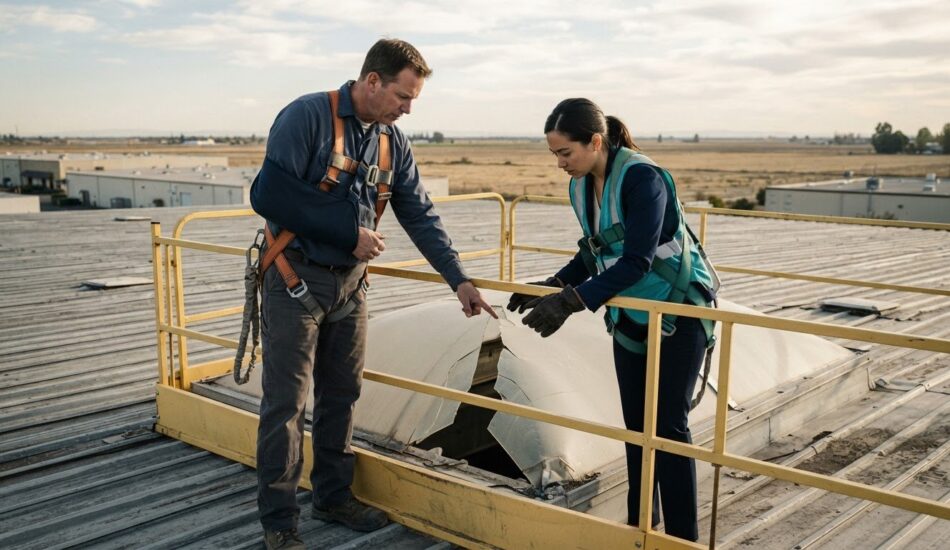
A Merced attorney for falls from a height can assess whether another party’s negligence contributed to the fall, identify who may be responsible, and explain what damages could be available. In California, an injured person generally has two years from the accident date to file a personal injury lawsuit, according to California Legislative Information. Evidence and deadlines can affect how a claim moves forward.
Choosing a lawyer means finding someone who can explain how the fall happened, what evidence may establish responsibility, and how the injury has affected your life. This article covers what a lawyer may examine, how evidence is gathered, which parties could be involved, and what factors shape an assessment of damages. It also outlines practical criteria for choosing legal representation in Merced, so you can understand the process and next steps without managing the claim alone.
Key Takeaways
- Learn which financial and personal harms may factor into an injury damages assessment.
- See how a lawyer can gather evidence and handle insurer negotiations to support your claim.
- Understand how contractors, property owners, or manufacturers may share responsibility for a fall.
- Explore what California property owners must do to address hazards or warn visitors.
Economic and non-economic damages
A fall from a height can affect both your finances and daily life. Economic damages include measurable losses such as medical bills, rehabilitation expenses, assistive equipment, and lost wages. Treatment records, invoices, pay statements, and records of missed work can help show how those losses relate to the accident. Future care needs and reduced earning ability may also matter if the injuries affect your work or independence.
Non-economic damages address harms without a direct bill. These may include physical pain, emotional distress, and reduced enjoyment of ordinary activities. For example, a worker who can no longer perform familiar tasks may face both lost income and personal disruption. A damages assessment considers the injury’s effects, the treatment received, and how those effects change over time. The Centers for Disease Control and Prevention identifies falls as the leading cause of unintentional injury death among adults aged 65 and older. In 2021, 38,742 older adults died from unintentional falls, a rate of 78.0 per 100,000 population, according to the Centers for Disease Control and Prevention.
There is no single average settlement for a fall-from-height injury in California. A claim’s value depends on documented losses, injury severity, expected treatment, time away from work, and evidence of responsibility. Insurance companies may consider these details when evaluating a settlement. A careful review focuses on records showing financial losses and effects on daily life, rather than relying on a broad average.
For workplace falls, safety rules can also be relevant to liability. OSHA regulation 1910.29 requires guardrails, safety nets, and personal fall arrest systems for employees working at heights, according to the Occupational Safety and Health Administration. If a California public entity may be responsible, a claim must be presented to that entity within six months under Government Code section 911.2, according to California Legislative Information. Those distinct requirements make it important to identify the worksite, potentially responsible parties, and applicable deadlines early.
How a lawyer gathers evidence and handles insurance negotiations
Evidence should show how the fall happened, what hazard existed, and how the injuries resulted. A Merced attorney for falls from a height can gather scene photographs, incident reports, witness statements, maintenance logs, and available surveillance video. These records may help show whether a dangerous condition existed or inspections and safety measures were inadequate. Medical records can connect the fall to diagnoses, treatment, and recovery needs.
At an initial consultation, a lawyer can build a timeline from the incident report, work records, and treatment history. They may contact witnesses while their recollections are clear and request relevant records from property managers or employers. Photographs can document the location, site conditions, and warning signs. If the scene changes, earlier images or video may preserve details that could otherwise disappear. A Merced attorney for falls from a height can use this evidence to assess how the event unfolded.
Experts can address technical questions that photographs alone cannot resolve. A safety professional may assess the worksite setup, access route, or fall-protection equipment. An engineer may examine how a platform, ladder, or other structure failed. Medical experts can explain the injuries and their connection to the fall. A lawyer can compare these findings with witness accounts and records to assess whether the evidence supports negligence.
During insurance negotiations, the lawyer organizes the evidence into a clear account of fault and injury. An incident report may establish when the fall was reported; maintenance records may show how the area was managed. An insurer’s early offer may come before the injury’s full effects are understood, so the lawyer evaluates it against available records and documented needs. A consultation can clarify which evidence matters. You can discuss evidence for a fall claim and how it may support negotiations.
Potentially responsible contractors, property owners, and manufacturers
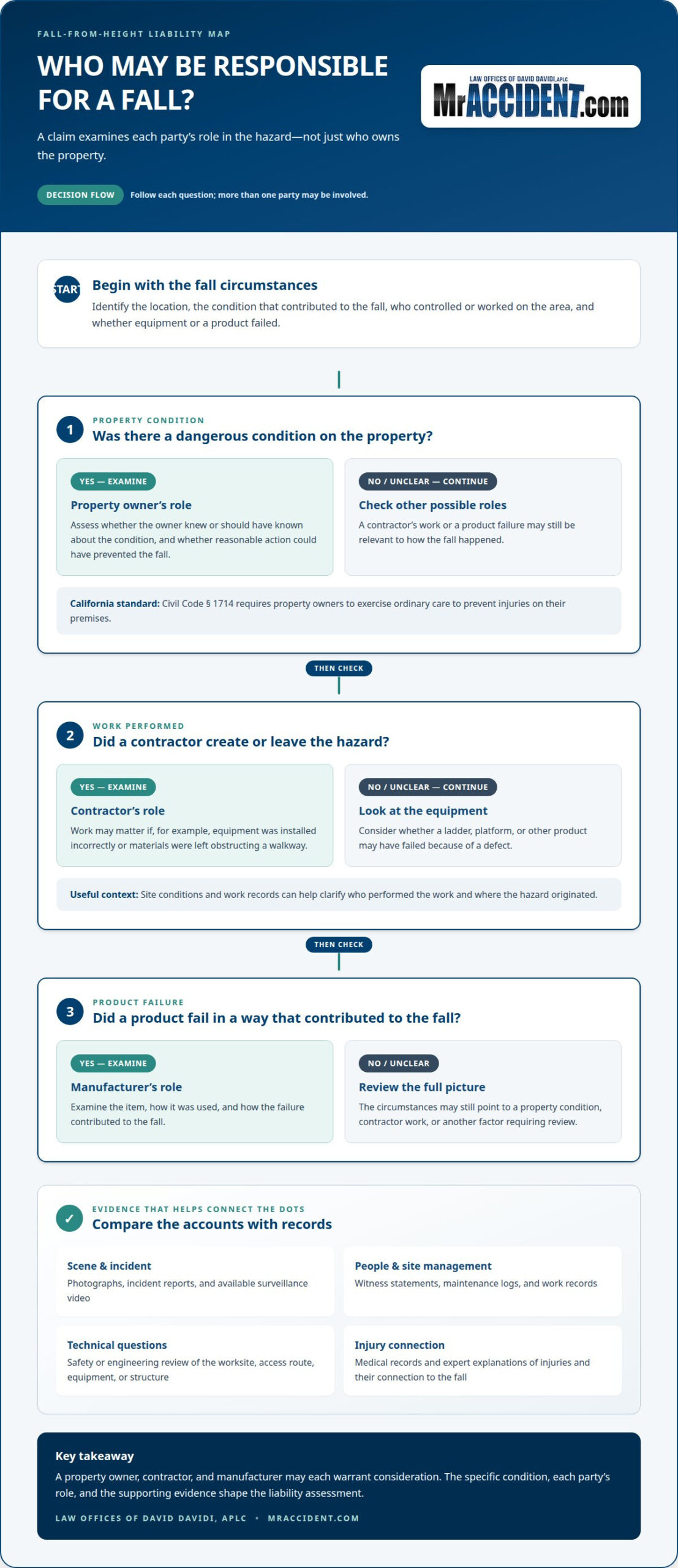
A fall at a construction site may involve several potentially responsible parties. A property owner may have failed to address a hazard, while a contractor’s work may have created or left it in place. An unsecured platform or unsafe access route, for example, could raise questions about who controlled the area and who performed the work. A personal injury claim examines each party’s role instead of assuming the property owner alone caused the accident.
Property-owner premises liability focuses on the property’s condition and the owner’s conduct. California Civil Code § 1714 requires property owners to exercise ordinary care to prevent injuries on their premises. A lawyer assesses whether a dangerous condition existed, who knew or should have known about it, and whether reasonable action could have prevented the fall. Those questions help connect alleged negligence to injuries, medical bills, and a request for compensation.
A contractor’s responsibility may depend on the work performed and where the hazard originated. If a contractor installed equipment incorrectly or left materials obstructing a walkway, work records and site conditions may help clarify responsibility. A manufacturer may also be considered if a ladder, platform, or other product failed because of a defect. Product-related claims require examining the item, how it was used, and how the failure contributed to the fall. Settlement discussions may consider evidence connecting each party to the injury.
For a fall in Merced, premises liability is assessed under California law and in light of the specific property involved. A lawyer can distinguish between a condition created by a contractor, a hazard the property owner could address, and a product failure that may implicate a manufacturer. If a contractor leaves an unstable platform on a property, for example, responsibility may depend on who supplied and installed it and who controlled access. Identifying those relationships helps focus a California fall case on the parties whose actions may have contributed to the injury and potential recovery.
Property owners’ duties to maintain safe premises or warn of hazards
California Civil Code § 1714 requires property owners to exercise ordinary care to prevent injuries on their premises. In practice, a property’s condition matters: a damaged stair, loose railing, or slick floor may create a fall hazard. The owner’s ability to address the condition or warn visitors can be relevant when evaluating whether reasonable care was exercised. The details depend on the property and the incident.
Notice is often central to showing how a hazard went unaddressed. A lawyer may examine when the condition appeared, whether an inspection could have found it, and whether anyone reported it before the fall. A maintenance entry about a leaking pipe, for example, may help establish that a wet floor was known. Witness accounts, inspection records, repair requests, and photographs can help establish a timeline of the hazard and the property owner’s response.
Weather can also affect property conditions. Wind may blow debris onto a walkway, while fog can reduce visibility around stairs or elevated access points. Rain may leave floors wet, and ice or snow can create slipping risks where those conditions occur. A claim assessment considers the specific hazard, its location, how long it remained, and what steps the property owner took. A weather report or dated photograph may help document conditions at the time of the fall.
For a fall from height, the review may include stairways, balconies, ladders, loading areas, and access routes. The lawyer can compare the scene and available maintenance records with the account of how the incident happened. That helps distinguish an unexpected event from a hazard that reasonable care could have addressed. If a dangerous condition on someone else’s property caused your injuries, discuss your premises liability claim and the evidence that may help establish notice.
Law Offices of David Davidi, APLC: Slip and Fall Legal Representation
Law Offices of David Davidi, APLC provides Slip and Fall Legal Representation for people injured by hazardous property conditions. If a fall from height involved unsafe premises, the firm can assess the circumstances, review evidence, and help identify potentially responsible parties. This review can clarify how the property conditions and injury records may support a personal injury claim.
Consider reaching out for guidance on next steps, an insurance claim, or how damages may relate to your injuries. You can discuss what happened, where the fall occurred, and how it has affected your work and daily activities. The firm also represents people injured in car, truck, and motorcycle accidents.
Contact Law Offices of David Davidi, APLC to discuss your fall injury and possible legal representation.
Take the Next Step Toward Clarity
The next step is a focused conversation about how the fall happened and what has changed since. A Merced attorney for falls from a height can explain which details may matter to a potential claim and what the process could involve. You do not need to organize every record before seeking legal guidance. Start with the basic circumstances, any immediate concerns, and the questions on your mind.
That conversation can help bring structure to a difficult situation. You can discuss the accident’s impact on your health, work, and daily responsibilities, then learn what information may help assess your options. A careful review focuses on your circumstances rather than assumptions about what a claim should look like.
If you’re ready to talk through your situation, contact Law Offices of David Davidi, APLC. Taking that first step can help you move forward with greater clarity.
Frequently Asked Questions
What criteria should I consider when hiring a Merced fall-from-height injury lawyer?
Look for a lawyer who can explain how they will investigate the fall, assess potential liability, and communicate about your case. Ask who will oversee the legal work and how the lawyer will evaluate site records, witness accounts, and medical documentation. A useful discussion should address your specific accident, identify unanswered questions, and clarify what information may be needed to assess your options.
What if the property owner claims I was clumsy or not paying attention?
An accusation alone does not explain how the fall happened. A lawyer can compare it with the physical scene, witness accounts, photographs, warning signs, and records about the property’s condition. Evidence of a broken handrail or an obscured hazard, for example, may provide important context. Be candid about what you remember, including where you were looking, so your account can be assessed against the available evidence.
What can a Merced, California fall-from-height injury lawyer do?
A lawyer can assess the circumstances of a fall, identify potentially responsible parties, and explain how the evidence relates to a potential injury claim. This may include examining who controlled the site, what work was underway, and whether a contractor, property owner, or product played a role. In Merced, share the location and a clear account of the incident so the lawyer can identify records that may help clarify responsibility.
How can a Merced construction accident attorney assess fall protection?
A construction accident lawyer can examine the worksite setup, relevant records, and accounts from people who saw the fall. OSHA regulation 1910.29 concerns guardrails, safety nets, and personal fall arrest systems for employees working at heights. The lawyer can assess how the equipment and work conditions relate to the incident, while distinguishing safety-rule evidence from the separate question of which parties may be legally responsible.
Can I sue a third party for a workplace fall in California?
Potentially, if someone other than your employer contributed to the fall. A property owner, contractor, or product manufacturer may warrant investigation if their conduct or equipment played a role. A lawyer can examine who controlled the work area, what task was underway, and whether records or witness accounts connect another party to the hazard. Responsibility depends on the facts of the incident.
What is the California fall injury statute of limitations for a personal injury claim?
California generally gives an injured person two years from the accident date to file a personal injury lawsuit, according to California Legislative Information. A claim against a California public entity has a different requirement: it must be presented to that entity within six months under Government Code section 911.2, also according to California Legislative Information. Identifying whether a public entity is involved can therefore affect which deadline applies.

Law Offices of David Davidi, APLC is a California – based Personal Injury Law Firm, our Attorney’s provide the representation for your personal injury, accident, product liability, premises liability, and other
negligence resulting in injuries. We treat all clients and cases, large or small, with hands-on care.
Practice Area
© Copyright 2026 Law Offices of David Davidi, APLC. All rights reserved.
Digital Marketing By 