
888-529-0707 call 24-7 we service throughout california
Average Time to Settle a Car Accident in California 2026

The average time to settle a car accident case in california 2026 depends less on a calendar estimate and more on whether the claim is ready to resolve. It’s understandable to want a date, especially when medical bills are arriving or an insurer is pressing you to accept an offer. But settling before your injuries and future care are understood can leave important losses unaccounted for.
There’s no guaranteed timeline for every California car accident claim. A case involving clear fault and a settled course of treatment may move more quickly. Serious injuries, disputed responsibility, multiple parties, or a lawsuit can add time. Some delay reflects necessary investigation and medical documentation; other delays may warrant a closer look.
This guide explains the main stages of a settlement, what can speed up or slow down progress, and practical ways to protect your claim while it moves forward. You’ll learn why case readiness matters and how attorney guidance can help you make informed decisions without rushing toward a final release.
Key Takeaways
- The average time to settle a car accident case in california 2026 can’t be pinned to one reliable statewide figure; the claim’s facts and readiness shape its timeline.
- Investigation, medical documentation, negotiations, and payment generally follow an order, although some steps can overlap.
- A quick offer isn’t automatically a fair one. Consider whether the full impact of your injuries is understood before deciding.
- Keep organized copies of medical records, expenses, and communications so you can track progress and respond to requests.
- Disputed fault, serious injuries, multiple parties, or unclear coverage may be reasons to seek legal guidance about your options.
How Long Does It Take to Settle a Car Accident Case in California?
There’s no universal California deadline for resolving a car accident settlement, and no single timeline can reliably predict when an individual claim will settle. The average time to settle a car accident case in california 2026 is not a dependable forecast unless it comes from a clearly sourced dataset that explains which claims it counted and how timing was measured. A claim may resolve through negotiations, or take longer if important facts remain disputed or a lawsuit becomes necessary.
California sets deadlines for filing certain lawsuits, but those are not deadlines for insurers to settle claims. Don’t mistake a legal filing limit or an insurer’s claim-handling step for a promise that settlement funds will arrive by a particular date.
What does an average settlement timeline actually mean?
An average, usually the mean, is calculated by adding the measured case durations and dividing by the number of cases. A small number of very long cases can pull it upward. The median is the midpoint: half the cases took less time and half took more. It can better describe a typical case when durations vary widely, but it still can’t tell you how long your claim will take.
A benchmark is meaningful only when its source identifies the population studied, the period covered, and what counts as “settled.” For example, a dataset of insurer-reported claims may not represent lawsuits or every type of injury claim. Without a verified source and those details, a specific 2026 average or median would suggest more certainty than the evidence supports.
Why can two California claims take different amounts of time?
Consider two crashes. In one, the available records and witness accounts consistently indicate who caused the collision, and the injured person’s treatment needs are becoming clear. In another, the drivers dispute what happened, several parties may share responsibility, or medical providers are still evaluating ongoing symptoms. The second claim needs more work before responsibility and the claim’s value can be assessed with confidence.
Injury recovery affects readiness, too. Settling before the medical picture is clear may make it harder to account for continuing treatment or lasting effects. Evidence matters as well: photographs, witness details, crash reports, and medical documentation can help establish what happened and how the collision affected you. If key records are missing or fault is contested, gathering and reviewing evidence can add time.
If negotiations don’t resolve the dispute and a lawsuit is filed, the court process adds another variable. Scheduling depends on the court and the case, so local calendars may affect timing. Without verified, current data for a specific court, it’s not responsible to promise how long that stage will take.
Settlement timing follows case readiness: the clearer the evidence, responsibility, and injury outlook, the better informed the parties can be about resolving the claim. A careful review may take longer than accepting an early offer, but speed alone doesn’t show whether a settlement accounts for the claim’s full impact.
What Are the Main Stages of a California Car Accident Settlement?
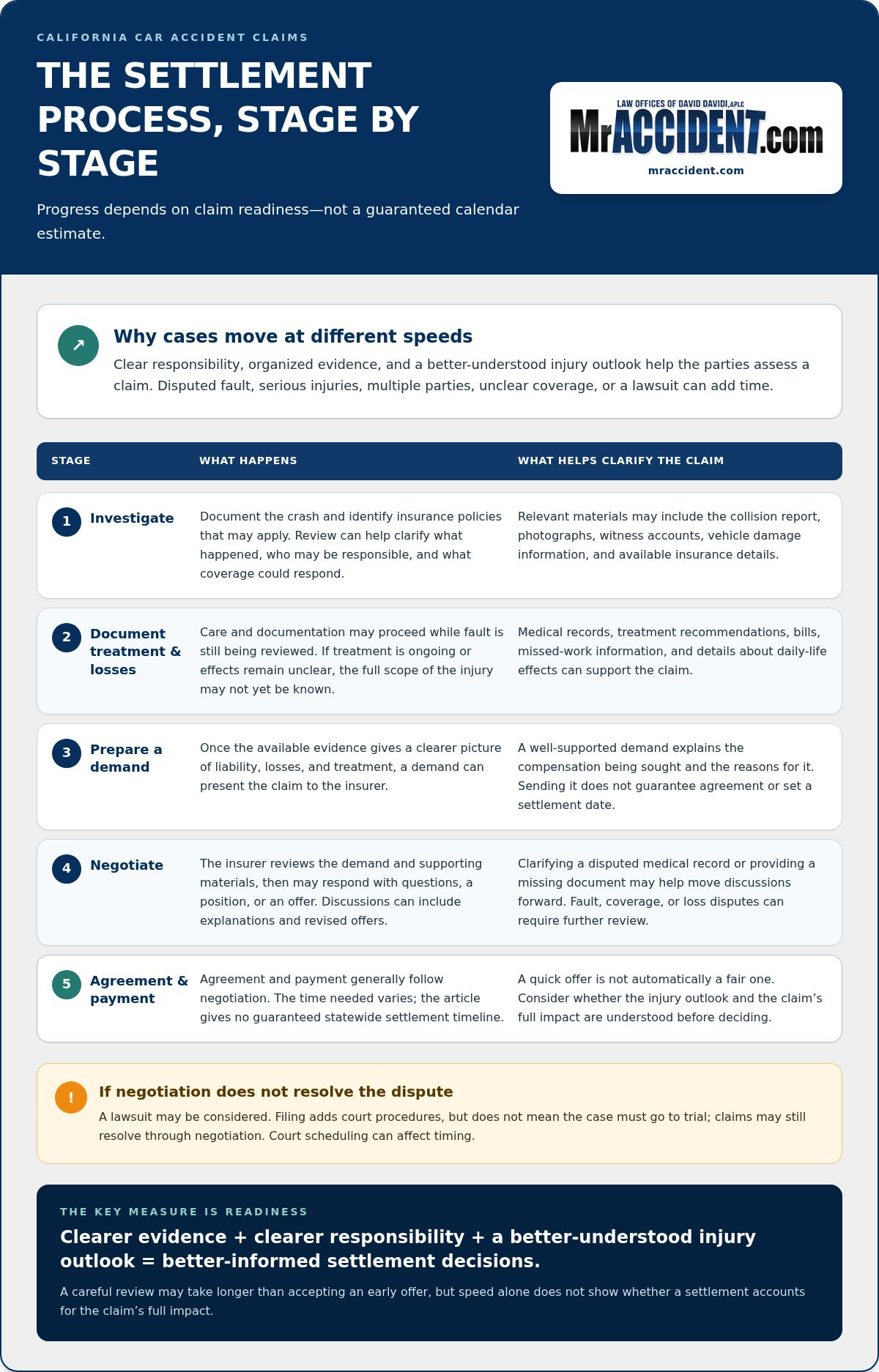
A settlement usually moves through investigation, evidence gathering, demand and negotiation, agreement, and payment. These steps can overlap. Medical records, for example, may arrive while fault is still being reviewed. The information needed to move forward varies by claim, so the stages don’t take the same amount of time for everyone.
Investigation, treatment, and assembling the demand
Early work often involves documenting the crash and identifying the insurance policies that may apply. Relevant materials can include the collision report, photographs, witness accounts, vehicle damage information, and available insurance details. These records can help clarify what happened, who may be responsible, and what coverage could respond. The California Department of Insurance’s Automobile Insurance Guide explains auto coverage and the claims process from a consumer perspective.
In parallel, the injured person may be receiving care and documenting how the injury affects daily life. Medical records, treatment recommendations, bills, and information about missed work can help support the claim. If treatment is ongoing or the likely effects remain unclear, the evidence may not yet show the full scope of the injury. Sending a demand before the supporting information is ready can leave important questions unanswered.
Once the available evidence gives a clearer account of liability, losses, and treatment, a demand can present the claim to the insurer. A well-supported demand identifies the compensation being sought and the reasons for it. It gives the insurer information to review, but doesn’t guarantee agreement or set a settlement date.
Negotiation, lawsuit decisions, and settlement payment
The insurer reviews the demand and supporting materials, then may respond with questions, a position, or an offer. Negotiation can involve an exchange of explanations and revised offers. Clarifying a disputed medical record or providing a missing document may help move discussions forward. Disagreements about fault, coverage, or the extent of losses can require further review.
If negotiation doesn’t resolve the dispute, a lawsuit may be considered. Filing changes the process and can add court procedures, but it doesn’t mean the case must go to trial. Claims may still resolve through negotiation while litigation is underway. The decision depends on the evidence, the issues in dispute, and the available options for pursuing the claim.
Agreeing on settlement is not the same as receiving the money. After the parties reach agreement, settlement paperwork, including a release, must be completed. The insurer then processes payment under the applicable rules; California regulations generally require payment within 30 calendar days after acceptance of a settlement. The release can close the claim, so understand its terms before signing. Each milestone requires its own steps, even after negotiations appear complete.
Knowing which stage your claim is in can make updates easier to interpret. If you need help understanding the evidence, negotiations, or next steps, California car accident claim guidance can help you assess your options.
What Can Delay a Car Accident Settlement, and Does Faster Mean Better?
A settlement may take longer because the people involved still need answers about fault, insurance coverage, or the injury’s effects. A delay alone doesn’t prove an insurer is acting improperly. Identify what is outstanding, who needs to provide it, and whether the next step is clear. That context can help distinguish ordinary claim work from a problem that may need attention.
Common reasons negotiations take longer
Some delays have a concrete explanation: crash accounts conflict, records are incomplete, several drivers or other parties may share responsibility, or the available insurance coverage needs clarification. Each issue can affect what evidence is needed and how the claim is evaluated. For example, an insurer may ask for a missing treatment record to review a claimed expense. A specific request differs from silence, although unanswered requests or unclear updates can make it harder to understand progress.
- Disputed fault: Conflicting accounts, witness statements, or other evidence may need review before responsibility can be assessed.
- Multiple parties: More than one driver, insurer, or potentially responsible party can complicate communication and allocation of responsibility.
- Incomplete documentation: Missing crash, medical, expense, or insurance records may leave questions about the facts or losses.
- Unclear injury outlook: If treatment is ongoing, the available information may not yet show the injury’s longer-term effects.
These factors don’t establish that an offer is unfair or that anyone is deliberately delaying a claim. They explain why a claim may need further investigation or documentation. Ask what information remains outstanding and what event or document would allow the review to move ahead. Keep a written record of requests and responses so you can follow up with specific questions.
What to consider before accepting an offer
Speed can bring relief, especially when bills and uncertainty are weighing on you. But the quickest offer isn’t automatically the best choice, and waiting doesn’t guarantee a higher settlement. The central question is whether you understand the offer and what it resolves. Compare its terms with the available records, expenses, injury information, and any unresolved questions about responsibility or coverage.
Read the release carefully before signing. A release can end claims within its scope, and a signed settlement is generally final. If your condition later worsens, you may not be able to seek additional compensation for claims you released. Understand which claims and parties the document covers, what payment is included, and whether any issues remain unresolved.
If the offer arrives before you understand the injury’s impact, or if fault, coverage, or the release language is confusing, pause to get the terms explained before deciding. A California car accident attorney can review the evidence and explain available options. The goal isn’t to prolong a claim without reason. It’s to make an informed decision rather than letting pressure for a quick resolution decide for you.
How to Keep a California Car Accident Claim Moving
You can’t control every insurer response, investigation, or court schedule. You can make it easier to answer questions and spot avoidable gaps. A clear record of what happened, what was requested, and what you’ve provided can help you and the person handling your claim understand the next step. These habits won’t guarantee a faster result, but they can reduce confusion and prevent missing information from becoming an unnecessary obstacle.
Records and updates that help clarify the claim
Keep one organized file, digital or on paper, and save copies rather than relying on memory. Include documents related to the crash, your treatment, expenses, and insurance communications. A simple log with dates and brief notes can help you track requests, submissions, and responses.
- Crash records: Save photographs, witness contact details, the collision report, and any insurer claim numbers or correspondence.
- Medical information: Keep records and bills you receive, along with appointment dates and updates from your providers.
- Expenses and impact: Record accident-related costs and any work or daily activities affected, keeping receipts or other supporting documents.
- Claim communications: Note who contacted you, when they did, what they requested, and how you responded.
Be accurate and consistent. Don’t alter records or guess at details you can’t recall. If you discover a mistake or receive new information, communicate the correction clearly. Share relevant updates and requested documents with the representative handling the claim, and keep a copy of what you send. For a broader overview of the attorney’s role and how legal guidance can support a claim, see this car accident attorney guide.
When a delay deserves a closer look
A quiet stretch doesn’t automatically mean something is wrong. Start with a focused question: What specific information, review, or decision is still outstanding, and who is expected to address it? If you’ve sent requested material, refer to the date and document in your follow-up. That gives the recipient a clear point to check and creates a useful record of your effort.
If repeated, documented requests go unanswered, or you receive conflicting explanations about what is holding up the claim, consider getting legal guidance. An attorney can review the communications, explain the available options, and help identify whether a genuine issue needs attention. The questions to ask a personal injury lawyer can help you prepare for that conversation. If you’re unsure what a delay means in your situation, discuss your California car accident claim with an attorney.
Organized records and clear follow-ups won’t determine the average time to settle a car accident case in california 2026. They can help you understand what remains unresolved and make informed decisions as the claim progresses.
When Should You Get Legal Guidance About a California Settlement Timeline?
Legal guidance may be useful when you’re unsure what is holding up a claim or what decision comes next. Disputed fault, serious injuries, multiple parties, and unclear insurance coverage can all raise questions that affect how a claim is evaluated. You don’t need to wait until a dispute becomes a lawsuit to ask for help understanding your options.
A lawyer can review the available evidence, explain what remains unresolved, and help you understand how different choices may affect your claim. That doesn’t guarantee a faster settlement or a particular result. It can give you a clearer basis for deciding how to respond to an insurer, what information to gather, and whether an offer or proposed release addresses your concerns.
How legal representation can help clarify next steps
An attorney can assess evidence about how the crash happened, review records supporting your losses, and identify questions about responsibility or insurance coverage that may need answers. If the insurer has requested additional information, counsel can help you understand what the request relates to and how it fits into the claim. Direct access to experienced attorneys can also help you discuss case developments with a legal professional who can explain your options in plain language.
That review can be particularly valuable if different parties give conflicting accounts, the full impact of serious injuries is still being documented, or you’re being asked to sign a release you don’t understand. Legal guidance can help you weigh the available information without promising that the process will move faster or that an insurer will change its position.
What to expect when discussing your case
A concise timeline can make an initial conversation more useful. Note the crash date and location, what you remember about the collision, the treatment you’ve received, insurer communications, and any outstanding requests or offers. Bring or organize relevant records if available, such as the collision report, photographs, medical documents, expense records, and letters or emails from the insurer. You don’t need to have every answer before asking questions.
The Law Offices of David Davidi, APLC represents car accident victims throughout California, including Los Angeles, Fresno, Modesto, Bakersfield, Stockton, Tulare, Visalia, Merced, and Riverside. The firm works on a contingency-fee basis: there are no upfront legal fees, and the fee is tied to a successful recovery.
If you’re uncertain about what is delaying your claim, what an insurer’s request means, or how to evaluate a proposed settlement, you can discuss your California car accident claim with an attorney. The average time to settle a car accident case in california 2026 may offer general context, but reviewing your specific facts helps clarify the next steps available to you.
Take the Next Step With a Clear Plan
You don’t need to predict the exact average time to settle a car accident case in california 2026 to make a useful decision today. Start with what you can clarify: which issue is unresolved, what information could address it, and what choices you may need to consider next. A focused conversation about those questions can help turn uncertainty into a practical plan for your claim.
If you’re weighing an insurance offer, waiting for an update, or unsure how a delay affects your options, the Law Offices of David Davidi, APLC can discuss your California car accident claim. The firm provides car accident representation throughout California, with no upfront legal fees under its contingency-fee arrangement. The fee is tied to a successful recovery, but no particular result or timeline is guaranteed.
Discuss your California car accident claim with our firm and take an informed step forward. Get clear on your options as you decide what comes next.
Frequently Asked Questions
How long does a car accident settlement usually take in California?
There’s no dependable statewide timeline that predicts when an individual claim will settle. The average time to settle a car accident case in california 2026 isn’t a useful personal estimate unless it’s based on a clearly sourced study of comparable claims. For your own claim, ask what milestone is next and what information is still needed. For example, an insurer may be waiting for a record or clarification before it can evaluate a demand.
Can a California car accident case take more than a year to settle?
Yes. A case can take more than a year if the parties dispute responsibility, the injury evidence needs further development, or negotiations don’t resolve the claim and litigation follows. A lawsuit can involve steps such as exchanging evidence and taking depositions, with timing affected by the issues and court schedule. If your case has passed a year, ask what specific work remains and whether there’s a clear plan for addressing it.
What happens if the insurance company is taking too long to respond?
Ask for a status update in writing and keep a copy, noting when you submitted the claim or requested information. California’s Fair Claims Settlement Practices Regulations generally require insurers to acknowledge a claim within 15 calendar days and accept or deny it within 40 days after receiving proof of the claim. If the insurer needs more information, ask what is missing. These are claim-handling deadlines, not a promise that your case will settle by then.
Should I wait until my medical treatment is finished before settling?
Not automatically, but consider whether you understand the injury’s likely impact before agreeing to a final settlement. You may still have questions about continuing symptoms, recommended care, or related expenses. A release can prevent you from seeking more compensation for claims it covers, even if circumstances change later. Ask how the proposed agreement treats known and unresolved losses, and discuss medical questions with your healthcare provider rather than relying on an insurer’s estimate.
Does filing a lawsuit mean my car accident case will take longer?
It can, because litigation adds formal procedures, such as exchanging evidence, depositions, and court scheduling. But filing a lawsuit doesn’t mean a trial is inevitable: the parties may still reach an agreement before trial. If a lawsuit is being considered, ask what issues it would address, what procedural steps may follow, and how those steps relate to your claim. The effect on timing depends on the case and the court’s schedule.
How long after agreeing to a settlement do I receive the money?
After a settlement is accepted, California’s Fair Claims Settlement Practices Regulations generally require the insurer to issue payment within 30 calendar days. Agreement, completing the release paperwork, and receiving funds are separate milestones, so confirm what documents are still needed and when the payment period begins. If you’re represented, ask your attorney how the funds will be handled and what steps remain before any net recovery is distributed.
Is there a deadline to file a California car accident lawsuit?
Generally, California gives you two years from the injury date to file a personal injury lawsuit and three years from the crash for a property-damage-only lawsuit. Claims involving a government entity may require a formal claim within six months. Exceptions can affect deadlines, so get case-specific legal guidance promptly rather than relying on these general rules. The Law Offices of David Davidi, APLC represents accident victims in Los Angeles, Fresno, Modesto, Bakersfield, Stockton, Tulare, Visalia, Merced, and Riverside.

Law Offices of David Davidi, APLC is a California – based Personal Injury Law Firm, our Attorney’s provide the representation for your personal injury, accident, product liability, premises liability, and other
negligence resulting in injuries. We treat all clients and cases, large or small, with hands-on care.
Practice Area
© Copyright 2026 Law Offices of David Davidi, APLC. All rights reserved.
Digital Marketing By 