
888-529-0707 call 24-7 we service throughout california
Defective Tire Recall Attorney in Tulare for Injury Claims
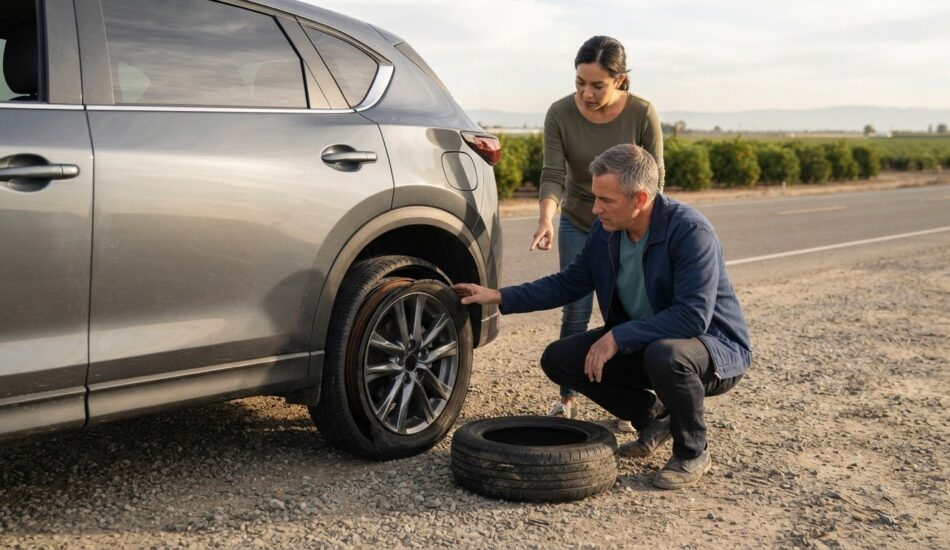
A tire recall does not, by itself, determine who is responsible for a crash. California applies strict product liability to defective tires under the rule associated with Greenman v. Yuba Power Products. A claim may also involve a vehicle manufacturer or, in a commercial-vehicle case, a fleet operator. A defective tire recall attorney in Tulare can investigate how the tire failed and which parties may have contributed to the injuries.
After a tire failure, injuries, medical care, and unanswered questions can make it difficult to know what to focus on first. The tire’s condition and history, any recall, and evidence of its maintenance can all help guide the investigation.
This article explains who may be liable, how a recall may inform a claim, and what evidence can connect a tire defect to a crash. It also covers what defective tire verdicts and settlements can show, and why the specific facts of each collision matter when assessing a claim.
Key Takeaways
- Preserve the damaged tire and related records promptly; they may help show how the failure happened and what parties were involved.
- A recall can be relevant to a claim, but investigators may also examine the roles of manufacturers, retailers, and repair shops.
- The severity of injuries and the evidence linking the tire failure to the crash can shape what losses an injury claim may address.
- Past verdicts and settlements offer context, but the facts and evidence in each case drive its value and outcome.
Why Not Speak To A Tread Separation Of Tire Defect Lawyer Now?
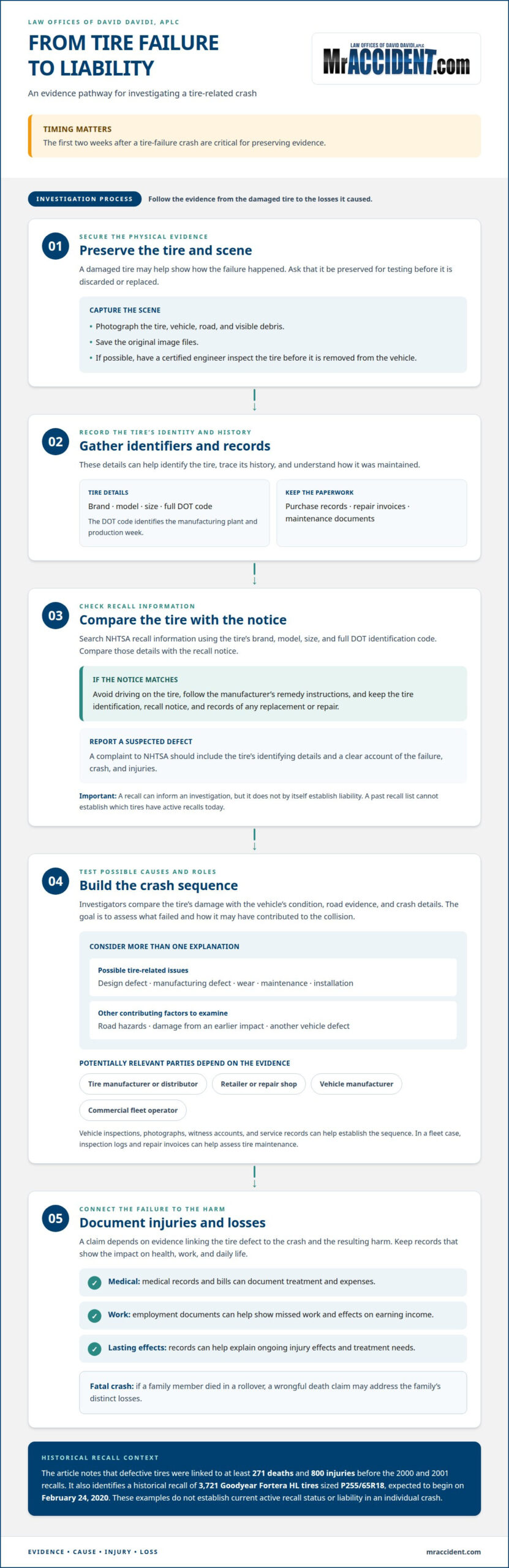
A tire failure can turn an ordinary drive into a rollover or a loss of control on the highway. A claim needs evidence showing what failed and how it caused the crash and injuries. Preserve evidence before the damaged tire is discarded or replaced. A defective tire recall attorney in Tulare can help assess how the tire and crash evidence fit together.
Photograph the tire, vehicle, road, and visible debris, and save the original images. Ask that the damaged tire be preserved for testing. If possible, have a certified engineer inspect it before it is removed from the vehicle. The first two weeks after a tire failure crash are critical for preserving evidence. Keep repair invoices, tire purchase records, and maintenance documents. Record the brand, model, size, and DOT code, which identifies the manufacturing plant and production week.
When comparing product liability attorneys serving Tulare County, look for experience investigating tire defects, preserving physical evidence, and tracing how a failure caused injuries. Ask a defective tire recall attorney in Tulare how they will arrange an inspection, identify potentially responsible parties, and explain the lawsuit process.
To report a suspected tire defect, submit a complaint to the National Highway Traffic Safety Administration (NHTSA). Include the tire’s identifying details and a clear account of the failure, crash, and injuries.
A thorough investigation considers more than one explanation. A tire manufacturer may face a claim if a design or manufacturing defect contributed to the crash. Investigators also consider wear, maintenance, installation, road hazards, and damage from an earlier impact. These facts can help distinguish a defective tire from one damaged by a pothole. Vehicle inspections, photographs, witness accounts, and service records can establish the sequence of events and connect physical evidence to the crash.
Are Tire Recalls Usually Too Late To Stop Deaths And Injuries?
A recall can warn drivers about a dangerous tire, but it cannot undo crashes that happened before the warning. The 2000 Firestone recall brought public attention to tire dangers. Before the 2000 and 2001 recall, defective tires were linked to at least 271 deaths and 800 injuries. A tread separation can trigger a catastrophic rollover, making prompt identification important.
The recall examples identified here are historical: Firestone tires in 2000 and 3,721 Goodyear Fortera HL tires sized P255/65R18, recalled because they could experience belt separation. The Goodyear recall was expected to begin on February 24, 2020. To check a tire, search NHTSA’s recall information using its brand, model, size, and full DOT identification code, then compare those details with the recall notice. A past recall list cannot establish which tires have active recalls today.
If a recall notice matches your tire, avoid driving on it and follow the manufacturer’s remedy instructions. Keep the tire identification and recall notice, and document any replacement or repair. A tire retailer or repair shop may also be relevant if records show it supplied, installed, or serviced the tire in a way connected to the failure.
Liability depends on the evidence, not simply on whether there was a recall. Investigators may examine a tire manufacturer or distributor for a defect; records may also show whether a seller or repair provider handled the tire improperly. Other vehicle defects, such as a design problem that worsens a rollover, can raise separate questions. In a commercial fleet case, inspection logs and repair invoices can help assess tire maintenance.
Ask a Tulare attorney who will preserve and inspect the tire, how the investigation will examine manufacturers and service providers, and what evidence links the failure to your injury. If the crash caused a death, ask how a potential wrongful death claim differs. These answers can clarify the investigation and identify whose conduct may be relevant.
Tire-related crashes and injuries
A tire failure can cause a driver to lose control, especially on the highway. The resulting injuries may affect a person’s health, work, and family life.
Crashes Caused by Defective Tires
When tread separates or a tire loses pressure, a vehicle may pull suddenly, skid, or roll over. Investigators examine the tire’s damage alongside vehicle condition, road evidence, and crash details. A 5,000-pound electric SUV, for example, may face greater crash energy if a worn or under-rated tire fails. The tire’s condition is one part of establishing what caused the collision.
Context matters. The Porsche involved in the 2013 crash that killed Paul Walker and Roger Rodas had tires that were nine years old. Tire age alone doesn’t establish the cause of a crash, but it can help investigators assess tire condition alongside inspection, maintenance, and other evidence.
Compensation for Injuries and Losses
A personal injury claim can address losses connected to the crash, including medical expenses, missed work, and the effects of lasting injuries. Keep medical records, bills, and employment documents organized. They can help show how the tire failure affected daily life, treatment needs, and the ability to earn income.
A defective tire investigation may examine whether a manufacturer or another responsible party contributed to the crash. Evidence should connect the tire’s condition to the collision and document the resulting losses. If a family member died in a fatal rollover, a wrongful death claim may address the family’s distinct losses. Product liability or wrongful death representation can help families understand the claim and the evidence involved.
Recovery depends on proving the link between the defect, the crash, and the harm suffered. Medical records can document treatment, while work records can show time away from a job. Keep these documents with crash photographs and tire records so the injury account and physical evidence can be considered together.
Defective tire verdicts and settlements
Past verdicts show how seriously juries may treat tire failures, but the amount alone doesn’t explain the result. In Lampe v. Continental General Tire, the listed verdict was $55,600,000. The claim’s evidence, injuries, and liability findings provide essential context for understanding that figure.
Other listed outcomes vary widely. Hill v. Titan resulted in a $7,400,000 verdict, while Flores v. Doe resulted in $6,500,000. Roepke v. Doe had a listed verdict of $1,995,000. These examples demonstrate why a serious separation or blowout cannot be valued by comparing one headline number with another.
A verdict follows a trial; a settlement is an agreement resolving a claim. Either outcome can reflect the strength of evidence about the tire defect, who was responsible, and how the car accident caused harm. Injury records and proof of lost income can help document losses, while tire and vehicle evidence can connect the failure to the crash. The nature of the injuries also matters when assessing a claim.
For people injured in a crash, the useful takeaway is to examine the reasoning and circumstances behind an outcome, not just its dollar figure. A defective-tire rollover case differs from a blowout with a different injury pattern or disputed cause. A recall, product testing, maintenance history, and crash evidence may each influence how responsibility is evaluated. Organize medical records, repair documents, and crash photographs to support that factual review.
A past result doesn’t establish what another claim will recover. The evidence must link a tire defect to the accident, identify responsible parties, and document the losses. If you suffered injuries in a tire-related crash, discuss your tire failure claim and the evidence that may support it.
Law Offices of David Davidi, APLC: Car Accident Legal Representation
Law Offices of David Davidi, APLC represents people injured in car accidents involving tire failure. If a crash raises questions about a defective tire, the firm can assess the accident evidence and injury claim. Its car accident legal representation can help you pursue a claim after a collision.
Bring the tire’s identifying information, recall notices, crash photographs, repair records, and medical documentation to help explain what happened and how you were affected. The firm also represents people injured in truck, motorcycle, and pedestrian accidents. Its no-win, no-fee policy means there are no upfront legal fees, and the firm only collects a fee if it recovers compensation.
If you’d like to discuss an injury claim after a tire-related crash, contact Law Offices of David Davidi, APLC.
Take the Next Step Toward Clarity
After a tire-related crash, turn scattered details into a clear account of what happened. Write down the route, weather, warning signs, and events immediately before the tire failed. Note what you remember firsthand and what comes from a document or another person. This distinction can help keep later conversations precise.
A defective tire recall attorney in Tulare can review how the crash evidence, injury records, and possible product defect fit together. Bring your timeline and the questions you still need answered. A focused conversation can help you understand the legal issues and decide what to do next, without relying on verdict headlines or assumptions about fault.
You deserve a clear path forward while you focus on your recovery. Arrange a conversation with Law Offices of David Davidi, APLC and take the next step at your own pace.
Frequently Asked Questions
Who else may be liable for a defective tire?
Potentially responsible parties include the tire manufacturer, vehicle manufacturer, seller, installer, or a fleet operator. The relevant party depends on what caused the failure. For example, a manufacturing defect may point toward the tire maker, while installation records could help assess a repair shop’s role. A product liability attorney can review who handled the tire and vehicle, then connect that history to the crash evidence.
Can I sue if my own tire blew out?
Yes. You can bring a claim if evidence supports that a tire defect caused the crash and your injuries. Owning the vehicle or buying the tire yourself does not automatically prevent a claim. The tire’s manufacturing history, physical condition, and purchase records may help distinguish a defect from damage caused by a road hazard or maintenance issue.
Does a recall mean I automatically win?
No. A recall alone does not establish that the recalled tire caused your crash or injuries. The claim still needs evidence connecting the tire defect to the failure and resulting harm. Compare the recall’s tire size, model, and DOT identification with the tire involved. A mismatch can matter, and evidence about the crash circumstances can help explain whether the recalled condition played a role.
How long do I have to file a tire defect claim in California?
California generally allows two years to file a tire defect injury claim, counted from the date of injury. A different deadline applies to claims against government entities: according to the California State Legislature, a claim generally must be presented within six months. Identify every potentially responsible party early, because a government entity’s involvement can change the first filing step.
Who is liable if a truck’s tire failed and debris hit my car?
Liability may involve the truck driver, carrier, tire or vehicle manufacturer, or maintenance provider, depending on the evidence. Carrier inspection and repair records, for example, can help show the tire’s condition before the trip. Photos of debris and damage to your car, witness accounts, and the truck’s identifying details can help investigators trace the tire and determine how it failed.
When can a tire defect support a product liability claim in California?
A tire defect can support a product liability claim when evidence shows that a defective tire caused injury or property damage. California applies strict product liability to defective tires under the rule associated with Greenman v. Yuba Power Products. The investigation focuses on the alleged defect, how it contributed to the incident, and the resulting harm, rather than relying on a recall alone.

Law Offices of David Davidi, APLC is a California – based Personal Injury Law Firm, our Attorney’s provide the representation for your personal injury, accident, product liability, premises liability, and other
negligence resulting in injuries. We treat all clients and cases, large or small, with hands-on care.
Practice Area
© Copyright 2026 Law Offices of David Davidi, APLC. All rights reserved.
Digital Marketing By 