
888-529-0707 call 24-7 we service throughout california
Suing for a Dog Bite in Visalia: Case Value and Liability
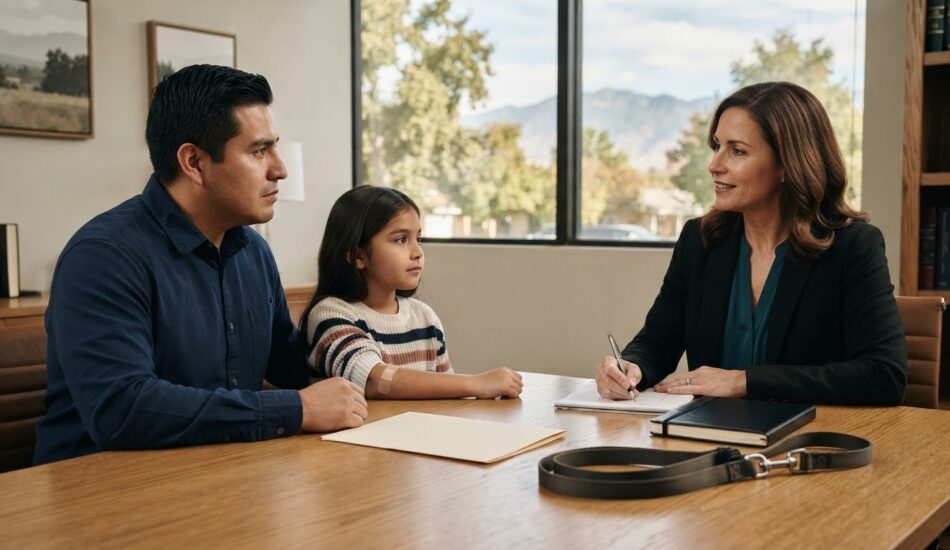
If you’re considering suing for a dog bite in Visalia after your child was bitten, California law may allow a claim against the dog’s owner. California Civil Code § 3342 makes dog owners strictly liable for bite injuries, regardless of the dog’s history, according to the California Legislature. You don’t have to prove the owner knew the dog might bite.
A dog bite can leave a family facing medical care, missed work, scarring, or lasting distress, along with urgent questions about responsibility and compensation. This guide explains California’s dog-bite liability rule, the evidence and losses that may matter, and how claims are handled for people suing for a dog bite in Visalia. It also covers claims involving children, injuries beyond the bite itself, and how legal representation can help you understand the process and protect your family’s interests.
Key Takeaways
- California’s strict-liability rule may let a bite victim pursue the dog’s owner without proving the owner knew the dog might bite.
- Build a clear record of medical care, missed income, scarring, and other effects to show how the injury has affected your life.
- For a Visalia claim, document where and how the bite happened, who was involved, and the injuries that followed.
- Settlement value depends on the evidence and the losses tied to the bite; learn what can shape negotiations before deciding how to proceed.
Is the dog owner always liable for a bite in California?
California applies a specific rule to dog bites. The location, victim’s status, and injury details still matter.
California Dog Bite Strict Liability
California Civil Code § 3342 makes dog owners strictly liable for bite injuries, regardless of the dog’s history, without requiring victims to prove negligence, according to the California Legislature. This rule focuses on whether the defendant owned the dog and whether a bite caused injury. A prior bite or warning is not required to establish strict liability. Record the dog’s identity, owner’s name, bite location, and injury details.
Dog Bites Involving Children
A child can bring a dog-bite claim under California’s strict-liability rule. The child’s age does not remove the owner’s responsibility for a bite injury. A parent or guardian can preserve important details, including where the child was, who controlled the dog, and what happened just before the bite. Note, for example, whether the child was visiting a home or playing in a shared yard.
Keep the child’s treatment records and photographs of visible injuries together. They can document the bite’s effects and the care it required. If an adult was with the child, write down that person’s account while the details are fresh.
Bites on Private Property
A bite on private property may still support a claim. A home or yard does not automatically rule one out; the circumstances matter. Record whether the injured person had permission to be there, why they entered, and whether the dog was restrained or under someone’s control. An invited visitor’s bite presents different facts from an injury to someone who entered without permission.
Save messages with the property owner and note any witnesses. These details can help clarify the visit and how the bite happened.
The filing deadline depends on the claim and who is sued, so don’t assume one timeline applies to every dog bite. Keep a record of the incident date and promptly seek legal guidance about the deadline that applies.
How much is a dog bite case worth?
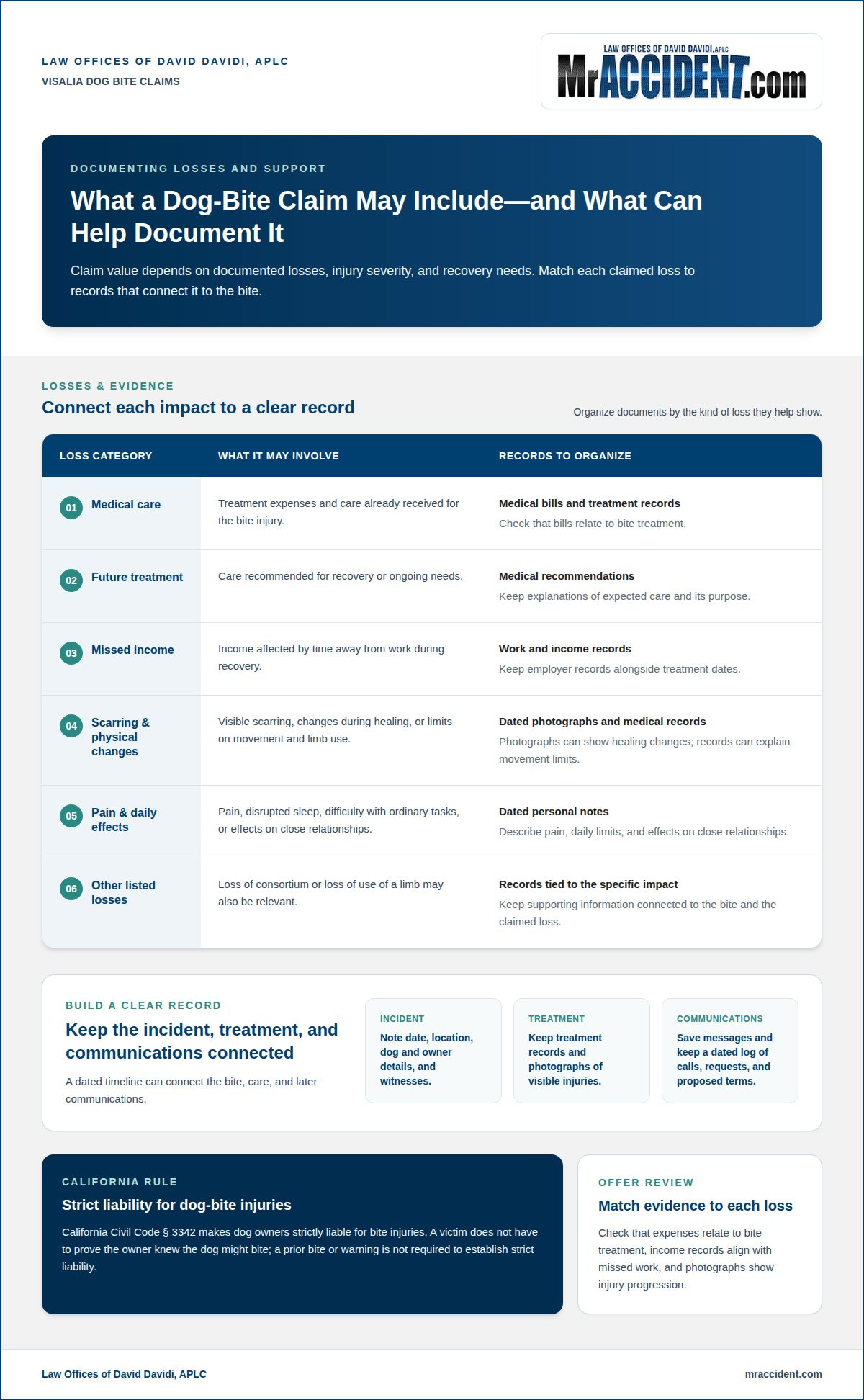
A dog-bite claim’s value depends on documented losses, injury severity, and recovery needs. Potential compensation may include medical bills, future treatment, lost income, loss of consortium, loss of use of a limb, scarring, and pain and suffering. For someone suing for a dog bite in Visalia, each claimed loss should be tied to the bite. A medical invoice documents treatment expenses, while photographs can show changes during healing.
Organize supporting records by loss category:
- Medical bills and treatment records related to the bite.
- Medical recommendations explaining future care and its purpose.
- Work and income records showing missed time during recovery.
- Dated photographs documenting wounds, scars, or mobility changes.
- Notes describing pain, daily limits, or effects on close relationships.
The injury’s course affects how losses are assessed. A wound that requires ongoing care involves different documented needs from one that heals without lasting effects. Scarring may affect appearance and daily life. If the bite limits the use of a limb, medical records can explain how the restriction affects movement and activities.
Lost income should be clearly connected to missed work. Keep employer records alongside treatment dates. For future care, save recommendations that explain the expected treatment. A dated account of pain, disrupted sleep, or difficulty with ordinary tasks can add context to the medical records.
Before assessing an offer, match each claimed loss to supporting evidence. Check that bills relate to bite treatment, income records align with missed work, and photographs show the injury’s progression. Someone suing for a dog bite in Visalia can use an organized record to make negotiations more concrete. Label documents and maintain a clear timeline, since gaps or unexplained expenses can make losses harder to assess.
Dog bite claims in Visalia and Fresno County
For a Visalia claim, create a clear incident record and organize the supporting documents. Local details can help establish where the bite happened and who was involved.
Insurance Company Claim Tactics
An adjuster may request a recorded statement, medical records, or authorization forms. Read requests carefully and keep copies of your responses. Broad authorizations may cover records unrelated to the bite. Stick to what you know, and don’t guess about the incident or your recovery. Before responding to an offer, compare it with documented expenses and ongoing effects.
An offer made before treatment ends may not account for later care. Keep a dated log of calls, document requests, and proposed terms. This helps track what the insurer reviewed and which evidence is still outstanding.
Comparing Visalia Dog Bite Attorneys
When choosing an attorney, ask about experience handling injury claims and how evidence is assessed. Clarify who will guide key decisions, explain negotiations, and discuss possible court steps. For someone suing for a dog bite in Visalia, these answers can help determine whether the attorney’s approach and communication fit the claim.
Bring the incident date, photographs, treatment records, and insurer correspondence to a case discussion. Ask how those specific materials may affect the assessment, and review the written fee agreement before deciding how to proceed.
Steps to Take After a Visalia Dog Bite
After a bite, seek medical care and photograph visible injuries. Record the date and location, describe the dog, and note the owner’s name and witness details. Preserve relevant messages and treatment records. To report the incident to Tulare County Animal Services, provide the location, date, dog description, and owner information, then keep the report details.
When suing for a dog bite in Visalia, a dated timeline can connect the incident, treatment, and communications.
Court for Visalia Dog Bite Lawsuits
The proper court for a Visalia lawsuit depends on venue and the claim’s circumstances. Don’t assume Fresno County is the right filing location just because it is nearby. Keep the incident location and defendant information available when determining where the case belongs.
Before filing, organize the facts and supporting records. An attorney can explain which court applies and the filing steps.
Dog bite settlement outcomes
Settlement outcomes depend on the evidence and losses in each claim. California paid about $76 million in compensation to dog-bite victims in 2016. That statewide total describes aggregate payments, not an individual case’s value. A Visalia claim turns on its own records, injury effects, and proof connecting losses to the bite.
Before considering an offer, organize the claim around documented losses. Match medical bills to treatment records, and separate completed care from recommendations for future treatment. Connect missed work to employer records and recovery dates. Photographs, scar documentation, and notes about daily limitations can show effects that invoices alone do not capture.
Compare the insurer’s offer with the evidence it addresses. Does it account for documented treatment, future care, lost income, scarring, and pain? Identify any omitted category and gather records to support it. A treatment recommendation, for example, can explain why care continues after the initial visit, while a dated photograph can show how a wound healed.
Read proposed settlement terms carefully. A release may resolve claims related to the incident, so understand which rights it covers before signing. Keep the offer, release, and related correspondence together. If a term is unclear, get legal advice before accepting; a signed agreement can affect your ability to pursue further compensation for the same injury.
For focused negotiations, prepare a concise timeline of the bite date, treatment dates, work absences, and insurer communications. Then match each claimed loss to its supporting document. This helps identify gaps and keeps discussions grounded in verifiable facts rather than estimates or assumptions.
If you’re weighing an offer after a dog bite, discuss your settlement options with an injury attorney before signing. Bring the insurer’s proposal, medical records, and loss documentation so the review can focus on your specific claim.
Law Offices of David Davidi, APLC: Car Accident Legal Representation
Law Offices of David Davidi, APLC represents people with dog-bite injury claims throughout California, including Visalia. An attorney oversees each case from start to finish, helping clients understand the legal process and assess evidence related to liability and losses.
Bring the incident details, medical records, photographs, and insurer communications to a case discussion. These materials can help clarify what happened, how the injury affected you, and what documentation supports your claim. The firm also represents people injured in car, truck, motorcycle, and pedestrian accidents.
For guidance on a dog-bite claim, contact Law Offices of David Davidi, APLC to discuss your situation.
Take the next step with a clear plan
If you’re considering suing for a dog bite in Visalia, use your records to start a focused discussion about what happened and how the injury affected you. Bring your timeline, treatment documents, photographs, and insurer correspondence. A careful review can help identify questions to address before you decide how to proceed.
Law Offices of David Davidi, APLC represents people in dog-bite injury claims. Its personal injury work also includes car, truck, and motorcycle accident representation. If an injury claim has left you unsure about what to do next, you can reach out to discuss your circumstances without pressure or promises about an outcome.
Contact Law Offices of David Davidi, APLC to discuss your situation. Taking one informed step can help you move forward with greater confidence.
Frequently Asked Questions
Can I sue if a dog bites my child?
Yes. A child can pursue a claim after a dog bite, and a parent or guardian can preserve details and records needed to assess it. Write down the child’s account in their own words, note who witnessed the incident, and keep appointment records together. A school or childcare report, for example, may help establish when the injury affected the child’s routine.
What are California’s dog bite liability laws?
California law generally makes a dog’s owner responsible for injuries caused by a bite under the circumstances covered by statute. The dog’s past behavior does not determine liability, and the victim need not prove negligence. Preserve evidence identifying the owner and documenting the bite. Where the victim was and why they were there may also matter.
What must a dog bite victim prove to sue in California?
Gather evidence identifying the dog’s owner, showing that a bite occurred, and documenting the resulting injury. Useful records include photographs, witness names, treatment notes, and messages about the incident. A dated wound photograph paired with a medical record, for example, can help connect the reported bite to the injury and subsequent care.
How much compensation can you claim for a dog bite in California?
There is no single amount that fits every California dog-bite claim. Potential damages may include treatment expenses, future care, lost income, scarring, pain and suffering, and other losses tied to the injury. Start by sorting records by category, then connect each claimed loss to supporting evidence, such as invoices, work records, or medical recommendations.
What defenses can a dog owner use in a California dog bite case?
An owner may dispute who owned the dog, whether a bite caused the injury, or the amount of the resulting loss. The owner may also challenge the account of where the incident happened and why the injured person was there. Preserve relevant messages, witness details, and photographs to help clarify which issues are genuinely disputed.

Law Offices of David Davidi, APLC is a California – based Personal Injury Law Firm, our Attorney’s provide the representation for your personal injury, accident, product liability, premises liability, and other
negligence resulting in injuries. We treat all clients and cases, large or small, with hands-on care.
Practice Area
© Copyright 2026 Law Offices of David Davidi, APLC. All rights reserved.
Digital Marketing By 