
888-529-0707 call 24-7 we service throughout california
How to Document Your Injuries for a Lawsuit and Support Your Damages Claim

Start documenting your injuries as soon as possible after an accident. Knowing how to document your injuries for a lawsuit means getting medical care, keeping treatment and expense records, and noting how symptoms affect your daily life. These details can help show how the accident relates to your injuries and what losses you have experienced.
It’s easy to focus on getting through the day and assume you’ll remember what happened later. But symptoms can change, and small details may be hard to recall. Keep copies of medical records, test results, bills, receipts, photographs, and communications about the incident. Follow your doctor’s advice and accurately note missed appointments or changes in your condition.
This guide explains what evidence to collect, how to keep a useful symptom journal, and how consistent records can support a claim about causation and damages. You’ll also learn how to document pain, daily limitations, treatment, and financial losses to build a clear account of what changed after the accident.
Key Takeaways
- Medical, rehabilitation, and vocational opinions can help explain how an injury affects work, function, and future needs.
- Photograph visible injuries as they change, creating a clearer record of their progression.
- A consistent symptom journal can capture pain and daily limitations that may be difficult to recall later.
- Organize records of missed work and other losses to show how the injury has affected your finances.
What Types of Medical Evidence and Records Can Be Used in Court?
Get medical attention as soon as possible after an accident, report each symptom, and preserve records as treatment continues. Keep injury evidence until the claim and any related legal proceedings are resolved. Retaining it longer can also preserve a useful timeline if questions arise later.
-
Collect Medical Records, Prescriptions, and Bills
Request copies of emergency room reports, diagnoses, test results, treatment plans, and progress notes from each provider. Save prescription records and itemized bills with receipts for medication and treatment. Check that dates, provider names, and listed services match your appointments. If a bill or report appears incomplete, contact the provider’s records department to correct it or obtain the missing document.
-
Save Medical and Mental Health Records
Keep physical therapy, rehabilitation, and mental health care records with your medical files. Include follow-up notes, medication changes, and bills, even when care addresses emotional symptoms rather than visible injuries. Store paper copies in a labeled folder and digital files in a secure, backed-up location. Don’t discard records after treatment ends, since later evaluations may refer to earlier symptoms or care.
-
Use Expert Opinions to Establish Causation
Ask providers to document when symptoms began, what you reported, and how examinations or imaging relate to the accident. Medical opinions can explain diagnoses and treatment, while rehabilitation specialists can describe functional limitations and recovery needs. Vocational experts may assess how limitations affect work. Together, records and expert opinions can help connect the incident, injury, treatment, and resulting losses. A qualified legal representative—or specialist counsel such as North East Barristers Chambers for those seeking direct access legal guidance in the UK—can help organize and present that evidence.
-
Keep Injury Records and Evidence
Maintain one dated file for reports, prescriptions, bills, and provider communications, then add each new appointment or expense. Keep records through the claim and any lawsuit, including when treatment changes or ends. Promptly report new or worsening symptoms to your treating provider, and make sure those reports appear in your chart. A clear sequence can show how symptoms and care developed after the accident.
What Records Do I Need for a Personal Injury Case?
Photograph injuries and the accident scene as soon as practical, then take dated photos and videos during recovery. Use clear, unaltered images that show changes, and explain what each file depicts.
-
Photograph Injuries and the Accident Scene
Take clear photos of each visible injury and the surrounding accident scene. Capture different angles against a neutral background, and include a ruler for scale when practical. Photograph torn clothing, nearby hazards, or damaged property if they help show what happened. Add timestamps when possible and keep the original files. Don’t risk your safety to revisit a scene; capture details only when it’s safe to do so.
-
Capture Injury Photos and Videos During Recovery
Record changes throughout recovery, not just the first visible mark. For example, photograph bruising as its color or size changes, and film a movement that remains difficult, such as reaching overhead. A short video can demonstrate mobility limits or difficulty with a routine task that a still photo can’t convey. Date each file and pair it with a brief note describing the activity or symptom shown.
-
Track Changes in Visible Injuries
Repeat photos from a similar angle, distance, and lighting so the images show progression rather than camera differences. Keep a simple sequence, such as “left knee, swelling” followed by the date, and note whether the area improved or worsened. Don’t use filters, crop out relevant context, or present an image as showing more than it does. Organized photos can help an attorney demonstrate injury severity and support claimed damages during settlement discussions. A lawyer can help assess how your accident evidence fits your claim; you can discuss injury evidence with legal counsel.
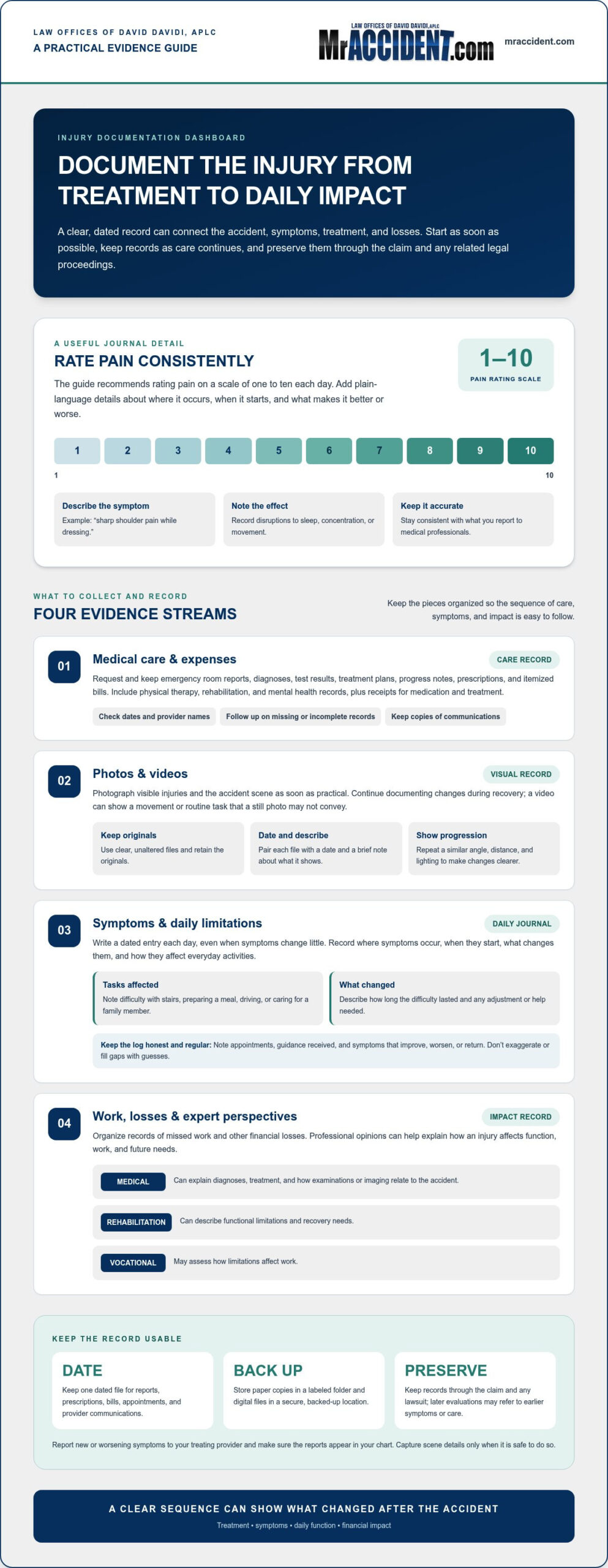
Keeping a journal of symptoms, pain, and daily limitations
Write a dated entry each day, even when symptoms change little. Specific notes can help explain how an injury affects routine activities, pain, and suffering.
-
Record Pain and Symptoms in a Journal
Describe each symptom in plain language, including where it occurs, when it starts, and what makes it better or worse. Rate pain on a scale of one to ten each day, and note whether it disrupts sleep, concentration, or movement. For example, write “sharp shoulder pain while dressing” rather than only “pain.” Keep entries honest and consistent with what you report to medical professionals.
-
Log Daily Limitations
Write down specific tasks you couldn’t do or needed help completing. Note whether you struggled to climb stairs, prepare a meal, drive, or care for a family member. Include what happened, how long the difficulty lasted, and any adjustment you made, such as asking someone to carry groceries. These details can show how symptoms affect everyday life beyond appointments or examinations.
- Keep the journal in one dated notebook or digital document, and add entries regularly instead of relying on memory later. Record appointments or conversations with health professionals, including questions asked and guidance received. If a symptom improves, worsens, or returns, describe the change and its effect. Don’t exaggerate or fill gaps with guesses. A clear, consistent log can give your personal injury claim a fuller account of daily effects. It may also help you explain those effects alongside medical records or a witness’s observations.
Using injury documentation to support causation and damages
Connect the accident, treatment, and resulting losses with a detailed timeline. To document lost wages, keep an employer letter identifying missed work hours and lost wages, along with pay records from before the accident.
- Arrange copies by date, starting with the accident report, first medical visit, and later evaluations. Match each record to the symptoms or treatment it describes. For example, a doctor’s note recording back pain soon after a collision can help establish when the complaint appeared. Add new evaluations as recovery continues, especially when they document lasting issues, disability, or changes in your condition.
- Track financial losses alongside treatment records. Keep medical bills, medication receipts, and other injury-related expense records together, then note which visit or treatment each cost relates to. For lost income, retain pay stubs, W-2 forms, and bonus reports from before the accident. Pair these with an employer letter that specifies missed hours and lost wages, so the loss has supporting documentation.
- Document how the injury affects earning capacity, not only past pay. Preserve records of your work duties and any change in your ability to perform them, such as reduced hours or tasks you can no longer complete. Ongoing medical evaluations can document chronic symptoms or long-term limitations. A vocational expert’s opinion may also explain how those limitations affect work prospects and future earning ability.
- Use your journal to connect documented limitations with daily life, such as difficulty standing through a shift or completing physical duties. Keep descriptions consistent with what you tell treating professionals, and update the record when symptoms or work capacity change. Together, medical records, expense copies, wage documents, and personal notes can support claims for compensation, including pain and suffering. A personal injury attorney can help organize this evidence; discuss your injury documentation with counsel.
Law Offices of David Davidi, APLC: Car Accident Legal Representation
Law Offices of David Davidi, APLC represents people injured in car, truck, motorcycle, and pedestrian accidents throughout California, including Los Angeles, Fresno, Modesto, Bakersfield, Stockton, Tulare, Visalia, Merced, and Riverside. If you’re unsure how your medical records, photographs, journal, and wage documents fit together, legal representation can help organize the evidence and assess how it supports causation and damages. A clear timeline can help identify missing records, explain changes during recovery, and present documented losses in a personal injury claim.
Consider speaking with the firm if an accident caused injuries and you need help pursuing a claim. Bring the records you’ve gathered, including treatment documents, expense records, images, and notes about work limitations. Contact Law Offices of David Davidi, APLC to discuss your accident claim, or visit mraccident.com.
Take the Next Step With a Clear Record
Your documentation can support your claim as it develops. Treat it as a living record: add new developments, preserve original files, and note when an important detail changes. Knowing how to document your injuries for a lawsuit also means keeping the record accurate as your recovery and responsibilities shift. A personal injury attorney can help assess how the evidence fits together and identify questions that may need attention.
The practical question of how to document your injuries for a lawsuit is only one part of moving forward. You don’t have to sort through every legal issue alone. If you’re ready to discuss your next steps, contact Law Offices of David Davidi, APLC. You can move forward thoughtfully, with your experience and concerns at the center of the process.
Frequently Asked Questions
How soon should I start documenting my injuries?
Start as soon as possible after the accident, while details are fresh and symptoms can be recorded accurately. If pain appears later, note when it began and what changed instead of guessing about earlier symptoms. For example, record when a headache first disrupted reading or driving. Keep entries factual, and tell your medical provider about new symptoms so your account and care records reflect the same timeline.
How can I demonstrate pain and suffering?
Describe the concrete effects of pain on your routines, relationships, and emotional well-being. For example, record whether discomfort interrupts sleep, prevents you from attending a family event, or makes a familiar hobby difficult. Treatment records and mental health care notes may support this account, while people close to you may describe changes they personally observed. Keep descriptions candid and consistent rather than overstating what you experienced.
What Evidence Do You Need to File a Personal Injury Claim in California?
Gather evidence showing what happened and how the incident relates to your injuries and losses. Useful materials may include an incident report, witness contact details or statements, scene photographs, medical documentation, and records of expenses or missed work. Keep original files and organize copies by date. These records can help present a clear account of the event and its impact when pursuing a California personal injury claim.
What happens if I forget to document something?
A forgotten detail doesn’t automatically make it impossible to support your claim. Reconstruct it using dated messages, appointment calendars, receipts, work schedules, or notes from people who witnessed the event. Mark anything added later with its actual date and explain how you recalled it. Don’t backdate a note or present a later recollection as contemporaneous. A lawyer may also help gather additional evidence to fill documentation gaps.
What evidence should you collect to document injuries for a personal injury lawsuit?
Collect evidence that connects the incident to your injuries and resulting losses. Depending on the event, this may include an accident or management report, witness statements, scene photographs, damaged clothing or property, and communications with insurers. Preserve original files and keep copies of relevant correspondence. For a vehicle crash, record the report’s incident number and review the report for errors when you receive it.
How do you keep a symptom and pain journal for a personal injury claim?
Make a brief, dated entry each day with your symptoms, pain rating, and what you could or couldn’t do. Rate pain from one to ten each day and include a concrete example, such as needing help to carry laundry. Note changes after treatment or conversations with health professionals. If you miss a day, resume with the current date instead of filling the gap from memory.

Law Offices of David Davidi, APLC is a California – based Personal Injury Law Firm, our Attorney’s provide the representation for your personal injury, accident, product liability, premises liability, and other
negligence resulting in injuries. We treat all clients and cases, large or small, with hands-on care.
Practice Area
© Copyright 2026 Law Offices of David Davidi, APLC. All rights reserved.
Digital Marketing By 