
888-529-0707 call 24-7 we service throughout california
Los Angeles Personal Injury Claim Guide 2026

The los angeles personal injury claim process starts with a practical question: who may be responsible for the injury? If a city, county, or other public entity could be involved, different claim rules may apply, and waiting can put important options at risk.
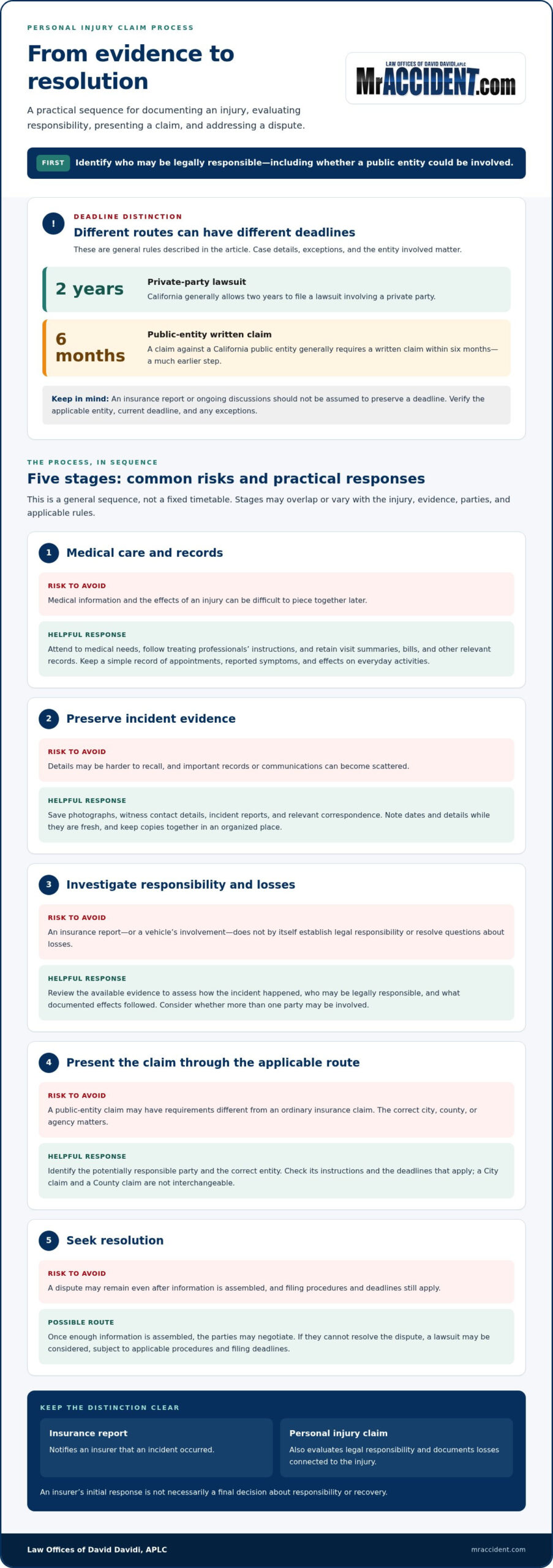
A clear plan can help you organize medical records, insurer calls, lost-income information, and deadlines. In general, a claim moves from documenting the incident and injuries to identifying responsibility, presenting a claim, and resolving any dispute. For many cases involving a private party, California allows two years to file a lawsuit. A claim against a public entity generally requires a written claim within six months, a much earlier step. The details and exceptions matter.
This guide explains what to preserve, what questions to prepare, and how the stages fit together, including when public-entity rules may apply. At the Law Offices of David Davidi, APLC, an attorney, not an assistant, oversees each case from start to finish. The firm handles only a limited number of cases, returns calls and messages within 24 hours, and represents injured people throughout California on a No Win No Fee basis. SE HABLA ESPAÑOL.
Key Takeaways
- The los angeles personal injury claim process depends first on identifying who may be legally responsible, including whether a public entity could be involved.
- Claims typically involve documentation, medical records, a liability investigation, claim presentation, and resolution. Stages can overlap or vary.
- Deadlines can differ: a lawsuit involving a private party generally has a two-year deadline, while a claim against a California public entity generally requires a written claim within six months.
- Organize incident details, photos, witness contacts, medical records, and relevant correspondence to help prepare for a claim evaluation.
- The Law Offices of David Davidi, APLC represents injured people throughout California with a free consultation and No Win No Fee representation. An attorney, not an assistant, oversees each case from start to finish; the firm handles a limited number of cases, returns calls and messages within 24 hours, and offers Spanish support: SE HABLA ESPAÑOL.
Los Angeles personal injury claim process: start by identifying the responsible party
A personal injury claim seeks recovery for an injury based on another party’s potential legal responsibility. The los angeles personal injury claim process starts by identifying who may be responsible. A claim involving a private person or company can follow a different route from one involving a public entity.
For example, consider a collision in Los Angeles involving a city vehicle. The vehicle’s involvement alone doesn’t establish that the City is legally responsible. The circumstances, available evidence, and applicable law all matter. A city or county agency may need to be considered alongside another driver, a business, or another potentially responsible party. A general overview of personal injury law can explain the broader concept, but the facts of an individual incident determine which rules apply.
What makes an injury claim different from an insurance report?
An insurance report tells an insurer that an incident occurred. A personal injury claim also involves evaluating legal responsibility and documenting losses connected to the injury. Reporting an accident doesn’t establish fault or resolve questions about medical expenses, missed work, or other effects.
More than one party may be responsible. In a collision, for example, the other driver’s actions may matter, as might an employer’s or public entity’s involvement, depending on the facts. Keep records of the incident and related communications. An insurer’s initial response isn’t necessarily a final decision about responsibility or recovery.
Why the identity of a Los Angeles public entity matters
Claims involving a public entity can have claim-presentation requirements that differ from an ordinary insurance claim. The entity might be a city, Los Angeles County, or another government agency, and identifying the correct one matters. A claim involving a City vehicle and a claim against the County aren’t interchangeable. Each entity may have its own instructions and process.
Los Angeles County’s claim guidance identifies a six-month deadline for presenting an injury claim to the County. That is County-specific information, not a substitute for checking the rules that apply to another public entity. California law also generally sets a six-month period for presenting a claim against a public entity, but exceptions and case details can affect the analysis. Don’t assume an insurance report or ongoing discussions preserve a deadline.
Identify the potentially responsible party promptly and verify the applicable entity, current deadline, and any exceptions. The incident date and location, the vehicle or property involved, and available records can help clarify where to start. Because the process and deadlines depend on the facts, early review can help you understand which steps may apply.
How a Los Angeles personal injury claim moves from evidence to resolution
The los angeles personal injury claim process follows a general sequence, not a fixed timetable. Stages may overlap, and the route can depend on the injury, evidence, parties involved, and whether a public entity is part of the claim. Medical care and records help document the injury. A separate investigation examines responsibility, and the claim may proceed to negotiation or, if a dispute remains, litigation.
In brief: Get appropriate care, preserve records, investigate liability, present the claim, and pursue resolution through negotiation or a lawsuit if needed.
- Attend to medical needs and keep records. Follow the instructions of your treating professionals and retain relevant visit summaries, bills, and other documents. These records help show how the injury and its effects develop over time.
- Preserve incident evidence. Save photographs, witness contact details, incident reports, and correspondence. Note dates and details while they’re fresh, and keep copies together in an organized place.
- Investigate responsibility and losses. The available evidence may be reviewed to assess how the incident happened, who may be legally responsible, and what documented effects followed. More than one party may need to be considered.
- Present the claim through the applicable route. The process may involve an insurer or, if a public entity is involved, a separate claim-presentation procedure. Applicable rules and deadlines depend on the circumstances.
- Seek resolution. Once enough information is assembled, the parties may negotiate. If they can’t resolve the dispute, a lawsuit may be considered, subject to applicable procedures and filing deadlines.
From medical care to claim investigation
Medical attention comes first. Keep a simple record of appointments, symptoms you report, and how the injury affects everyday activities, while following your treating professionals’ guidance. Also gather incident details, photos, witness information, and relevant communications. An investigation may compare these materials with other available evidence to evaluate responsibility and the injury’s documented impact. For severe injuries requiring long-term rehabilitation or physical therapy assessments, consulting services such as Injury Consulting LLC can assist in evaluating future medical needs and life care planning. Records can help clarify events, but they don’t determine liability on their own.
Negotiation, settlement, and a possible lawsuit
Negotiations may begin once relevant information is assembled, though the process can continue as evidence develops. Disagreements about responsibility or the documented effects may remain unresolved. If so, litigation may be an option, but not every claim goes to court. Filing rules matter. The California Code of Civil Procedure is a starting point for reviewing procedural law, not a substitute for checking the rules that fit your case. You decide whether to accept a settlement, and no outcome can be promised.
The Law Offices of David Davidi, APLC offers a free consultation and No Win No Fee representation to injured people throughout California. The firm handles only a limited number of cases, and an attorney, not an assistant, oversees each case from start to finish. Calls and messages are returned within 24 hours. Discussing your injury claim can help you understand potential next steps. SE HABLA ESPAÑOL.
Private-party claim or public-entity claim: the Los Angeles difference
Two injury incidents in Los Angeles may call for different claim routes, depending on who may be legally responsible. A claim involving a private driver or business generally begins through the relevant private insurance process. If a government entity may be responsible, a separate claim-presentation procedure could apply before a lawsuit. This distinction matters early, especially when a deadline may be shorter or a specific filing may be required.
| Possible defendant | Initial route | Deadline issue to verify |
|---|---|---|
| Private person or business | Claim may be presented to the responsible party’s insurer or through another applicable route. | Confirm the deadline for the specific claim and any exceptions. |
| City of Los Angeles or another city | A public-entity claim-presentation process may apply. Check the correct city’s current instructions. | Verify the city-specific deadline, filing requirements, and exceptions promptly. |
| Los Angeles County | County claims follow the County’s own claim-presentation route. | Los Angeles County publishes a six-month deadline for injury claims. Verify the current rule and any applicable exceptions. |
When a city or county may be involved
A government vehicle in a collision or an incident on public property may raise questions about a public entity’s involvement. A public location alone doesn’t establish that a city or county is responsible. The property’s ownership, who maintained it, what happened, and other facts may matter. Likewise, a government vehicle’s involvement doesn’t by itself prove liability.
If a public entity could be involved, identify which one as soon as possible. A city claim and a County claim aren’t interchangeable, and an insurer report may not satisfy a public entity’s claim-presentation requirements. Prompt legal review can help clarify the potentially responsible entity, its filing route, and the deadline to verify.
Why deadlines need case-specific review
Deadlines may differ based on the defendant, type of claim, and circumstances. The six-month period published by Los Angeles County is County-specific. Don’t assume it applies identically to a claim against the City of Los Angeles, another agency, or a private party. A general personal-injury deadline also shouldn’t be applied without checking the governing law and exceptions. Confirm current requirements for the particular entity and claim, and act promptly rather than relying on ongoing insurance discussions to preserve your options.
At the Law Offices of David Davidi, APLC, an attorney, not an assistant, oversees each case from start to finish and helps clients understand the steps and requirements that may apply. The firm handles only a limited number of cases, represents injured people throughout California, and returns calls and messages within 24 hours. SE HABLA ESPAÑOL.
What to Do During Your Los Angeles Claim Evaluation
An organized record can make a claim evaluation more productive. You don’t need every answer before asking for guidance. Start with what you know, preserve relevant documents, and mark details that are estimates or memories you may need to clarify. These steps can help you prepare for the los angeles personal injury claim process without trying to decide liability on your own.
Build an organized record of the incident and its effects
Write a concise account while the details are clear. Separate facts from assumptions, and update the record if you learn something new. A folder, with digital copies where possible, can keep key information together.
- Incident basics: Record the date, time, location, people involved, and a factual description of what you remember. Distinguish what you personally observed from what someone else told you.
- Photographs and video: Preserve images of the scene, vehicles, property, visible injuries, or other relevant details. Keep original files when possible.
- Witness information: Save names and contact details for people who saw the incident. Don’t guess at missing information.
- Medical and related records: Keep available visit summaries, bills, and other records related to care, along with repair or property-damage information where relevant. Continue appropriate medical follow-up and retain the records you receive.
- Communications: Save emails, letters, claim numbers, and notes from calls with insurers or others. Record the date, who you spoke with, and what was discussed.
If a vehicle crash is involved, these materials may help an attorney assess the circumstances and explain car accident legal representation. A crash report or insurer statement is one piece of information, not necessarily the full account. Keep your description factual, and don’t fill gaps by guessing about speed, distance, or another person’s actions.
Prepare for an informed legal consultation
Before a consultation, gather your timeline, available records, and a short list of questions. You might ask which facts need clarification, who may have legal responsibility, what deadlines could apply, and which documents would help with the next step. Thinking about what to ask a personal injury lawyer can also help you prepare. You don’t need a particular document or a complete answer to start a useful conversation.
An attorney can review the case-specific facts, potential responsibility, and applicable deadlines. The Law Offices of David Davidi, APLC offers a free consultation and No Win No Fee representation to injured people throughout California. The firm handles only a limited number of cases, and an attorney, not an assistant, oversees each case from start to finish. Calls and messages are returned within 24 hours. To discuss your records and potential next steps, request a claim evaluation. SE HABLA ESPAÑOL.
Moving forward with a Los Angeles personal injury claim
Start by bringing the key pieces together: identify who may be responsible, preserve records that help explain what happened and how you were affected, and check which deadlines and claim procedures apply. These steps can focus the next conversation, whether the potential defendant is a private party or a public entity. The los angeles personal injury claim process depends on the facts, so there’s no single path or guaranteed outcome.
What attorney-led representation looks like
The Law Offices of David Davidi, APLC represents injured people throughout California, including Los Angeles. Direct attorney oversight can help you understand what is happening, what information may be needed, and how decisions at one stage affect the next.
Depending on the claim, representation may include reviewing the facts, investigating potential responsibility, communicating with insurers, negotiating, evaluating a proposed settlement, or pursuing a lawsuit when appropriate. These are possible parts of a legal matter, not a promise that every case will require each step or reach a particular result. The firm brings 25 years of experience and has a 5.0 rating with 200+ client reviews.
Attorney involvement also gives you a way to discuss questions as the claim develops, rather than having to interpret every request or update alone. Your priorities and the evidence matter. A settlement decision is yours, and an attorney can explain available information and procedural considerations without guaranteeing how a dispute will resolve.
Take a clear next step
For a consultation, bring what you have, not what you think you should have. A brief timeline, incident photographs, medical or repair records, witness details, and insurer correspondence can help begin a focused review. If information is missing, say so. Distinguish what you remember firsthand from what you’re unsure about. This gives an attorney a clearer starting point for discussing potential responsibility, the applicable claim route, and deadlines to review.
The firm offers a free consultation and No Win No Fee representation. These are the firm’s stated consultation and fee terms, not a guarantee of compensation or a particular result. Ask questions about the process and make sure you understand the next steps before making decisions about your claim.
If you’re ready to discuss your Los Angeles injury claim, request a free consultation with the Law Offices of David Davidi, APLC. The firm returns calls and messages within 24 hours. SE HABLA ESPAÑOL.
Take the next step with confidence
You don’t need every detail settled before moving forward. A clear conversation can turn unanswered questions about your claim into practical next steps, especially if you’re unsure which deadlines or procedures apply. The los angeles personal injury claim process can feel more manageable with guidance tailored to the facts of your situation.
Bring your questions and the information you’ve gathered so far. The Law Offices of David Davidi, APLC offers a free consultation to discuss your Los Angeles injury claim. Request a free consultation about your Los Angeles injury claim and take a considered step toward understanding your options.
You deserve clear answers and room to make informed decisions. Start with one conversation, then move forward one step at a time.
Frequently Asked Questions
What is the first step in a Los Angeles personal injury claim?
Address urgent medical needs first, then write down the basic facts while they’re fresh. Record the date, location, people involved, and what you personally remember, keeping assumptions separate. The next legal step is to identify who may be responsible, since a private-party claim can follow a different route from one involving a public entity. Preserve relevant records and get case-specific deadline guidance promptly. This early organization can help clarify the los angeles personal injury claim process.
How long do I have to file a personal injury claim in Los Angeles?
There isn’t one deadline that safely applies to every Los Angeles injury claim. The defendant, claim type, and circumstances can affect which deadline or filing procedure matters. Los Angeles County states that injury or death claims against the County must be presented within six months. That County-specific rule shouldn’t be assumed to govern private claims or claims against another agency. Verify current requirements and possible exceptions promptly, even if an insurer is reviewing the incident.
What happens if my injury claim involves the City of Los Angeles or Los Angeles County?
A claim involving a public entity may require a written claim through a government process before a lawsuit can proceed. First, determine which entity may be involved and review its current filing instructions. Los Angeles County publishes a six-month deadline for injury and death claims against the County. That information is specific to the County, not a blanket rule for the City of Los Angeles, other agencies, or private defendants.
Do I need a lawyer to file a personal injury claim in Los Angeles?
You can learn about the process on your own, but a lawyer can apply the rules to your particular facts. For example, an attorney can review a collision involving a rideshare vehicle, identify questions about potentially responsible parties, and help track insurer communications. The Law Offices of David Davidi, APLC offers a free consultation and No Win No Fee representation. A consultation can help you understand potential next steps without assuming the claim will have a particular outcome.
What evidence should I keep for a Los Angeles injury claim?
Keep original records and organize copies so you can find them quickly. For a crash, preserve full-resolution scene photos, the incident or police report if available, repair documents, and insurer letters or emails. Save witness contact details and note when and how you received each item. If you later correct a timeline, keep the earlier version and record what changed. An attorney can help assess which materials are relevant to your specific claim.
Will every Los Angeles personal injury claim go to court?
No. Some claims are resolved through negotiations, while a lawsuit may be considered if a dispute remains or the circumstances call for litigation. Court isn’t an automatic step, and the appropriate route depends on the evidence, parties, and applicable procedures. Keep copies of settlement communications and take time to understand any proposed terms before deciding. The decision to accept a settlement belongs to you, and no attorney can promise a settlement or court result.
How does the Law Offices of David Davidi, APLC charge for a personal injury claim?
The firm’s stated policy is: “No Win No Fee – we work for free, until we win!” It also offers a free consultation. An attorney, not an assistant, oversees the case from start to finish, and the firm handles only a limited number of cases. It represents injured people throughout California, including Los Angeles, Fresno, Modesto, Bakersfield, Stockton, Tulare, Visalia, Merced, and Riverside. SE HABLA ESPAÑOL.

Law Offices of David Davidi, APLC is a California – based Personal Injury Law Firm, our Attorney’s provide the representation for your personal injury, accident, product liability, premises liability, and other
negligence resulting in injuries. We treat all clients and cases, large or small, with hands-on care.
Practice Area
© Copyright 2026 Law Offices of David Davidi, APLC. All rights reserved.
Digital Marketing By 