
888-529-0707 call 24-7 we service throughout california
Riverside Lawyer for Pedestrians Hit by Cars in Parking Lots
California’s pure comparative fault rule means a pedestrian’s compensation is reduced by their share of fault, not automatically erased. For example, a Riverside pedestrian found 30% at fault for a $400,000 injury would recover $280,000. A lawyer in Riverside for a pedestrian hit by a car in a parking lot can help assess how fault and injury losses may affect a claim.
A parking-lot collision can leave you with painful injuries and difficult questions about responsibility. This guide explains what compensation may be available, how backing and turning maneuvers can injure pedestrians, and how jaywalking or other alleged fault may affect a claim. It also outlines practical steps to take after a crash in Riverside, California, and what to consider next.
Key Takeaways
- A claim may include medical expenses, lost wages, and pain and suffering; organize records that show how the injury affected your health, work, and daily life.
- Photos, witness accounts, and details about the vehicle’s movement can help clarify how a parking lot collision happened and who may be responsible.
- Jaywalking doesn’t automatically prevent recovery in California; a pedestrian’s share of fault can reduce compensation, while drivers still have duties to avoid collisions.
- Deadlines depend on who may be responsible: a claim against a private driver generally has a two-year filing deadline, while a claim against a California government entity generally requires a Government Tort Claim within six months.
What Compensation Can a Riverside Pedestrian Accident Victim Recover?
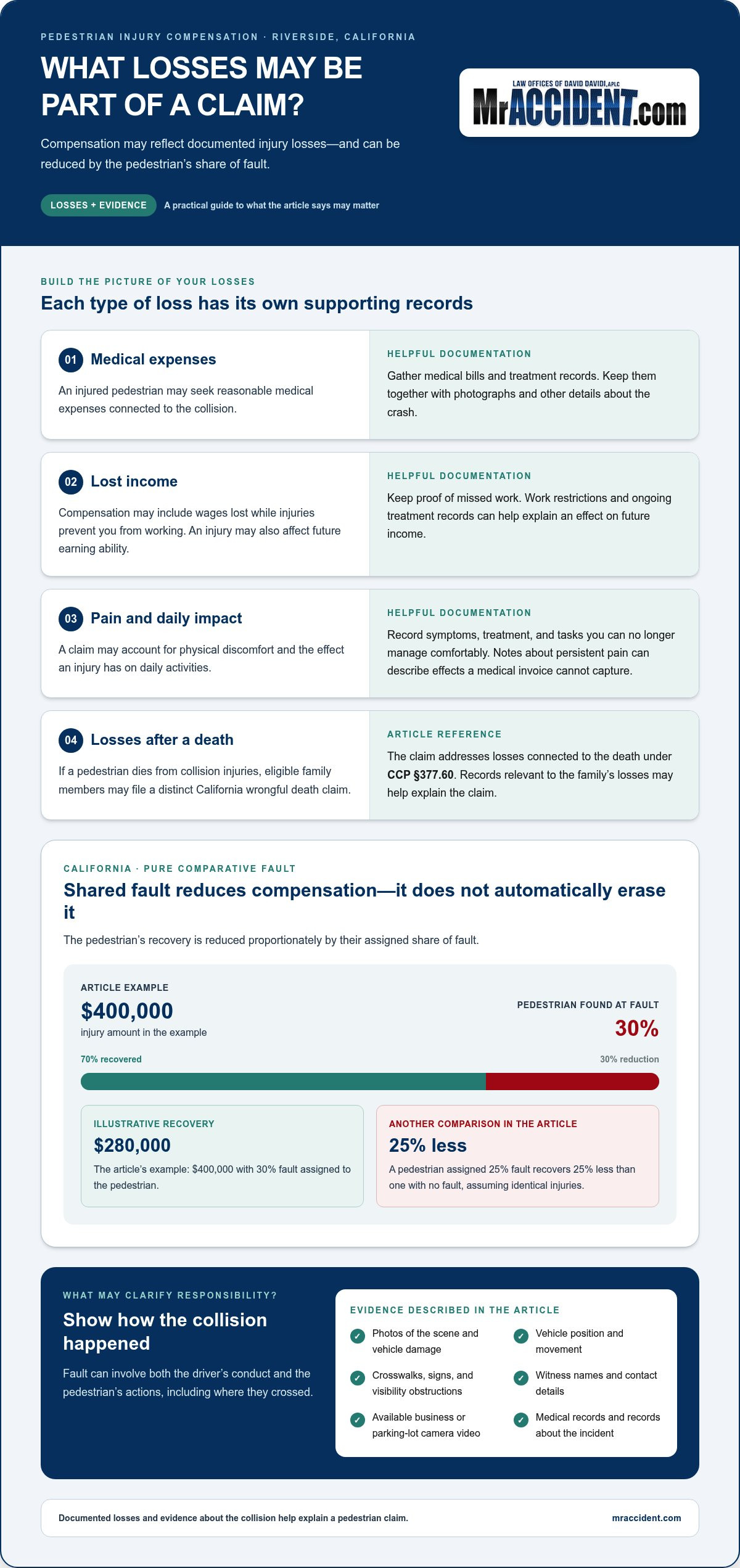
An injured pedestrian may seek compensation for medical expenses, lost income, and pain and suffering. The amount depends in part on documented losses and how responsibility for the collision is assigned.
Medical Bills and Income Losses
Gather medical bills, treatment records, and proof of missed work to document the financial effects of the collision. Compensation may include reasonable medical expenses and wages lost while injuries prevent you from working. If an injury affects your future ability to earn income, records of work restrictions and ongoing treatment can help explain that loss. A pedestrian accident lawyer can assess how the evidence connects your expenses and income changes to the crash.
Pain and Injury Compensation
Compensation may also account for pain and suffering, including physical discomfort and the effect of an injury on daily activities. Keep a record of symptoms, treatment, and tasks you can no longer manage comfortably. For example, notes about persistent pain after a fracture can help describe effects that a medical invoice cannot capture. The injury, treatment, and documented impact help explain the losses involved.
If a pedestrian dies from collision injuries, eligible family members may file a California wrongful death claim under CCP §377.60. The claim is distinct from the injured person’s own claim and addresses losses connected to the death. An attorney can help identify the applicable claim and organize records relevant to the family’s losses.
Fault Percentages and Recovery
California follows pure comparative fault, so a pedestrian’s compensation is reduced proportionately by their share of fault. For example, a pedestrian found 30% at fault for a $400,000 injury would recover $280,000. A pedestrian assigned 25 percent fault recovers 25 percent less than a pedestrian with no fault, assuming identical injuries. Fault can involve the driver’s conduct and the pedestrian’s actions, including where they crossed.
Evidence about crosswalks, vehicle movements, and each person’s conduct can help establish negligence and assess compensation. Keep photographs, witness details, and medical records together so the circumstances and losses can be reviewed clearly.
How Do Parking Lot and Backing Accidents Injure Pedestrians?
Backing drivers may not see pedestrians moving behind parked vehicles or through busy aisles. California Vehicle Code §21950 requires drivers to yield to pedestrians in marked and unmarked crosswalks.
Even a slow collision can cause serious harm. A pedestrian accident at 5 to 10 miles per hour can cause fractures, head injuries, and soft tissue damage. Turning vehicles, blocked sightlines, and cars entering or leaving parking spaces create hazards for people walking between vehicles or toward an entrance.
Evidence can help show how the collision happened and who may be liable. If it is safe, photograph the vehicle’s position and damage, nearby signs and crosswalks, and anything obstructing visibility. Get witnesses’ names and contact details, and preserve messages or records about the incident. Video from nearby businesses or parking-lot cameras may also show how the vehicle moved.
After a collision in Riverside, seek medical attention, report the accident to law enforcement, and document the scene if possible. Keep report details, medical records, and photographs together. These steps can preserve useful information while you focus on treatment and recovery.
When comparing pedestrian accident lawyers in Riverside, ask how they assess liability, preserve evidence, and explain the claims process. Consider how clearly the attorney addresses your specific circumstances, including any dispute about where you crossed or how the driver acted.
The at-fault driver’s auto liability coverage may provide a route to compensation. If the driver is uninsured, review whether your own uninsured motorist coverage applies to the parking-lot collision. The policy terms matter.
An accident attorney can organize evidence, communicate about liability, and present documented injury losses to insurers. If you need help evaluating a pedestrian claim, explore pedestrian accident legal guidance.
Comparative fault when a pedestrian is jaywalking
Jaywalking does not automatically prevent a pedestrian injured in Riverside from seeking compensation. California applies pure comparative fault, which reduces recovery according to the pedestrian’s share of responsibility.
Jaywalking and Shared Fault
California Vehicle Code §21954 requires pedestrians crossing outside crosswalks to yield, while drivers still owe them a duty of care to avoid collisions. That means crossing outside a marked route can matter, but it doesn’t automatically settle fault. The driver’s actions, visibility, speed, and opportunity to avoid impact may also affect how responsibility is assessed.
Consider the full sequence of events, not just where the pedestrian crossed. A driver backing out of a parking space may have limited visibility, while a pedestrian may have crossed between parked cars. Evidence showing where each person was and when they could see one another can help explain how the collision occurred.
Fault Disputes in Pedestrian Claims
California’s comparative fault rule allows an injured pedestrian to recover reduced compensation even if they were partly responsible. The reduction reflects the share of fault assigned to the pedestrian, so disputes about the route taken or the driver’s conduct can affect damages, including medical expenses. Photos, witness accounts, vehicle positions, and available video can help clarify conflicting descriptions.
California Vehicle Code §21950 also requires drivers to yield to pedestrians in marked and unmarked crosswalks. If a driver argues that a pedestrian entered traffic unexpectedly, evidence about crosswalks, sightlines, and the vehicle’s movement can help assess that claim. Keep relevant records together and note details while they remain clear.
Georgia’s rule does not govern a collision in Riverside. Under Georgia’s comparative negligence laws, an injured pedestrian must be less at fault than the other party to remain eligible for compensation. For a California parking-lot claim, California’s pure comparative fault rule applies instead.
For a claim in Riverside, identify where the pedestrian crossed, preserve evidence from the scene, and compare each account with the physical details. This review can help show whether jaywalking, driver negligence, or both contributed to the collision.
Whether a pedestrian can sue after a parking lot collision
A pedestrian may pursue a personal injury claim when another party’s negligence caused an injury. Liability depends on evidence connecting the collision to a driver’s conduct or a hazardous condition.
Riverside County recorded 436 pedestrians injured or killed in traffic collisions during 2014. Of those pedestrians, 41 were over age 65, a reminder that collision evidence can matter to victims of different ages.
Evidence Gathering and Investigation
Build a timeline using the collision report, vehicle positions, parking-lot layout, and accounts from people who saw the impact. Compare those details with the walking route and the point where the pedestrian and vehicle met. California Vehicle Code §21804 requires drivers entering a roadway from a parking lot or driveway to yield, including to pedestrians. That rule can matter when a vehicle crosses a sidewalk or street entrance.
Parking Lot and Backing Collisions
A backing collision may happen when a driver reverses from a space into a pedestrian’s path. Turning vehicles and cars moving through crowded parking areas create other risks, especially where parked vehicles block sightlines. At crosswalks, California Vehicle Code §21950 requires drivers to yield to pedestrians in marked and unmarked crosswalks. Record whether the impact occurred in a marked crossing, aisle, sidewalk, or driveway.
Potentially Liable Parties
A driver may be liable if evidence shows that negligent driving caused the collision, such as failing to yield while entering a street. A property owner or business may also need to be considered if a dangerous condition contributed, but ownership alone does not establish responsibility. The evidence must connect the condition to the collision and resulting injury. Compare a distracted driver’s account with physical evidence and witness descriptions.
For a consultation, organize the collision report, injury records, and a short timeline of events. If a serious injury or disputed liability complicates your claim, request a case review to discuss your next steps.
Law Offices of David Davidi, APLC: Car Accident Legal Representation
Law Offices of David Davidi, APLC represents people injured in pedestrian and car accidents. If you were a pedestrian hit by a car in a parking lot, a Riverside lawyer can help assess the claim, the available evidence, and the losses connected to your injuries.
After a car hits you in a parking lot, you may have questions about insurer communications, disputed accounts, or what records to gather. Bring relevant correspondence and a timeline of events to discuss how the circumstances may affect your claim and what steps could follow.
If you’re ready to discuss your pedestrian accident claim, contact Law Offices of David Davidi, APLC.
Take the Next Step Toward Clarity
After a parking-lot collision, uncertainty about treatment, work, and what comes next can make decisions harder. A focused conversation about your circumstances can help clarify options for addressing the claim and moving forward.
If you need a Riverside lawyer after a pedestrian is hit by a car in a parking lot, Law Offices of David Davidi, APLC can discuss your pedestrian accident claim. The firm also represents people in truck and motorcycle accident cases. Share what matters most to you, including the questions you still have about pursuing recovery.
There’s no need to have every detail organized before taking that step. Start with the information you have and explain what you’re facing. Contact Law Offices of David Davidi, APLC to discuss your next steps. You deserve clear guidance as you work toward a steadier path forward.
Frequently Asked Questions
Can I Sue if I Was Hit By a Car While Walking in a Parking Lot?
Yes. You may bring a claim if a driver’s negligence caused your parking-lot injuries. A pedestrian can seek compensation even if the collision happened outside a marked crosswalk, although the crossing location may affect comparative fault. A property owner or business may also be relevant if a dangerous condition contributed. The key question is whether evidence connects another party’s conduct or a condition to your injury.
Can a family file a wrongful death claim after a pedestrian fatality?
Yes. Under California Code of Civil Procedure §377.60, eligible family members may file a wrongful death claim when a pedestrian dies from collision injuries. This claim is separate from the injured person’s personal injury claim and addresses losses resulting from the death. Preserve records identifying family relationships and documenting funeral or other related expenses, alongside medical and collision records.
How Does Fault Affect What a Pedestrian Recovers?
California’s pure comparative fault rule reduces a pedestrian’s recovery by the percentage of fault assigned to them. It does not automatically bar a claim if the pedestrian contributed to the collision. For example, an insurer may argue that the pedestrian’s route contributed, while evidence may show the driver had time to avoid the impact. Compare each party’s conduct with the evidence supporting the assigned share of fault.
How Does Local Knowledge Strengthen a Pedestrian Claim?
Local context matters in Riverside because parking lots differ. A review can identify whether the collision occurred in a private aisle, at a driveway exit, on a sidewalk crossing, or on a public roadway. That distinction can guide an investigation toward relevant witnesses, available video, property records, or a possible public-entity issue.
How long do I have to file a pedestrian accident lawsuit in California?
A claim against a private driver generally has a deadline of 2 years from the accident date under CCP §335.1. A claim against a government entity generally requires a Government Tort Claim within 6 months under Government Code §911.2. According to California Legislative Information, a lawsuit must be filed within 6 months after the claim is denied. For a minor, the listed deadline is 2 years after turning 18 under CCP §352.
What should a pedestrian do after being hit by a car in a parking lot in Riverside, California?
After a parking-lot collision in Riverside, prioritize immediate safety and medical care, then note the precise location. Record the aisle, nearest entrance or storefront, and the direction the vehicle traveled. Keep parking receipts, visit records, and messages from the driver or property staff together. If symptoms change after initial care, note when they began and tell your treating clinician.

Law Offices of David Davidi, APLC is a California – based Personal Injury Law Firm, our Attorney’s provide the representation for your personal injury, accident, product liability, premises liability, and other
negligence resulting in injuries. We treat all clients and cases, large or small, with hands-on care.
Practice Area
© Copyright 2026 Law Offices of David Davidi, APLC. All rights reserved.
Digital Marketing By 