
888-529-0707 call 24-7 we service throughout california
Common Causes of Pedestrian Accidents in Riverside
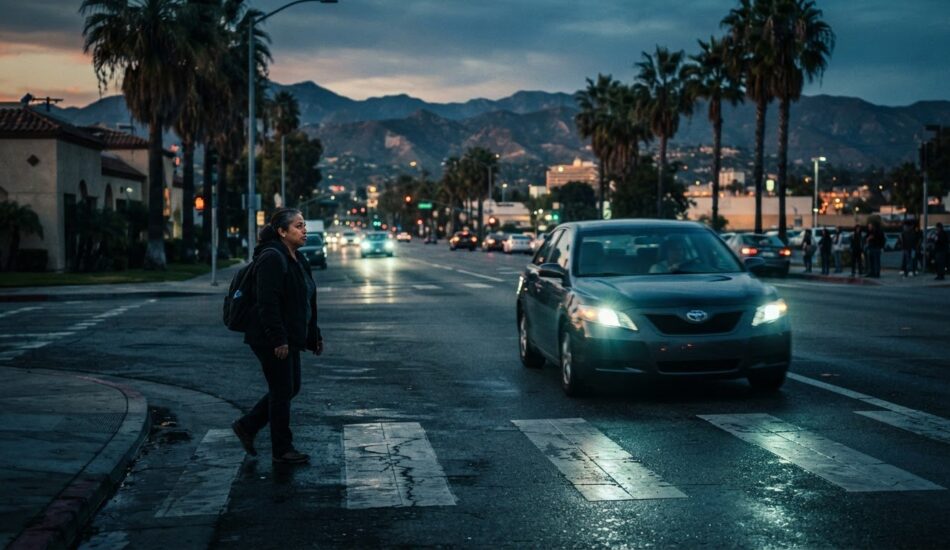
A pedestrian crash rarely has one simple explanation. The common causes of pedestrian accidents in riverside include distracted driving, speeding, failure to yield, impairment, and limited visibility. Several factors can contribute to the same collision: a driver’s actions, the crossing, lighting, and traffic conditions may all matter.
If you’re trying to understand what happened, it’s natural to have questions about which behaviors create danger and whether a poorly lit street or blocked view played a role. This article explains common crash contributors in Riverside and how street conditions can affect a pedestrian’s visibility and a driver’s ability to react.
You’ll also learn why fault isn’t always clear from one detail alone, what information may help explain how a collision happened, and why responsibility depends on the specific facts. California’s comparative-fault rules may allow responsibility to be shared, so an injured pedestrian isn’t automatically at fault simply because questions arise about their actions. Understanding the circumstances can be a useful first step toward deciding what to do next.
Key Takeaways
- The common causes of pedestrian accidents in riverside can involve driver behavior, visibility, and street conditions interacting, so a crash may have more than one contributing factor.
- Darkness, glare, shadows, weather, and visual obstructions can affect how soon drivers and pedestrians see one another.
- A pedestrian’s location alone doesn’t determine fault. Signals, crossing conditions, driver conduct, and available evidence may also matter.
- Drivers and pedestrians can reduce risk through attentive, predictable choices, though precautions can’t guarantee a collision won’t happen.
- After a crash, prioritize safety and medical needs. When possible, record the location and conditions, take photographs, and note witness details.
Common Causes of Pedestrian Accidents in Riverside: What Contributes to a Crash?
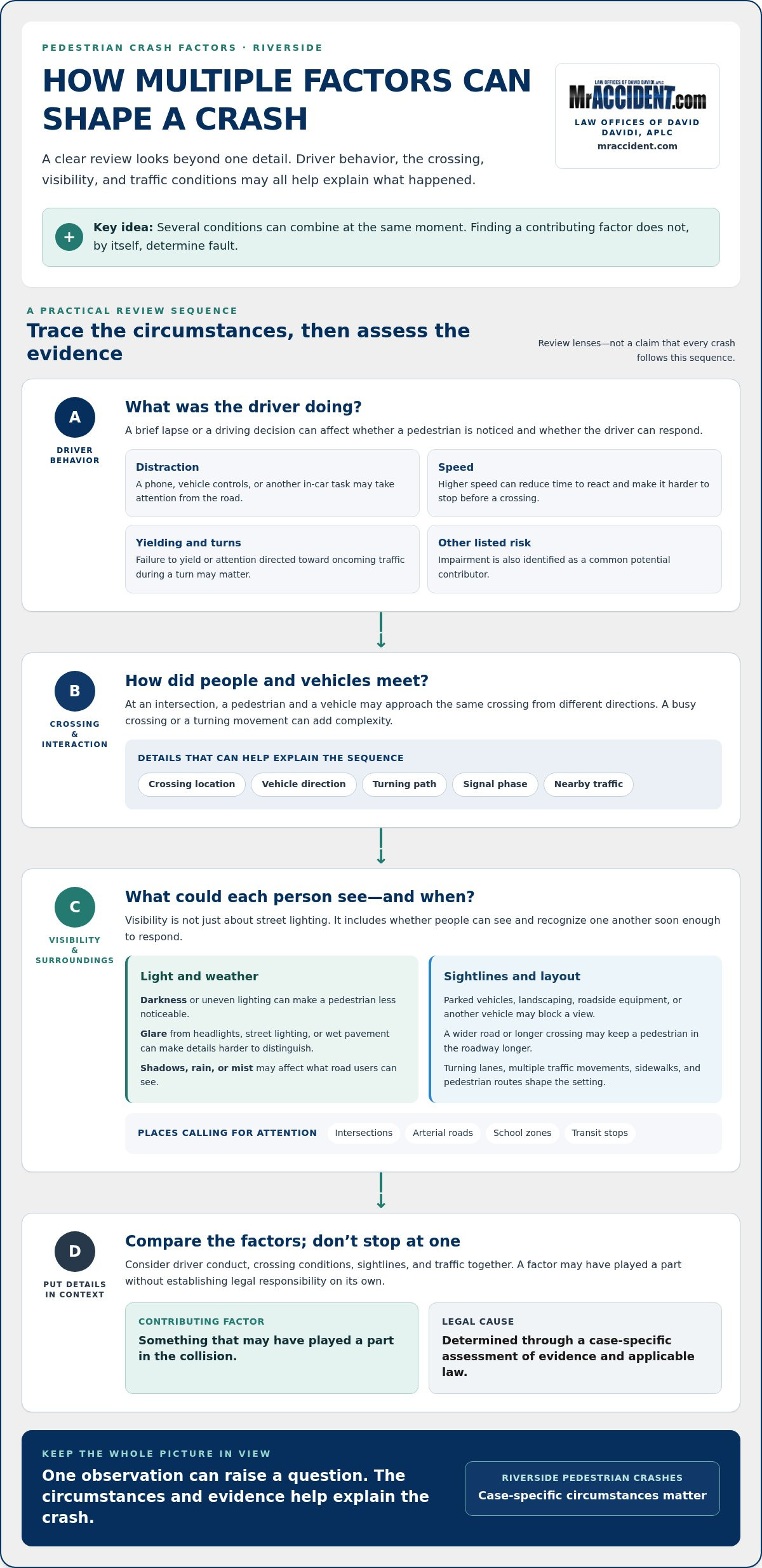
A pedestrian crash can involve several contributing factors, and identifying one doesn’t automatically assign blame. A driver may be watching traffic while turning, a pedestrian may be difficult to see, or a crossing may be busy. In Riverside, these circumstances can arise on an arterial road or at an intersection. They’re general examples, not claims about a particular location.
A pedestrian crash involves a person traveling on foot and a vehicle. A contributing factor is something that may have played a part in the collision. A legal cause is determined through a case-specific assessment of the evidence and applicable law. The ideas are related, but not interchangeable: a factor may be present without establishing legal responsibility on its own.
The common causes of pedestrian accidents in riverside may include driver inattention, failure to yield, excessive speed, turning movements, and limited visibility. These risks can overlap. A crash may result not from one isolated mistake, but from several conditions combining at the wrong moment. A broad overview of pedestrian safety also describes how road-user behavior and surroundings can shape risk.
Driver behaviors that can put pedestrians at risk
Distraction can take a driver’s attention away from the road, even briefly. Looking at a phone, adjusting controls, or focusing on another in-car task may delay noticing someone entering a crossing. Drivers approaching crosswalks or preparing to turn need to watch for pedestrians and yield as required. The signals, crossing location, and surrounding circumstances can matter when assessing what happened.
Speed affects the time available to react and the force of a collision. A vehicle moving faster may be harder to stop before reaching a crossing, and a person struck at speed may face more severe harm. The posted limit is only part of the picture. Road layout, traffic, and visibility can all affect whether a driver has room to respond safely.
Why intersections and turning vehicles deserve attention
At an intersection, a pedestrian and a vehicle may approach the same crossing from different directions. A driver turning across a crosswalk may be watching oncoming traffic or checking for a gap while a pedestrian is moving through the intersection. If a vehicle, landscaping, or another obstruction blocks the driver’s view, the pedestrian may be harder to see in time.
These situations can occur at intersections throughout Riverside, including where arterial roads meet side streets. That describes a type of setting, not a claim that a particular intersection is unusually dangerous. When reviewing a collision, details such as the vehicle’s direction, turning path, signal phase, sightlines, and nearby traffic can help explain how events unfolded. Consider them together rather than treating one detail as the whole story.
How Riverside Visibility and Street Conditions Can Increase Pedestrian Risk
Visibility means more than whether a street is lit. It’s whether drivers and pedestrians can see and recognize one another soon enough to respond. A pedestrian may be present but difficult to distinguish from a dark background, or a driver’s view of a crossing may be briefly blocked. These conditions don’t automatically cause a collision or establish fault, but they can affect what each person could see and when.
Reduced visibility can shrink the time available to notice a pedestrian, interpret their movement, and react safely. That can matter on a Riverside street at night, in changing weather, or near an intersection where vehicles and people approach from different directions. Consider visibility alongside the roadway layout and the actions of everyone involved.
Lighting, glare, and sightline limitations
Darkness can make a person crossing the road less noticeable, particularly if the surrounding area is dim or unevenly lit. Headlights may help drivers see ahead, but glare from headlights, street lighting, or wet pavement can make details harder to distinguish. Shadows may obscure someone near a curb or in a crossing. Rain, mist, or other weather can further affect what road users see, though conditions vary and don’t affect every collision in the same way.
Objects can interrupt sightlines, too. A parked vehicle, roadside equipment, landscaping, or another vehicle may temporarily block a driver’s view of someone approaching or already in a crosswalk. The same obstruction can limit a pedestrian’s view of oncoming traffic. These are examples of factors to examine, not claims that a particular Riverside street has a lighting or visibility problem.
Crossings, sidewalks, and the walking environment
The layout of a crossing can affect how long a pedestrian is exposed to vehicle traffic. A wider road or a longer crossing may mean a person remains in the roadway longer, while turning lanes or multiple traffic movements can add complexity—factors that transport planning consultancies like ML Traffic Engineers Australia evaluate when designing safer urban corridors. Sidewalks and pedestrian routes also shape where people walk and how they reach a crossing. Without evidence about a specific location, describe these as general considerations rather than claiming a Riverside route is missing or obstructed.
School zones and transit stops call for attentive driving because pedestrians may be walking near the road, crossing, or moving between a vehicle and a destination. Drivers can scan ahead, moderate their speed for conditions, and watch for people near crossings and stops. Pedestrians can stay alert to traffic and use available crossing routes where practical, while recognizing that careful choices can’t eliminate every risk.
When reviewing the common causes of pedestrian accidents in riverside, visibility is one part of a wider picture. Relevant details may include lighting, weather, glare, sight obstructions, crossing layout, and the positions of vehicles and pedestrians. If you’ve been injured, a pedestrian accident attorney can help assess how the case-specific facts may relate to responsibility.
Misconceptions About Riverside Pedestrian Crashes and Who May Be Responsible
After a pedestrian crash, it can be tempting to focus on one visible detail, such as where the person was crossing. But a pedestrian’s location alone doesn’t settle who was legally responsible. The driver’s actions, traffic signals, crossing conditions, visibility, and events immediately before impact may all be relevant. Each collision deserves a careful review of its own circumstances.
The common causes of pedestrian accidents in riverside can help explain how a crash may happen, but identifying a possible contributing factor is different from determining legal liability. A person’s presence outside a crosswalk, for example, doesn’t by itself establish that they caused the collision. Nor does a driver’s presence behind the wheel automatically resolve responsibility. The full context matters.
Does being outside a crosswalk automatically make a pedestrian at fault?
No single fact should be treated as an automatic conclusion. Where a person crossed may matter, along with nearby crosswalks, signals, traffic, visibility, and the driver’s conduct. California law has changed how certain safe crossings outside crosswalks are treated, but crossing rules and their application depend on the specific circumstances. Don’t assume that crossing outside a marked crosswalk decides fault or that a pedestrian always has the right of way.
California generally applies comparative negligence, which can allow responsibility to be shared. If an injured person is found partly responsible, that finding may affect a claim under the applicable rules. How those rules apply requires a current, case-specific legal assessment. General information can clarify the issue, but it can’t establish liability in an individual Riverside collision.
How investigators may assess contributing factors
A careful review may consider several kinds of information together. Depending on what’s available, that may include:
- Photographs or video showing the scene, crossing, signals, lighting, or vehicle positions.
- Statements from the people involved and witnesses, including where each person was and what they observed.
- Records related to the collision, along with physical details at the scene that may help explain movement or sightlines.
Accounts can differ, particularly after a frightening event. A witness may have seen only part of the collision, while a photograph may show conditions after vehicles or people moved. That doesn’t make these details useless. It means each should be weighed in context rather than treated as conclusive proof of fault. Preserving available information can help clarify what happened.
An attorney can review the case-specific facts, explain how California liability principles may apply, and help an injured pedestrian understand possible next steps. No article can predict the outcome of a particular claim. A reliable assessment considers the available evidence and circumstances together.
Practical Ways to Reduce Pedestrian Crash Risks in Riverside
Safer streets depend on attention from everyone using them. Drivers can make space and time to respond, while pedestrians can make their movements easier to anticipate and stay alert to traffic. These steps may reduce risk, but they can’t prevent every collision or transfer responsibility for a crash to an injured pedestrian.
In Riverside, conditions can change from an intersection to an arterial road, school zone, or transit stop. Consistent habits help in each setting: slow near crossings, check carefully before turning, and take extra care when visibility is limited.
Steps drivers can take near people walking
Approach crossings and intersections at a speed that leaves room to respond. Before turning, reversing, or entering a roadway, look for pedestrians on sidewalks and in crosswalks, including people partly hidden by another vehicle. Put away distracting devices and avoid rushing through a turn. A clear view and a few extra seconds can make a difference.
- Slow down near intersections, marked crossings, school zones, and transit stops.
- Check the crosswalk and sidewalk before turning, backing up, or pulling into traffic.
- Stay focused on driving instead of handling a phone or in-car task.
- Leave enough space to stop if a pedestrian enters the roadway.
Steps pedestrians can take to improve visibility
Choose an available crossing and follow the signals where present. Before stepping into the road, look for approaching vehicles and take care around turning traffic. Making eye contact with a driver may help when practical, but don’t assume the driver has seen you. If lighting is poor, visible clothing or reflective accessories may help others notice you sooner.
- Use a crossing route where available and pay attention to traffic signals.
- Pause to check approaching vehicles, including those preparing to turn.
- Make eye contact if possible, but wait until it’s safe rather than relying on it.
- Consider brighter or reflective items in dim conditions, without treating them as a substitute for driver attention.
Slow near crossings, check before turning, put distractions away, and stay visible when light is low. These habits address some conditions behind the common causes of pedestrian accidents in riverside, while recognizing that people walking can’t control every driver or roadway condition.
Safety steps aren’t a measure of fault. If you were injured in a Riverside pedestrian crash, contact a pedestrian accident attorney to discuss the circumstances and understand what information may help assess your situation.
After a Riverside Pedestrian Accident: Clarify What Happened and Get Support
Your immediate safety comes first. If anyone may be seriously hurt or in danger, seek emergency assistance. Get medical attention when needed, and don’t delay care to take photos or gather information. Once urgent needs are addressed, details about the scene and conditions may help clarify how the collision happened.
The common causes of pedestrian accidents in riverside can overlap, and the first account of a crash may not explain every contributing factor. If you’re injured or supporting someone who was, focus on preserving useful information rather than deciding fault before the facts have been reviewed.
What information may help explain how the collision happened?
As soon as practical, write down what you remember. Note the date, approximate time, location, weather, lighting, and crossing conditions. Include where you and any involved vehicles were, which direction they were moving, and what you observed before and after impact. Memories can become less precise over time, so a brief, factual account may be useful.
If it’s safe and you’re able, keep photographs of the scene and relevant conditions, witness names and contact details, and any incident records together. Preserve related documents, such as medical records and communications about the collision. Don’t put yourself at risk to collect evidence, and don’t postpone treatment for it.
When legal guidance may help
Responsibility can depend on details such as the driver’s actions, signals, crossing conditions, visibility, and available evidence. An attorney can review those case-specific facts and explain how liability questions may apply without promising a particular result. The Law Offices of David Davidi, APLC represents injured pedestrians in California, including in Riverside, Los Angeles, Fresno, Modesto, Bakersfield, Stockton, Tulare, Visalia, and Merced.
For additional information, the firm’s pedestrian accident rights and recovery guide can help you understand issues that may arise after a crash. Keep public comments about fault measured while the facts are being reviewed. A brief online post or an incomplete account may not reflect the full circumstances, and it can be difficult to take back statements once shared.
Clients pay no upfront legal fees under the firm’s contingency-based arrangement. The firm collects a fee only if it successfully recovers compensation through settlement or trial judgment. If you’re ready to talk through what happened, speak with our team about your pedestrian accident.
Take the Next Step With Clarity
After a pedestrian collision, it can be hard to know what deserves attention first. You don’t have to settle every question about responsibility on your own or make decisions before you understand the circumstances. An individual review can help you consider what happened and what options may be available.
Learning about the common causes of pedestrian accidents in riverside is a starting point, not a verdict on any particular crash. Your experience and the evidence deserve to be considered on their own terms. If you’re weighing whether legal guidance could help, a conversation with an attorney gives you space to discuss your concerns and ask questions without assuming a particular outcome.
The Law Offices of David Davidi, APLC represents injured pedestrians and provides direct access to experienced attorneys. Discuss your Riverside pedestrian accident with our team.
Frequently Asked Questions
What are the most common causes of pedestrian accidents in Riverside?
Common contributors include driver inattention, speeding, failure to yield, turning movements, impairment, and conditions that limit visibility. The common causes of pedestrian accidents in riverside can overlap, so a collision may involve multiple behaviors or circumstances rather than one clear explanation. These are general contributing factors, not a ranking of Riverside crash data. To understand a particular incident, consider the traffic movements, signals, roadway setting, and available evidence together.
Are pedestrian accidents more likely at night in Riverside?
Without reliable Riverside-specific data comparing crashes by time of day, it’s not possible to say whether pedestrians are more likely to be involved in a crash at night locally. Darkness can make people harder to see, while glare, shadows, and headlight conditions may affect what drivers notice. For an individual collision, details such as lighting, weather, and the driver’s view can help explain the circumstances, but night conditions alone don’t establish fault.
Can a pedestrian be partly at fault in a California accident?
Yes. California generally follows comparative negligence, so responsibility may be allocated between people involved in a collision. If a pedestrian is found partly responsible, that may affect a claim, but it doesn’t automatically bar recovery. The result depends on the facts and applicable law. A crossing location or a disputed account by itself doesn’t determine a person’s share of fault; an attorney can assess how the evidence relates to a specific case.
What evidence can help show what caused a pedestrian accident?
Useful information may include the collision report, photos or video, witness accounts, medical records, and details about traffic signals or the roadway. Preserve original files where possible, since edits or reposts may remove helpful context. Note where each person and vehicle was, along with the direction of travel, while memories are fresh. No single record necessarily settles the cause; the evidence is most useful when considered together.
Where can I find pedestrian crash statistics for Riverside, California?
For city-level information, look for collision records or safety data from the City of Riverside and Riverside Police Department. California Highway Patrol’s collision data and California Office of Traffic Safety reports can provide broader comparisons, though their geographic boundaries and reporting periods may differ. Riverside Police Department provides a process for requesting collision reports. Check what area and years a dataset covers before comparing figures, since city, county, and regional totals aren’t interchangeable.
What should I do if a driver says I suddenly stepped into the road?
Don’t feel pressured to argue about fault at the scene. Prioritize safety and medical care, then write down your own recollection, including where you were, the signal or crossing conditions, and what you saw or heard. Keep any messages or relevant records, and note witnesses who may have seen the approach to the collision. A driver’s statement is one account, not necessarily the complete picture. A lawyer can review the circumstances with you.
Can poor lighting or a blocked view contribute to a pedestrian crash?
Yes. Dim conditions, glare, shadows, or an obstruction such as a parked vehicle may affect when a driver sees a pedestrian, or when a pedestrian sees approaching traffic. Their relevance depends on the specific scene and timing. If you’re documenting a crash, record the lighting and sightlines as they appeared, and take photographs only when safe. Those details may help explain what happened, but they don’t independently prove who was legally responsible.

Law Offices of David Davidi, APLC is a California – based Personal Injury Law Firm, our Attorney’s provide the representation for your personal injury, accident, product liability, premises liability, and other
negligence resulting in injuries. We treat all clients and cases, large or small, with hands-on care.
Practice Area
© Copyright 2026 Law Offices of David Davidi, APLC. All rights reserved.
Digital Marketing By 