
888-529-0707 call 24-7 we service throughout california
Evidence That Can Help Prove Negligence in a Tulare Slip and Fall
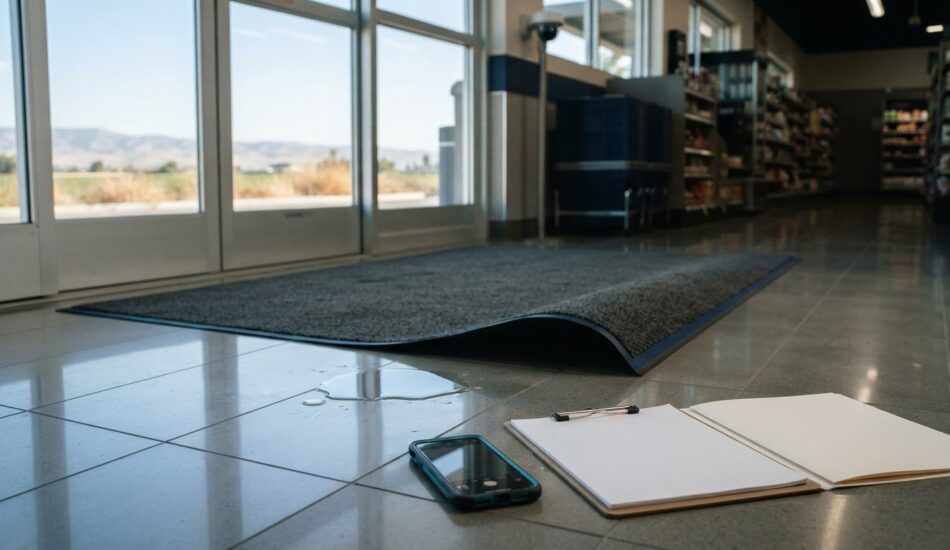
Evidence that an owner should have known about a hazard may help support a negligence claim. You generally need evidence that a dangerous condition created an unreasonable risk, the owner knew or should have known about it, and failed to fix it, protect visitors from it, or warn them. Evidence showing how long the hazard existed may help establish whether it should have been discovered.
A fall can leave you dealing with pain, medical care, and uncertainty about what happened. Photos, witness accounts, incident reports, video, and medical records may help show the hazard, how the fall occurred, and the injuries that followed. This article explains what evidence may support a claim, how hazardous property conditions factor into the analysis, and when you may still seek compensation even if the owner says they did not know about the danger.
Key Takeaways
- Evidence that a hazard existed long enough to be discovered may help show the property owner should have known about it.
- Preserve records that connect the dangerous condition to the fall and your injuries, including incident documentation and medical notes.
- Look beyond spills: broken flooring, poor lighting, loose rugs, and uneven steps can also create risks that matter to a claim.
- Being partly responsible for a fall doesn’t automatically prevent recovery in California; your share of fault can reduce compensation.
Can I recover if the property owner did not know about the hazard?
Possibly. In California, a claim may rely on evidence that the owner should have discovered a hazard, such as a spill left on a store floor.
Owner Knowledge of Hazards
Knowledge can mean actual awareness of a dangerous condition or circumstances showing the property owner should have discovered it. This distinction matters because an owner’s denial of prior knowledge does not, by itself, resolve liability. For example, a wet floor in a busy aisle may support an argument that someone should have noticed it during a reasonable inspection. Evidence of how the hazard arose and how long it remained can help show what the owner knew or should have known.
Property Owner Duty of Care
California property owners must use ordinary care to protect others from harm on their property. This duty can apply to a person or business that owns, leases, occupies, or controls the location. For a fall claim, you generally need to connect an unreasonably dangerous condition to your injury and show that the responsible party knew or should have known about it. That connection helps establish whether the party breached its duty of care.
Repairing Hazards and Warning Visitors
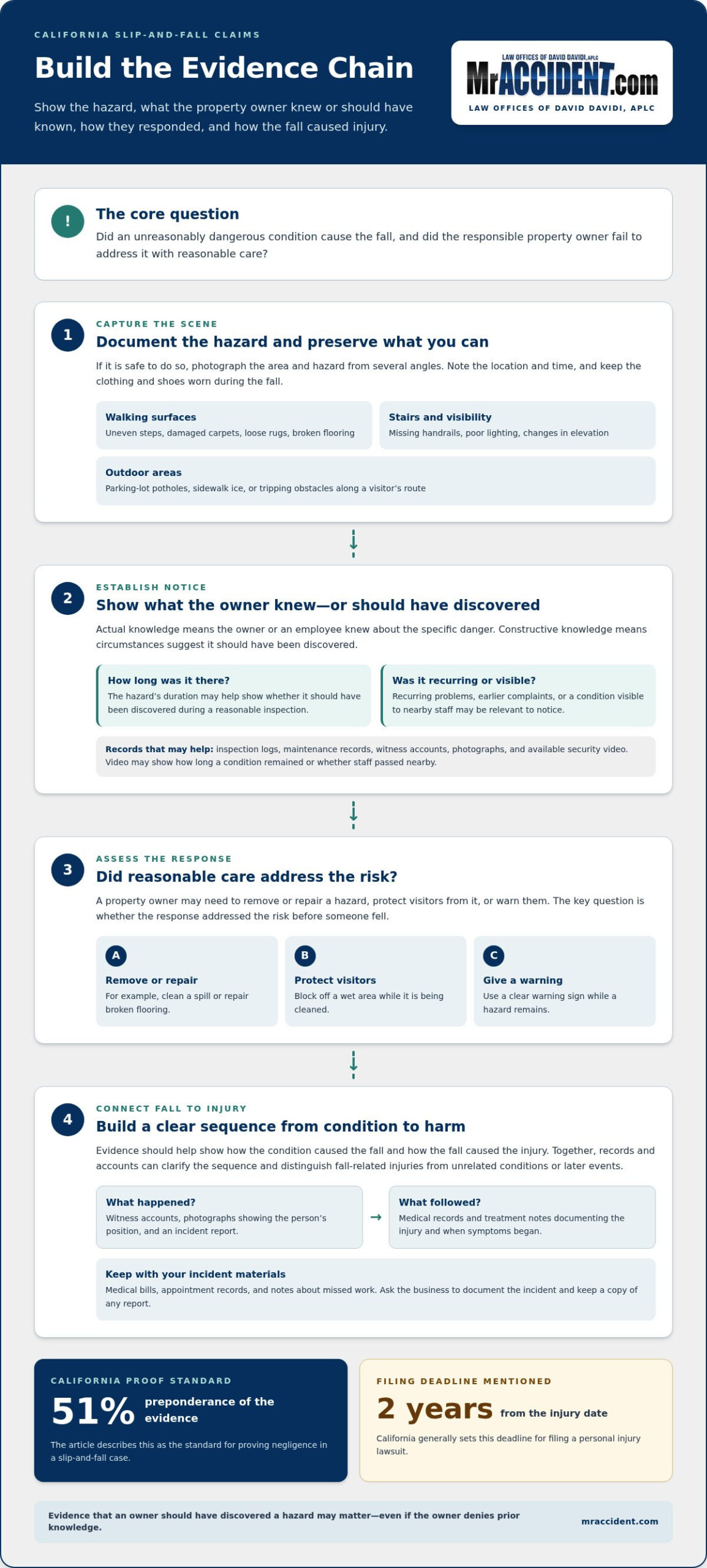
Reasonable care may require an owner to remove or repair a hazard, protect visitors from it, or provide a warning. A store might clean a spill, block off a wet area, or place a clear warning sign while cleaning is underway. If broken flooring remains unrepaired and unmarked, that may support a negligence claim. The key question is whether the response addressed the risk before someone fell.
Evidence for a lawsuit can help show both the dangerous condition and its connection to your injuries. Photos, witness accounts, inspection or maintenance records, and incident reports may establish how the hazard developed and whether it should have been discovered. Medical records can document resulting harm. California law generally sets a two-year deadline from the injury date to file a personal injury lawsuit, so delay can affect your ability to bring a claim.
How do You Prove Negligence in a Slip and Fall Case?
To prove negligence, connect a dangerous condition to the property owner’s failure to address it and to your injury. In California, the claimant generally must prove negligence by a preponderance of the evidence, described as a 51-percent standard. Proving negligence in a slip and fall case in Tulare means showing how the evidence supports each part of that connection.
Preserving Evidence After a Fall
Preserving evidence means keeping records and images that capture the scene, the incident, and its aftermath. If you can do so safely, photograph the area and hazard from several angles, and note the location and time. Keep the clothing and shoes you wore during the fall. Ask the business to document the incident and keep a copy of any report. An attorney can investigate records, identify witnesses, and seek available security footage before it disappears.
Linking the Hazard to the Injury
Evidence links a hazard to an injury when it shows how the condition caused the fall and how the fall caused harm. A witness who saw the slip, photographs showing the person’s position, and an incident report may help establish the sequence. Medical records and treatment notes can document the injury and when symptoms began. Together, these materials help distinguish injuries from the fall from unrelated conditions or later events.
Evidence Supporting Negligence Claims
Evidence supporting a negligence claim may show the hazard, the owner’s notice, the response, and the resulting harm. Maintenance logs or inspection records may reveal whether the area was checked or earlier complaints were addressed. Video may show how long a condition remained or whether staff passed nearby. Witness statements can add context to records and images. An attorney can compare these sources and organize evidence relevant to liability and damages.
Keep medical bills, appointment records, and notes about missed work with your incident materials. These records help explain the personal injury’s effects and support damages claimed in personal injury cases. For proving negligence in a slip and fall case in Tulare, a personal injury attorney’s investigation can help clarify which records and witnesses may matter.
Common slip-and-fall hazards
Hazards vary by location, but each can pose a risk when visitors cannot reasonably see or avoid it. A missing handrail, uneven step, or poorly lit stairway may cause someone to lose balance and suffer an injury.
California courts consider whether the property owner knew about a hazard or should have discovered it through reasonable inspection. They may look at how long the condition existed, whether it occurred regularly, and what inspection or maintenance practices could have revealed it.
Actual knowledge means the owner or an employee was aware of the specific danger. Constructive knowledge means the circumstances suggest the hazard should have been discovered. For example, records of recurring problems in a walkway may help show notice, while evidence that a condition appeared moments before a fall may raise a different question.
- Walking surfaces: Uneven steps, damaged carpets, loose rugs, and broken flooring can catch a person’s foot.
- Stairs and visibility: Missing handrails and poor lighting can make changes in elevation harder to detect.
- Outdoor areas: Parking-lot potholes, sidewalk ice, and tripping obstacles may create hazards along a visitor’s route.
To prove negligence, evidence must help connect the hazard to a breach of duty. An inspection log showing regular checks may help explain what the owner could have discovered, while missing records may also be relevant. Witness accounts, photos, and maintenance documents can show whether the danger was visible, recurring, or left unaddressed.
A reasonable response depends on the condition. A property owner may need to repair a damaged walkway, secure a loose rug, improve lighting, or warn visitors while addressing the risk. If a warning sign was placed away from the hazard, its location may affect whether it gave people a useful chance to avoid danger. Medical records can document injuries and support damages, including pain and suffering. A lawyer can assess how notice, inspection, and the owner’s response fit together when evaluating whether you may recover.
Common hazardous property conditions
Hazardous conditions can occur inside apartments, stores, parking lots, and public walkways. Examples include broken or wet flooring, loose rugs, damaged carpets, uneven steps, missing handrails, poor lighting, potholes, and tripping obstacles. The location matters because it may help identify who controlled the premises and who was responsible for addressing the danger.
In an apartment building, a fall on a shared staircase or in a common hallway may involve the landlord, property manager, or another party controlling that area. A tenant’s fall inside a unit may raise different questions about who maintained the surface. Lease terms, maintenance requests, photos, and incident reports can help clarify responsibility and whether someone received notice before the accident.
California premises liability claims may involve someone who owns, leases, occupies, or controls the property. Ownership alone may not resolve who could be responsible for a dangerous condition. For example, a property manager who handles inspections or repairs may be relevant when reviewing reports about a broken entryway. Evidence must still connect the condition to the fall and show how the responsible party failed to use reasonable care.
Falls on government property can involve a different claims process from falls at private businesses or apartments. Claims against government entities in Tulare County typically have a six-month deadline. Identify whether the location was publicly controlled, preserve photos and reports, and record the exact place of the fall. Those details can help distinguish a city sidewalk from a privately maintained walkway.
California personal injury law focuses on the negligence elements, including a dangerous condition, notice, failure to respond reasonably, and resulting harm. The condition and responsible party shape what evidence matters and whether compensation may be pursued. If you fell on an apartment stairwell, a public path, or another unsafe premises in Tulare, discuss your fall injury claim with an attorney.
Law Offices of David Davidi, APLC: Car Accident Legal Representation
Law Offices of David Davidi, APLC represents people injured in slip-and-fall accidents throughout California, including Tulare. If you are considering a claim, the firm can assess how the hazard, property control, and available evidence relate to potential liability and damages. This may be useful when an owner disputes notice, multiple parties maintained the property, or your injuries require ongoing treatment.
The firm also represents people injured in car, truck, motorcycle, and pedestrian accidents. For a fall claim, bring any photos, incident reports, witness details, and medical records you have gathered. These materials can help clarify what happened and what questions need attention.
Contact Law Offices of David Davidi, APLC to discuss your slip-and-fall injury, or visit mraccident.com.
Take the Next Step With Your Evidence
The decisions you make after a fall can help preserve your options. Keep your records together, note changes in your symptoms, and write down details you may otherwise forget, such as where you were walking and what you noticed before falling. These notes can help clarify what happened as you consider your next steps.
If you are proving negligence in a slip and fall case in Tulare, a legal review can help you understand how the evidence relates to responsibility and potential recovery. The facts of your case shape that assessment. Law Offices of David Davidi, APLC also represents people injured in car, truck, and motorcycle accidents.
Contact Law Offices of David Davidi, APLC to discuss your situation and possible next steps. You deserve clear information as you decide how to move forward.
Frequently Asked Questions
What Damages Can I Recover?
Recoverable damages may include medical expenses, lost earnings, and compensation for pain and suffering. Records of follow-up care, for example, can document continuing treatment, while pay stubs may help show income lost during recovery. Keep receipts for injury-related expenses and track how symptoms affect daily activities. These details help explain the financial and personal effects of the fall.
What Evidence Can Help Prove Negligence?
Evidence may include scene photos, witness accounts, incident reports, medical records, and available security footage. A photo’s original date and time can help place the image in context. Save messages with the property manager and copies of any written complaint. Together, these materials can help clarify what happened, who was responsible for the area, and how the injury developed.
What Is Negligence?
Negligence is a failure to use reasonable care that causes harm to someone else. In a premises claim, the central issue is whether a responsible party acted reasonably given the condition and circumstances. For example, leaving a damaged entryway unaddressed after receiving a complaint could be relevant. The analysis connects conduct to the injury; a fall alone does not prove fault.
What if I was partially at fault for my slip and fall?
California’s pure comparative negligence rule allows an injured person to pursue a claim even when partly at fault. Any compensation is reduced according to the share of responsibility assigned to that person. For instance, distraction or unsuitable footwear could be part of the fault analysis, but neither automatically removes the property owner’s responsibility. The evidence helps determine how fault is allocated.
What are the elements of negligence in a California slip and fall case?
The elements are duty, breach, causation, and damages. You must show that the defendant owed a duty of reasonable care, failed to meet it, and thereby caused an injury and resulting harm. California claims are generally proved by a preponderance of the evidence, meaning the evidence makes the claim more likely true than not. Each element needs support; proof that a fall occurred is not enough on its own.
How can an injured person prove a property owner knew or should have known about a dangerous condition?
Show actual notice with evidence such as a prior complaint, employee communication, or repair request identifying the same condition. To show constructive notice, point to circumstances suggesting the hazard should have been discovered, such as a recurring problem or evidence that it remained present. For example, records of repeated leaks near the same doorway could help establish a pattern and support an inference of notice.

Law Offices of David Davidi, APLC is a California – based Personal Injury Law Firm, our Attorney’s provide the representation for your personal injury, accident, product liability, premises liability, and other
negligence resulting in injuries. We treat all clients and cases, large or small, with hands-on care.
Practice Area
© Copyright 2026 Law Offices of David Davidi, APLC. All rights reserved.
Digital Marketing By 