
888-529-0707 call 24-7 we service throughout california
How Your Personal Injury Settlement Is Paid in California

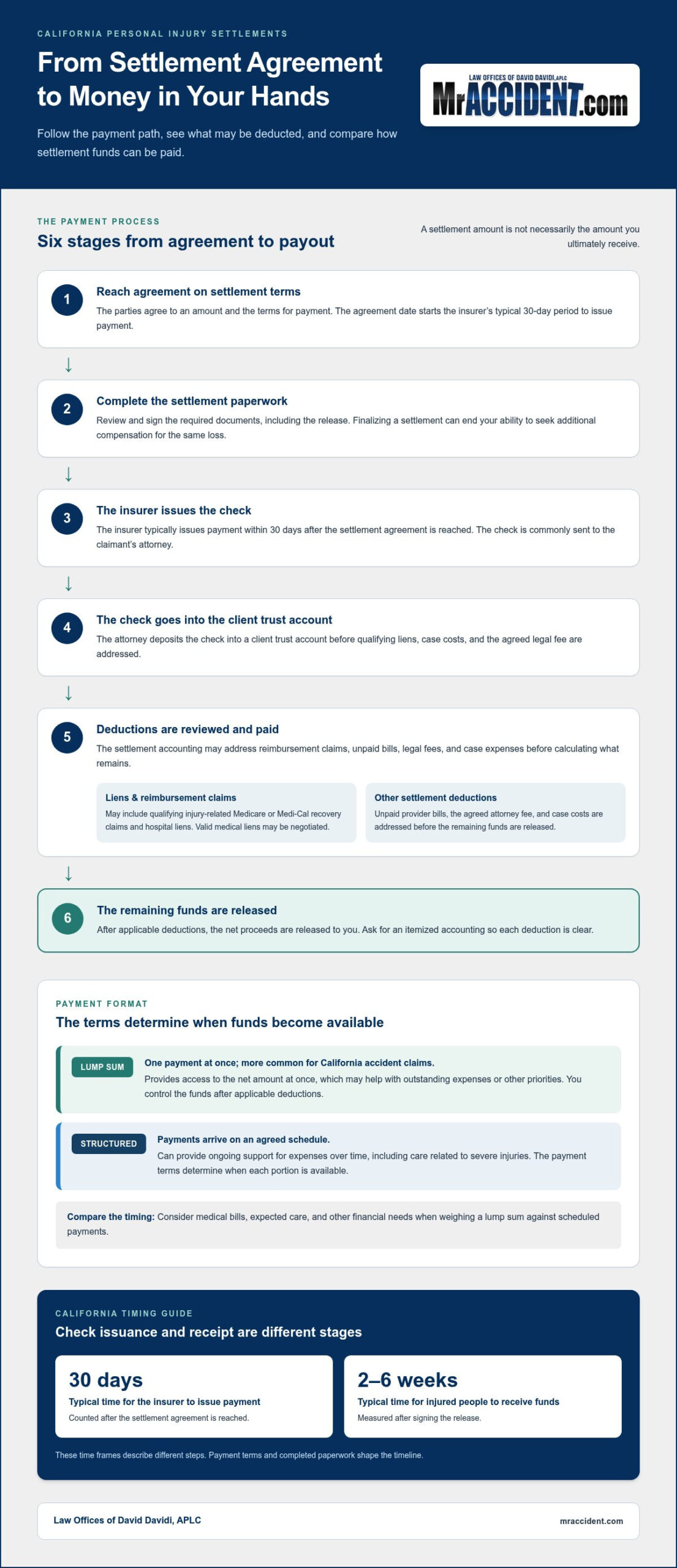
The settlement amount isn’t necessarily what you take home. How personal injury settlements are paid out in California depends on the settlement terms. Most are paid as a lump sum, with the check deposited into an attorney’s client trust account before qualifying liens, case costs, and the agreed legal fee are deducted. The remaining funds are then released to you.
It’s understandable to want a clear picture of when the money arrives and what may be deducted, especially while medical bills and other losses are weighing on you. This guide explains how payment typically moves from the insurer to you, what damages a settlement may cover, and how liens, fees, and expenses can affect your final proceeds. It also covers what to consider before accepting an offer or signing a release, since settling can close your claim and limit your ability to seek more compensation for the same loss.
Key Takeaways
- Compare an insurance offer with the full scope of your losses and potential reimbursement claims before deciding whether to accept it.
- Understand whether your settlement will arrive as a lump sum or structured payments, and how each option affects access to funds over time.
- Review the settlement accounting to see how liens, unpaid medical bills, case costs, and the agreed attorney fee affect the amount you receive.
- Consider both financial losses, such as medical expenses and lost income, and non-economic harm when assessing what a claim may include.
- Read the release carefully before signing: finalizing a settlement can end your ability to seek additional compensation for the same loss.
Should I accept the insurance company’s first offer?
Don’t accept an offer until you understand what it covers and what may be deducted from it. An insurance company weighs liability evidence, documented treatment, lost income, future care, and available policy limits. A quick offer may arrive before your medical outlook is clear. Compare it with your known losses, outstanding bills, and expected treatment before agreeing to settle.
California’s minimum auto liability limits, effective 1/1/2025, are $30,000 per person, $60,000 per accident, and $15,000 for property damage. These limits can constrain payment when several people are injured or losses are substantial. Med-Pay or PIP coverage through your own insurance may cover some medical expenses regardless of fault. If the at-fault driver lacks enough insurance, you may also seek payment through your own uninsured or underinsured motorist coverage if your policy includes it. Pursuing the driver’s personal assets is possible, but collection can be difficult if the driver has limited resources.
Reimbursement obligations can reduce the settlement amount you keep. Medicare’s recovery rights for injury-related treatment paid while a claim is pending arise under the federal Medicare Secondary Payer framework, 42 U.S.C. § 1395y(b). The Centers for Medicare & Medicaid Services issues a conditional payment amount; the attorney reviews it for unrelated charges before repayment is finalized. California Medi-Cal may recover injury-related care costs under Welfare and Institutions Code § 14124.70 and following sections. Under Arkansas Department of Health and Human Services v. Ahlborn, state Medicaid recovery is generally limited to the portion representing past medical expenses. California Civil Code Section 3045.1 is cited as allowing hospitals to file statutory liens. Negotiating valid medical liens can increase the proceeds left after repayment.
A settlement check is not the same as money available to spend. The insurer typically issues payment within 30 days after the settlement agreement is reached. The check is commonly sent to the claimant’s attorney and deposited into a client trust account. Liens, unpaid provider bills, legal fees, and case costs are addressed before the remaining funds are released. Ask for an itemized accounting so each deduction is clear.
Can a minor receive a settlement directly? In California, a minor’s personal injury settlement generally requires court approval. The court reviews the settlement and how the funds will be protected, so payment is not simply handed directly to the child.
How are funds divided among multiple injured claimants? Available insurance limits and each person’s documented injuries and losses shape the allocation. When claims compete for limited coverage, the proposed distribution should identify each claimant’s share before anyone accepts payment.
What if a settlement check is delayed or lost? Contact the attorney handling the claim to confirm whether the insurer issued the check, where it was sent, and whether it cleared. If it was lost, the insurer can be asked to stop payment and issue a replacement.
How Do Settlement Payments Work?
California personal injury compensation is usually paid as a lump sum, though a structured settlement can spread payments over time. The choice affects when you can use the money and how it may support future needs.
Lump-Sum and Structured Payments
A lump-sum settlement pays the agreed amount at once, while a structured settlement delivers payments on an agreed schedule. Lump sums are more common for California accident claims. They provide access to the funds at once, which may help with outstanding expenses or other priorities. Structured payments can instead provide ongoing support for expenses over time, including care related to severe injuries.
The distinction matters because each option affects access to compensation. With a lump sum, you control the entire net amount after applicable deductions. With a structured arrangement, the payment terms determine when funds become available. Consider the timing of medical bills, expected care, and other financial needs when comparing the options. A lawyer can explain how the settlement terms address those needs before you agree.
Settlement Payment Timelines
Payment timing starts after the parties reach an agreement and complete the required settlement paperwork. The insurance company typically has 30 days after a settlement agreement is reached to issue payment. In California, injured people typically receive settlement funds within two to six weeks after signing the release. These time frames describe different stages: issuing the check and receiving the funds.
Plan while payment is being processed. Keep track of when the release is signed and when the insurer says it issued payment. If the expected funds have not arrived, follow up on the payment status and any remaining processing steps. The payment terms and completed paperwork shape the timeline, so review both rather than treating the agreement date as the day funds become available.
Tradeoffs of Structured Payments
Structured payments divide compensation into scheduled installments, which can provide ongoing support for expenses over time. They are more common when severe injuries or disabilities require long-term medical care. Payment schedules may extend across several months or longer, depending on the agreed arrangement. This can help match incoming funds with future needs rather than placing the full amount in the recipient’s hands immediately.
There are tradeoffs. A lump sum gives you access to all settlement money at once, with freedom to spend or invest it, but poor investment decisions can reduce its value. Structured payments can make it harder to cover a large, unexpected expense because the full amount isn’t available at once. Compare likely ongoing expenses with the need for immediate access before choosing payment terms.
Most California settlements are one-time agreements, but the payment method remains part of the settlement terms. Before accepting, understand whether compensation arrives all at once or in installments, when payment is expected, and how the schedule fits your medical bills and other needs. Those details can affect how useful the settlement is after the claim ends.
How Are Personal Injury Settlements Paid?
In a California injury claim, settlement money is accounted for before the injured person receives the balance. The attorney reviews the check, resolves required deductions, and provides an accounting of the funds.
Attorney Fees and Case Costs
Attorney fees and case costs are deducted from settlement proceeds according to the representation agreement and expenses incurred. The agreement signed when representation begins states how the attorney’s fee is calculated. Review it to understand the fee terms before settlement funds are distributed.
Case costs are expenses tied to pursuing the claim, separate from the attorney’s fee. They may include expert evaluations, medical-record retrieval, and court filing fees. The costs depend on the work required for the injury claim. For example, an expert evaluation may help document the effects of an injury, while medical records support the treatment history.
After settlement, the check is typically payable to both the injured individual and the attorney. The attorney deposits it into a client trust account, including an Interest on Lawyer’s Trust Accounts (IOLTA) account in California. From there, the attorney identifies qualifying liens and unpaid provider bills, case expenses, and the agreed fee. Liens and other outstanding obligations may need to be addressed before settlement funds are paid to the client.
Ask for a written settlement accounting that lists each deduction and its purpose. Compare the fee with the signed agreement, and review costs against the case expenses shown. If a provider or lienholder is involved, make sure its payment appears in the accounting. This helps you see how the gross settlement becomes the amount you receive.
Calculating the Net Settlement
The net settlement is what remains after applicable liens, bills, case costs, and the attorney fee are accounted for. It can differ substantially from the insurer’s settlement amount, so don’t plan around the gross figure alone.
For example, a settlement accounting may show an agreed fee, medical bills still owed, a provider lien, and documented case expenses. Each deduction changes the remaining proceeds. The exact balance depends on the settlement terms, the signed fee agreement, and which obligations must be paid from the recovery.
Medical liens allow providers to seek payment for treatment costs from settlement funds. A health plan or government program may also have reimbursement rights for injury-related care. Those obligations may need review before distribution. Resolving or negotiating a lien can change how much remains for the injured person, so the accounting should show the amount paid and the recipient.
Before funds are released, review the final figures with the attorney handling the claim. Confirm the settlement total, each fee and cost, payments to providers or lienholders, and the balance due to you. If an entry is unclear, ask for its supporting record or an explanation. A careful review connects every deduction to the injury claim and shows how the final payment was calculated.
Economic and non-economic damages
A California personal injury settlement may include financial losses and harm that has no direct bill. Evidence connecting each loss to the accident, liability, and negligence helps shape the damages considered.
Economic Damages and Future Care
Economic damages are measurable financial losses, such as medical bills, lost wages, and other injury-related expenses. Receipts, bills, and income records help show how the accident affected your finances. For example, medical invoices document treatment already received, while employment records can support lost-income claims.
Future care can also affect the amount sought when an injury requires ongoing treatment. If negotiations take weeks or months and you need more treatment during that time, the resulting medical bills still need to be paid. A clear record of treatment, current expenses, and anticipated care helps explain why costs continue beyond the accident’s immediate aftermath.
Keep the connection to the accident clear. A bill or missed workday matters to the claim when evidence shows it resulted from the injury. Organizing treatment records alongside bills and income documentation makes it easier to identify financial losses and distinguish them from unrelated expenses.
Non-Economic Damages
Non-economic damages address harm without a fixed invoice, including emotional harm and the effects of an injury on daily life. These losses matter even when no receipt captures them. A person’s account of pain, disrupted routines, or difficulty returning to usual activities can help describe what the injury changed.
One method described for estimating general damages in California uses a multiplier of 1.5x to 5x economic costs. It is a calculation approach, not a guaranteed settlement formula. The injury’s severity, treatment, recovery, and evidence influence how the harm is assessed. A consultation can help clarify how the documented facts relate to the claim’s damages.
Liability also affects compensation. California follows pure comparative negligence, so a claimant’s recovery can be reduced by their share of fault. For example, with $100,000 in total damages and 20 percent responsibility, the typical recovery would be $80,000. Evidence about how the accident happened can therefore affect both responsibility and the amount sought.
Review economic and non-economic losses together before evaluating an offer. Medical bills and lost wages show measurable costs; evidence of emotional harm and disruption to daily activities describes other effects. Considering both categories alongside liability evidence and any comparative fault gives a fuller picture of the damages connected to the accident.
Finalizing the settlement agreement and release
In California, settlement payment follows once all required parties sign the agreement. The release is legally binding, so review what it resolves before signing. Settling generally prevents additional compensation for the same loss.
The written agreement records the terms the claimant and defendant accepted, including the settlement amount and the claims being resolved. Read the entire document, not just the payment figure. Check that the named parties and accident match your case, and that the release describes the injury claim you intended to settle. If a term differs from the negotiated result, raise it before signing.
A release can affect more than the timing of a check. It closes the claim covered by its terms, even if later expenses arise from the same injury. Before signing, compare the document with the final negotiations and consider whether your medical treatment and financial losses are understood. A personal injury attorney can explain how the release language applies to the claims and parties involved.
Use a focused review before you sign:
- Confirm the settlement amount matches the final agreement.
- Identify each defendant and claim included in the release.
- Review whether the release covers only the intended accident and injury claim.
- Check the payment terms and any conditions that must be completed first.
- Ask how outstanding liens, medical bills, and case expenses affect distribution.
Each required signature matters. The payout process starts after all required parties sign the settlement agreement, and payment is not received until the release form is signed. If multiple parties must sign, an incomplete agreement can delay the next step. Keep a copy of the final signed documents so you can compare the insurer’s payment with the agreed terms.
Timing follows completion of the paperwork, not simply the day negotiations end. Many personal injury settlements are paid within 30 to 60 days after final paperwork or a settlement agreement is completed. The earlier payment timeline after agreement and the time needed after signing a release describe different milestones. Track the signing date and the payment status to understand where the process stands.
Negotiating before signing is important because a completed release can close the covered claim. If the defendant’s offer does not account for the damages or expenses you intend to resolve, discuss the terms before accepting. For injuries involving a defective product, get help with a product-related injury claim before signing a release that could end your right to seek further compensation for that loss.
Law Offices of David Davidi, APLC: Car Accident Legal Representation
Law Offices of David Davidi, APLC represents people injured in car accidents who need help evaluating an offer, understanding settlement deductions, or reviewing a release before signing. The firm also handles truck, motorcycle, and pedestrian accident claims. Legal representation can help you assess how liability evidence, medical records, liens, and settlement terms affect your claim and the amount you may ultimately receive.
If an insurer has made an offer or you’re unsure what a release would resolve, the firm provides access to experienced attorneys who can address your questions and explain the next steps. You can visit mraccident.com to contact Law Offices of David Davidi, APLC.
Move Forward With a Clear Plan
Understanding how personal injury settlements are paid out in California can help you approach the next decision with greater clarity. Before moving on, consider what financial stability and recovery mean for you beyond the claim itself. A settlement is one part of rebuilding after an injury; your next steps may include organizing ongoing care, planning around work changes, and leaning on people you trust.
If questions about an offer or release still feel unresolved, a conversation with a personal injury attorney can help you understand your options and decide what to do next. Law Offices of David Davidi, APLC represents people injured in car, truck, and motorcycle accidents, and can help them assess their legal claims and settlement decisions.
Contact Law Offices of David Davidi, APLC to discuss your situation. Take the process one decision at a time, with the information and support you need to move forward.
Frequently Asked Questions
When Will I Receive My Settlement Check?
Expect payment after the settlement documents are signed and processed, not when the insurer first makes an offer. In California, settlement funds typically reach injured people within two to six weeks after signing the release. If you’re coordinating rent, medical appointments, or other expenses, don’t treat the settlement date as the date money will be available. Track the signed paperwork and payment status with the attorney handling your claim.
How Are Accident Settlements Paid Out in California?
A practical way to understand how personal injury settlements are paid out in California is to follow the check from the insurer to the claimant. The insurer generally sends it to the attorney, and the check may name both the claimant and attorney. The attorney deposits it into a client trust account, addresses liens and approved deductions, then releases the remaining proceeds. Request an itemized accounting to understand each payment and the net amount.
How Long Does It Take to Get Paid?
Payment can take longer when the claim itself takes longer to resolve. Simple car accident cases may settle in a few months, while complex cases may take a year or more. A lawsuit can extend the process because parties must follow the court’s schedule, and courts may be busy for weeks or months. For planning, separate the time spent negotiating or litigating from the time needed to issue and distribute settlement funds.
Is There a Cap on How Much I Can Recover in California?
California does not have one universal recovery cap for every personal injury claim. Auto policy limits, liability, comparative fault, and documented damages can affect recovery. Medical malpractice claims may be subject to limits on non-economic damages, while economic losses such as medical bills or lost income are treated separately. Those caps apply to non-economic damages, not economic losses such as medical bills or lost income.
What Is an Out-of-Court Settlement?
An out-of-court settlement is an agreement resolving a personal injury claim without a trial verdict. The claimant and defendant agree on terms, including compensation and the claims being released. For example, after a car crash, the parties may settle through insurance negotiations rather than asking a jury to decide liability and damages. Review the written release carefully because signing generally ends the claim for the loss it covers.
How Are California Personal Injury Settlements Paid: Lump Sum or Structured Payments?
California settlements can be paid as one lump sum or through scheduled structured payments. A lump sum provides access to the full settlement proceeds after deductions; structured payments distribute funds over time. For example, someone expecting ongoing care may value scheduled payments, while a person facing immediate expenses may need access to more funds sooner. Compare the payment schedule with anticipated needs before agreeing, since the chosen terms shape when compensation is available.
How Long Does It Take to Receive a Personal Injury Settlement Check in California?
After a settlement agreement is reached, the insurance company typically has 30 days to issue payment. That is not the same as the time required for the funds to reach you. In California, injured people typically receive settlement funds within two to six weeks after signing the release. If a check has not arrived, confirm whether the release is fully signed and whether the insurer has issued payment.
What Deductions Are Taken From a California Personal Injury Settlement?
Common deductions include the attorney fee stated in the representation agreement, case expenses, unpaid treatment bills, and qualifying medical liens. Case expenses may include medical-record retrieval, expert evaluations, or court filing fees. Medicare or Medi-Cal may also seek repayment for injury-related care they paid for. Ask for a final accounting that identifies each deduction, the recipient, and the amount, so you can distinguish the gross settlement from the proceeds you receive.

Law Offices of David Davidi, APLC is a California – based Personal Injury Law Firm, our Attorney’s provide the representation for your personal injury, accident, product liability, premises liability, and other
negligence resulting in injuries. We treat all clients and cases, large or small, with hands-on care.
Practice Area
© Copyright 2026 Law Offices of David Davidi, APLC. All rights reserved.
Digital Marketing By 