
888-529-0707 call 24-7 we service throughout california
Inadequate Lighting Slip and Fall Cases in Visalia: Who May Be Liable
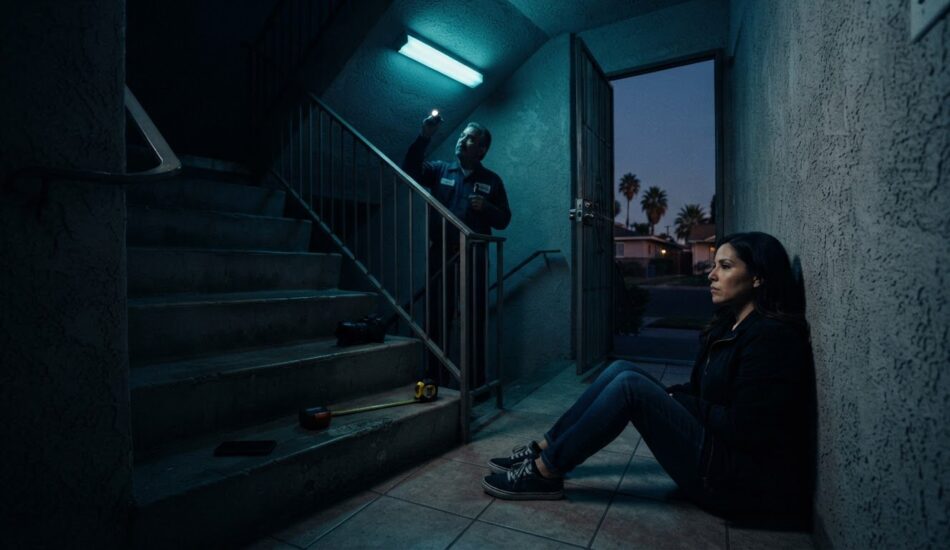
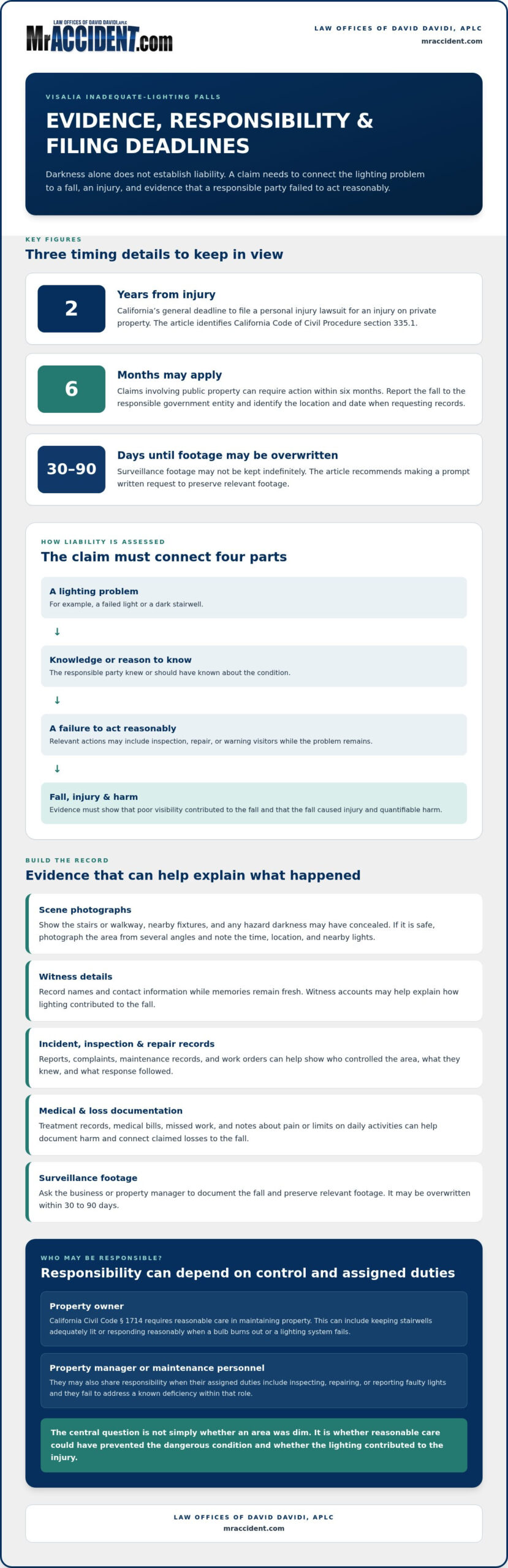
A poorly lit stairwell can hide a hazard, but darkness alone does not automatically make a property owner liable. In an inadequate-lighting slip-and-fall case in Visalia, evidence generally must show that the owner knew or should have known about the lighting problem, failed to address it, and that the condition contributed to the fall and caused harm. For an injury on private property, California’s general deadline to file a personal injury lawsuit is two years from the injury date, according to the California Legislature.
It’s understandable to wonder whether a dim walkway or failed light contributed to your fall, especially if you couldn’t see what was underfoot. The key questions are how the lighting affected visibility, whether it concealed another hazard, and what the responsible parties knew or should have known.
This article explains how poor lighting can contribute to falls in stairwells, parking lots, walkways, and other places around Visalia; who may be responsible; what evidence can help support a claim; and how the analysis changes on public property or when poor lighting appears to be the only problem.
Key Takeaways
- Poor lighting alone doesn’t automatically establish liability; the key is whether a responsible party failed to act reasonably and the lighting contributed to an injury.
- Maintenance records, incident reports, photos, witness details, and surveillance footage may help show what happened and whether a lighting problem was known.
- Dark stairwells, parking lots, walkways, and pool areas can hide other hazards, making the location and conditions of a fall important to the claim.
- Claims involving private property generally have a two-year lawsuit deadline in California; claims involving public property can require action within six months.
- Property managers or maintenance personnel may also be responsible when they had upkeep duties and failed to address a known lighting deficiency.
Does poor lighting automatically make a property owner liable for a stairwell fall?
No. A property owner may face liability when inadequate lighting creates a dangerous condition, the owner knew or should have known about it, and the condition caused an injury.
At a store, apartment, or parking lot in Visalia, responsibility may also involve a property manager or maintenance worker assigned to inspect and repair lighting. A key issue is who controlled the area and was responsible for addressing the hazard.
Property Owner Safety Responsibilities
California Civil Code § 1714 requires property owners to use reasonable care when maintaining their property. That responsibility can include keeping stairwells adequately lit or responding reasonably when a bulb burns out or a lighting system fails.
Poor visibility may conceal a loose step, wet floor, or broken handrail. If an owner knew or should have known visitors faced this risk, inspection, complaint, and repair records can help show whether the owner acted reasonably.
Potentially Responsible Property Personnel
A property manager or maintenance worker may share liability if their assigned duties include inspecting, repairing, or reporting faulty lights. For example, a manager who receives a complaint about a dark stairwell may be responsible for arranging repairs or warning visitors while the problem remains.
Job responsibilities, maintenance records, work orders, and employee statements can help identify who controlled the lighting issue. A property owner may remain responsible for safe premises, while a management company or maintenance worker may also face liability for failing to address a known deficiency within their assigned role.
Evaluating Inadequate Lighting
California courts assess whether lighting was unreasonably inadequate by considering what the responsible party knew or should have known, whether reasonable action was taken, and whether poor visibility contributed to the fall. A failed bulb may be assessed differently from a stairwell left dark after repeated complaints.
Evidence must connect the lighting condition to the accident and injury. Photos of the stairwell, witness accounts, inspection records, and incident reports can help establish that connection. The issue is not simply whether the area was dim, but whether reasonable care could have prevented the dangerous condition.
Recoverable damages require an injury and quantifiable harm. Medical records, missed work, and other financial losses can support a claim, while documented pain and suffering may also be considered. A settlement demand should connect each claimed loss to the fall and supporting evidence.
For an injury on private property, an injured person generally has two years from the injury date to file a personal injury lawsuit, according to the California Legislature. California Code of Civil Procedure section 335.1 sets that deadline, so the injury date matters when assessing a claim.
Can Inadequate Lighting Cause a Slip and Fall Accident?
Yes. Poor lighting can conceal a wet floor, uneven step, loose mat, or other dangerous condition, making it harder to avoid a fall. To support a Visalia claim, evidence should connect the lighting, the fall, and the resulting injuries, rather than simply show that an area looked dark.
There is no single average settlement for every inadequate-lighting fall. Settlement value depends on documented medical care, lost income, lasting effects, evidence of negligence, and any share of fault assigned to the injured person. Medical bills and treatment records help document harm; photos and witness accounts can explain how the lighting contributed.
Useful evidence may include photographs of the area, surveillance footage, witness contact information, incident reports, and maintenance records. If it’s safe, photograph the lighting and surrounding hazards from several angles. Note the time, location, nearby lights, and whether a wet floor, loose mat, or broken step was visible. These details can help distinguish a lighting problem from another cause.
- Photographs: Show the stairs or walkway, nearby fixtures, and any hazard concealed by darkness.
- Witness details: Record names and contact information while memories remain fresh.
- Incident and maintenance records: Request the report and records concerning complaints, inspections, or repairs.
- Medical records: Keep treatment documents and notes describing pain or limits on daily activities.
Ask the business or property manager to document the fall and preserve relevant records, including surveillance footage. Footage may be overwritten within 30 to 90 days, so make a prompt written preservation request. For public property, report the fall to the responsible government entity and identify the location and date when requesting incident or maintenance records.
Immediately after a fall, seek medical attention if you believe you’re injured. Report the incident to the person managing the property, photograph the scene when safe, collect witness details, and keep notes about your symptoms. An attorney handling injury claims can help assess how records and other evidence relate to liability and damages.
Poor lighting in stairwells, pool areas, parking lots, and walkways
Lighting problems can make familiar routes dangerous by limiting visibility where people walk, turn, or change levels. In Visalia, the location and specific conditions help explain how poor lighting contributed to a fall.
Lighting Conditions in Common Areas
Poor lighting in common areas can include dark stairwells, dim pool decks, shadowed parking spaces, and unlit walkways. Each setting creates different visibility problems for people using the property.
On stairs, a shadow can obscure an edge or change in height. Near a pool, dim lighting may make water on a deck harder to see. In a parking area, a failed fixture can leave a pedestrian unable to spot uneven pavement. California lighting requirements include areas such as walkways, staircases, parking lots, entrances, and exits.
Concealed Walking Hazards
Low visibility can conceal hazards that might otherwise be easier to notice and avoid. A dark walkway may hide cracked pavement, while a poorly lit stairwell can obscure a loose handrail or uneven step.
Lighting can also affect how clearly someone sees a wet floor, loose mat, or object in a path. Consider the hazard and light conditions together. For example, a photograph of a dark corridor may be more informative if it also shows the spill or obstruction in the walking route.
Lighting-Related Slip and Fall Hazards
Poor lighting contributes to accidents when it limits a person’s ability to see a hazard, judge a step, or choose a safe route. A visitor may misjudge a stair edge, step onto a slick surface, or trip over an obstruction hidden by shadows.
That connection matters in premises liability because dimness alone does not explain how a fall happened. Relevant details include where the person was walking, what the lighting revealed, and whether a concealed condition contributed to the accident. A fall beside a burned-out fixture may require a different factual analysis from a fall on a brightly lit, unobstructed path.
Across Visalia properties, blocked fixtures can create dark patches even when other lights work. An overhang, sign, tree, or stored item may prevent a fixture or window from illuminating a walkway. Comparing the affected area with nearby lighting can help show whether visibility changed along the route.
Light placement matters as much as whether a bulb works. A fixture aimed away from steps may leave their edges in shadow, while a parking-lot light may illuminate parked cars but not the pedestrian route. These details help explain how a specific lighting condition affected someone’s ability to see and avoid a hazard.
Can I file a slip and fall claim if the only problem was poor lighting?
Yes. Poor lighting can support a California claim when it created a dangerous condition, caused a fall, and resulted in injury or other quantifiable damages. A separate spill or broken step is not always necessary. The evidence must show how inadequate visibility itself contributed, such as a dark stairwell concealing a step edge.
Deadlines depend on who owns or controls the property. For an injury on private property, an injured person generally has two years from the injury date to file a personal injury lawsuit, according to the California Legislature. Missing the deadline can prevent a court from hearing the claim.
A fall on government property follows a different process. In California, a claim involving public property generally requires an administrative claim to the appropriate government entity within six months after the incident. An administrative claim may be part of the process before pursuing a lawsuit against a public entity. Identify the agency responsible for the location, such as the public body managing a sidewalk or facility, and document when and where the fall occurred.
A lawyer can organize evidence around the main questions: who controlled the lighting, what they knew, and how the darkness contributed to the fall. For example, a lawyer may compare an incident report with inspection records, maintenance logs, witness accounts, and photographs. These materials can clarify whether someone reported a burned-out light or whether the hazard was visible from the injured person’s approach.
Insurance adjusters may examine whether the lighting condition caused the accident, whether another hazard contributed, and whether the injuries are consistent with the medical records. Keep communications accurate. Describe what you saw, where you fell, and what happened afterward. Don’t guess about details you can’t recall. Save claim letters, medical documents, and notes from each conversation to keep the timeline clear.
Compensation depends on evidence of harm and how responsibility is allocated. Recoverable damages may include financial losses and pain and suffering tied to the injury. California applies pure comparative negligence: if a claimant is found 20% at fault, compensation is reduced by 20%. For instance, an insurer may argue the visitor could have avoided a visible hazard; photographs and witness statements can help address that argument.
A consultation with a lawyer can help assess whether the lighting evidence, injury records, and filing deadline support a claim. Bring the incident report, photographs, witness details, and medical records. For public property, include the agency name and incident date, because the six-month administrative-claim deadline makes prompt identification important.
Common locations with inadequate lighting
In Visalia, lighting risks can differ between a stairwell, parking area, and outdoor walkway. The useful question is how visibility changed along the route and whether a specific hazard contributed to the incident.
Stairwells and building entrances
A stairwell may have a bright landing but dim steps, making a change in height difficult to see. A burned-out fixture, poorly aimed light, or shadow near a doorway can affect visibility at the exact point someone steps down. For example, compare the lighting on the landing with the light on the stair edges. That contrast describes what a person encountered more precisely than simply labeling the whole area dark.
Entrances also deserve attention. A visitor moving from a bright exterior into a dim lobby may not immediately see a floor-level hazard. The route from the doorway to the stairs can matter, especially if a mat, wet patch, or uneven threshold lies in the transition.
Parking lots and garages
In a parking lot, light may reach parked vehicles without illuminating the walking path between them. A shadowed curb, pothole, or wheel stop can be difficult to distinguish from the surrounding pavement. In a garage, pillars and parked cars may block light from fixtures. Note whether the fall happened beside a vehicle, at a curb cut, or near a pedestrian entrance.
These details can help explain how the route was used and what the lighting revealed. If a visitor had to walk around a vehicle or cross a darker section, that path may matter more than the lot’s overall brightness.
Walkways and outdoor paths
Outdoor walkways can have uneven lighting where trees, signs, or building overhangs block fixtures or windows. A lit entrance does not necessarily illuminate the path leading to it. For example, someone may see the doorway but miss a crack or raised section several steps away.
After an incident, identify the precise stretch involved. “The walkway beside the entrance, near the shaded section” is more useful than “outside.” Photos taken from the direction of approach can show how the route looked to someone walking toward the hazard.
Pool areas and shared spaces
Pool decks and shared outdoor areas combine walking surfaces with changes in use. Water on a deck can be harder to see where lighting leaves dark patches. A path between a pool gate and a building may also cross areas with different visibility. The fall location, nearby fixtures, and route taken can help explain the conditions.
Property staff can inspect fixtures, placement, and obstructions as part of reasonable upkeep. For injury victims, the practical takeaway is to document the exact location and approach, then connect those conditions with medical records and the incident report. If an inadequate light or blocked fixture contributed to your Visalia fall, discuss your fall injury and the conditions involved.
Law Offices of David Davidi, APLC: Car Accident Legal Representation
Law Offices of David Davidi, APLC represents people injured in car, truck, motorcycle, and pedestrian accidents. This representation may be relevant if a vehicle collision contributed to a fall, such as when a pedestrian is struck and then falls on a poorly lit roadway or walkway. The circumstances matter: a collision-related injury raises different liability questions from a fall caused only by a property condition.
For a vehicle-related injury, preserve photographs, witness information, medical records, and any incident report. These details can help explain how the collision occurred and connect it to the injuries. If your situation involves a vehicle accident alongside a fall, you can contact Law Offices of David Davidi, APLC to discuss the circumstances.
Choose a clear next step for your recovery
After a fall, it can be difficult to know which details to focus on first. Keep incident documents together, note how your injuries affect daily activities, and organize questions about the property, its lighting, and your medical care. These steps can help focus a discussion about an inadequate-lighting slip-and-fall case in Visalia.
Law Offices of David Davidi, APLC also represents people injured in car, truck, and motorcycle accidents. If a vehicle collision contributed to your injuries, that representation may be relevant; a fall involving only a property condition raises different legal questions. The circumstances of your injury help determine what information matters next.
If you’re ready to discuss what happened and understand possible next steps, contact Law Offices of David Davidi, APLC. You can start with the facts you have and take the process one step at a time.
Frequently Asked Questions
Can I still recover compensation if I was partly responsible for my fall?
Yes. California’s pure comparative negligence rule permits compensation even when an injured person shares responsibility, with damages reduced by that person’s percentage of fault. If evidence assigns you 20% of the fault, compensation is reduced by 20%. For example, disputed footwear or a decision to use a dark route could affect fault allocation. The property’s lighting, the hazard, and each person’s conduct all matter to that assessment.
How Can a California Premises Liability Lawyer Assess Your Claim?
A California premises liability lawyer can assess whether the evidence supports each part of your claim: a duty of care, negligent conduct, a causal connection, and measurable damages. For example, the lawyer can compare a stairwell’s layout with incident details to assess whether the lighting concealed a hazard. Medical records help document injuries, while inspection documents may clarify how the property was maintained. The assessment also considers disputed facts, such as how the fall occurred.
How do I prove the property owner knew about broken or inadequate lighting?
Evidence may show that the owner received notice or that the lighting issue existed long enough to be discovered through reasonable inspections. A dated maintenance request about a burned-out fixture, followed by a repair record, may establish notice and delay. Prior incident reports, employee statements, inspection logs, and surveillance footage can add context. Compare dates and descriptions to see whether the same light or area appears repeatedly.
What evidence helps prove a stairwell was too dark?
Photographs taken from the approach and landing can show whether stair edges, handrails, or changes in height were visible. Include the relevant fixture and anything obstructing its light. Witness descriptions can explain what they could see before the fall, while building plans or lighting records may clarify fixture placement. Record the time and conditions shown in each image so the evidence reflects the stairwell as it appeared during the incident.
How do I choose the right attorney?
Choose an attorney who handles premises liability and can explain how the facts of your fall relate to California negligence requirements. A useful discussion should address property control, notice, causation, documented injuries, and possible shared fault. Consider whether the attorney answers questions directly and explains next steps in plain language. Bring your incident report, medical records, and a short timeline, then assess whether the proposed approach addresses your concerns.
What must a California slip and fall plaintiff prove to show inadequate lighting caused the fall?
A plaintiff must establish that the defendant was negligent and that the negligence caused the accident. In a lighting case, evidence should connect an unreasonably poor lighting condition to the fall, rather than merely show that the area was dim. The claim also requires quantifiable damages, such as documented injury-related losses. For example, testimony about a concealed step, together with scene evidence and treatment records, can help establish those connections.
What is the deadline to file a premises liability lawsuit in California?
For an injury on private property, the general deadline is two years from the injury date to file a personal injury lawsuit, according to the California Legislature. A fall involving public property follows a separate claims process. California generally requires an administrative claim to the appropriate government entity within six months after the incident. Identify who controls the property promptly, because the public-entity process differs from a private-property lawsuit.
How does California comparative negligence affect compensation for a slip and fall?
California’s pure comparative negligence rule reduces compensation according to the injured person’s share of fault. If a factfinder assigns 20% responsibility to the injured person, the recoverable compensation is reduced by 20%. The remaining fault may be attributed to other responsible parties. In a lighting dispute, evidence about the route, visibility, and actions taken before the fall can influence how fault is allocated and how damages are calculated.

Law Offices of David Davidi, APLC is a California – based Personal Injury Law Firm, our Attorney’s provide the representation for your personal injury, accident, product liability, premises liability, and other
negligence resulting in injuries. We treat all clients and cases, large or small, with hands-on care.
Practice Area
© Copyright 2026 Law Offices of David Davidi, APLC. All rights reserved.
Digital Marketing By 