
888-529-0707 call 24-7 we service throughout california
Knee Injury From a Car Accident Settlement in Riverside: What Shapes a Claim?
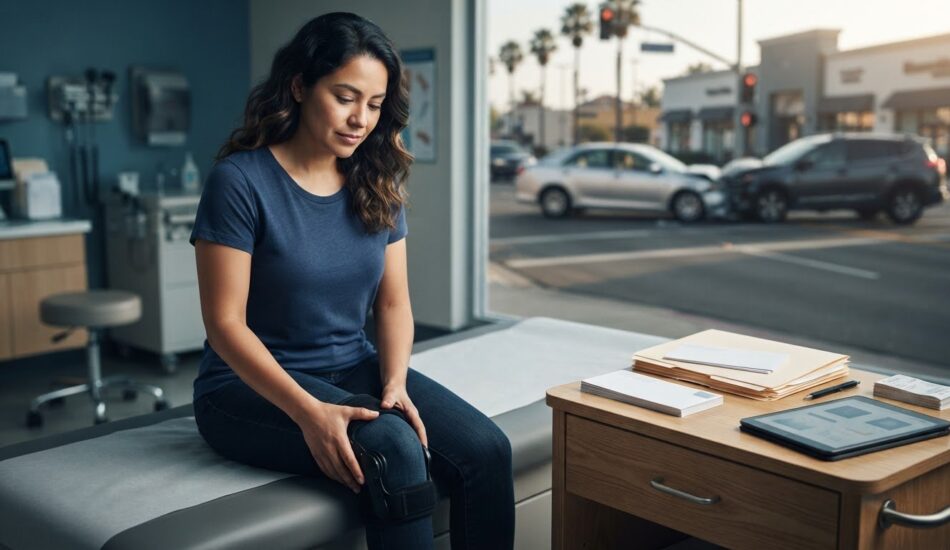
A diagnosis alone doesn’t determine what an insurer may offer after a crash. A knee injury from car accident settlement Riverside claim depends on the documented effects of the injury and how recovery unfolds, not just the name of the condition.
It’s understandable to worry that ongoing pain, future treatment, missed work, or limits on everyday activities may not come through clearly in an insurance review. Evidence connecting your knee injury to the collision, your care, and its impact on your life can help tell that fuller story. Medical records, treatment plans, work information, and notes about daily limitations may all be relevant.
This article explains what can affect a Riverside knee injury claim, how to organize evidence of its impact, and why recovery and future care may matter in settlement discussions. You’ll also learn what to consider before discussing or accepting an offer, including how fault and available insurance coverage can affect a claim. An attorney can help you understand the evidence and make informed decisions without feeling pressured to settle before you’re ready.
Key Takeaways
- A knee injury from car accident settlement riverside claim depends on the full picture of injury, treatment, liability, losses, and recovery.
- Organize medical records, expense details, work impacts, and notes about daily limitations to show how the injury affects you.
- An early offer may not reflect an unfinished recovery, so weigh the certainty of resolving a claim against uncertainty about future care.
- Before discussing settlement, prioritize care, preserve relevant records, document changes in your routine, and avoid rushed statements or releases.
- Legal guidance can help organize evidence, address insurer communications, and review settlement terms, though no particular outcome is guaranteed.
What Can a Knee Injury From a Car Accident Settlement in Riverside Depend On?
Knee pain after a crash can make walking, standing at work, climbing stairs, or keeping up with ordinary routines harder than expected. If you’re searching for “knee injury from car accident settlement riverside,” remember that a diagnosis label alone doesn’t set a settlement amount or guarantee recovery. An evaluation considers the evidence of the injury, treatment, liability, related losses, and how recovery progresses.
A knee injury claim is shaped by evidence of the injury’s cause, treatment, practical effects, responsibility for the collision, and recovery. The details matter. Two people with similar diagnoses may have different treatment needs, time away from work, or lasting limitations.
Which knee injuries can follow a vehicle collision?
A collision may cause or aggravate ligament injuries, meniscus tears, kneecap injuries, fractures, or damage to other soft tissue. The way a knee is struck can matter: a Posterior cruciate ligament (PCL) injury can be associated with a forceful impact to the front of the knee, sometimes called a dashboard injury. This is general information, not a diagnosis.
Symptoms and care vary from person to person. Bruising may be visible, while some injuries aren’t apparent from the outside and may require imaging or specialist assessment. A medical professional’s evaluation and records are the appropriate sources for an individual diagnosis and treatment plan.
How does California fault affect a Riverside claim?
California follows a pure comparative negligence rule. In plain language, an injured person may still seek recovery if they share some responsibility for a crash, but any recovery can be reduced by their percentage of fault. That percentage depends on the evidence and circumstances, not simply on an insurer’s initial position.
Photographs, witness accounts, vehicle damage, and available collision records may help clarify how the crash happened and what each person did. If the other driver disputes responsibility or accounts differ, legal review can help assess the liability evidence alongside the injury documentation. No single fact automatically determines fault or the outcome of a claim.
How Knee Diagnosis, Treatment, and Recovery Shape Settlement Evidence
Clear, organized evidence can help show how a knee injury developed and affected you after a crash. For a knee injury from car accident settlement riverside claim, the goal is to connect the collision, medical care, expenses, recovery, and practical effects without overstating what the records show. Consistent documentation can make symptoms and progress easier to understand, but it doesn’t guarantee an insurer will accept a claim or agree with its value.
A complete timeline helps an evaluator follow the injury from the first symptoms through treatment, work disruption, and recovery. Keep records together and note important dates, including appointments, changes in restrictions, and time missed from work.
What medical records may help document a knee injury?
Relevant records may include emergency care notes, imaging reports, specialist evaluations, therapy records, and treatment plans. Johns Hopkins Medicine explains common knee problems and diagnostic approaches in its overview of knee injuries and problems. In a claim, clinical notes may help explain reported symptoms, examination findings, recommended restrictions, and how the knee responds to care over time.
Keep copies of bills and records you receive, and store them securely. Medical files can contain sensitive information, so share them thoughtfully and get legal guidance if you’re unsure what an insurer is requesting. Treatment decisions belong with your treating professionals, not an insurer or an article about claims.
Useful evidence may cover several connected areas:
- Diagnosis: assessment notes and imaging reports.
- Treatment: appointments, therapy, recommendations, and follow-up plans.
- Expenses: bills and records of related out-of-pocket costs.
- Work impact: absence, modified duties, or documented restrictions.
- Daily limitations: changes in mobility, routine tasks, or activities.
How can a knee injury affect work and daily activities?
A knee problem may make standing through a shift, walking between work areas, climbing stairs, or driving uncomfortable. It can also affect caregiving or household tasks. Describe specific changes rather than relying only on broad statements. For example, note which duties became difficult, what adjustments were made, and when those limitations changed.
A brief journal can help you recall symptoms and activities, such as difficulty with stairs on a particular day or needing help with a routine task. It isn’t medical proof and can’t replace professional records, but it may add useful context. Keep employment and wage records with it where relevant. If you need help organizing the evidence and understanding how it may fit a claim, Riverside car accident legal guidance can help you consider the documentation in context.
Why an Early Settlement Offer May Not Reflect an Unfinished Knee Recovery
An initial diagnosis doesn’t always reveal how a knee injury will affect someone over time. Symptoms may change, treatment may continue, and the functional outlook may still be unclear. An early offer can be worth considering, but weigh it against what’s known about the injury and what remains uncertain. Don’t accept or reject it automatically.
Resolving a claim can provide certainty and avoid further negotiation. The trade-off is that a settlement may require signing a release, and its terms can affect your ability to pursue additional claims related to the crash. If future care or lasting limitations haven’t been clarified, understand what the offer covers and what rights you may be giving up before signing. The California Department of Insurance provides consumer information about auto claims, including California’s Fair Claims Settlement Practices.
What if treatment or the recovery outlook is still changing?
Ongoing care can mean future needs and functional outcomes aren’t yet clear. Treating professionals can document symptoms, progress, restrictions, and their current outlook. Those records may help inform settlement discussions about unresolved needs. There’s no single recovery timeline that applies to every knee injury, and a particular treatment shouldn’t be assumed necessary. Make care decisions with your treating professionals, not based on an offer or legal article.
For a knee injury from car accident settlement riverside discussion, consider whether the available evidence gives a sufficiently clear picture of both current effects and remaining uncertainty. An offer isn’t automatically inadequate because it arrives early, but timing and supporting information matter.
Can pre-existing knee problems affect a claim?
A prior knee condition doesn’t automatically determine whether a collision caused new symptoms or worsened an existing problem. That question depends on the individual medical history and evidence. Accurate information about prior symptoms, diagnoses, and treatment, alongside records from after the crash, can help clarify what changed and when. Don’t hide relevant history or assume it rules out a claim.
Medical evidence can help explain health changes, while legal review can consider how those facts relate to liability and damages. If responsibility, causation, or release terms are disputed, an attorney can help assess the available records before you decide. Take time to understand the trade-offs, especially if the recovery picture is still developing.
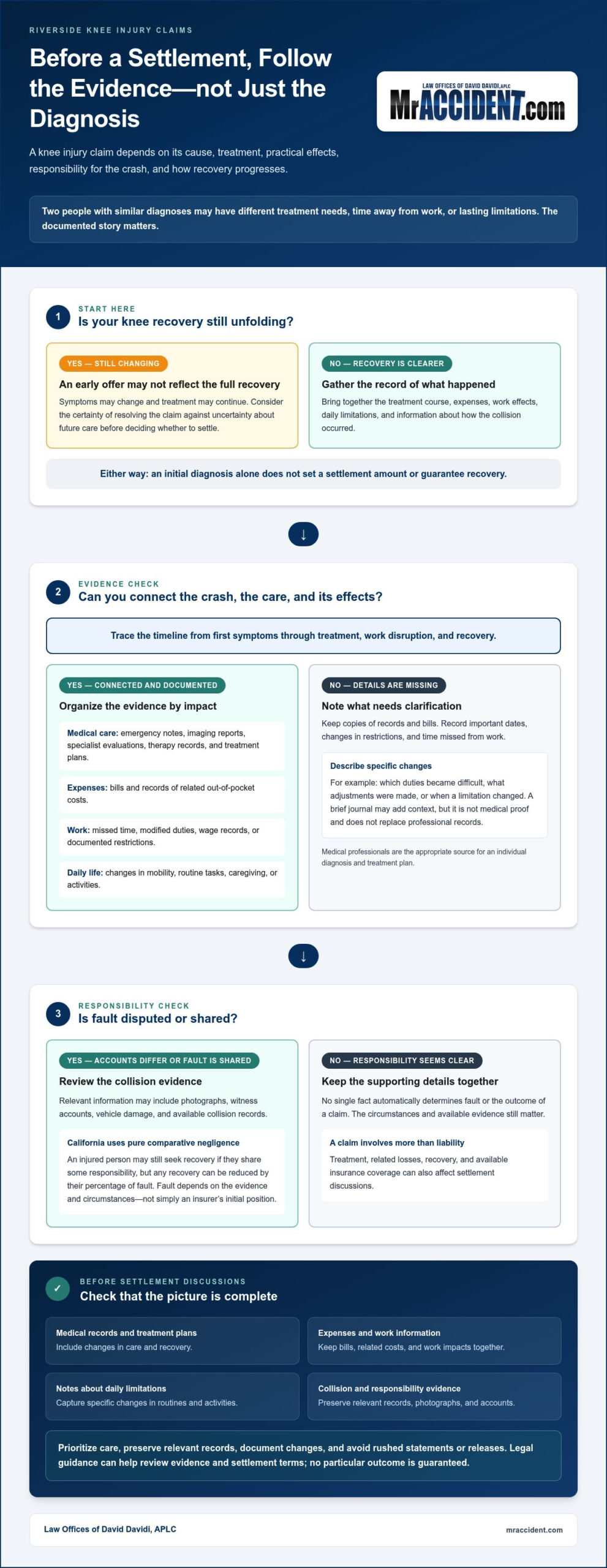
Riverside Knee Injury Claim: Steps Before Settlement
Before discussing settlement, take practical steps to protect your health and keep claim details organized. If you’re building a knee injury from car accident settlement riverside claim, a clear record can help connect the collision, your care, and its effects. This checklist is a starting point, not a substitute for advice about your specific circumstances.
- 1. Prioritize your care. Follow guidance from your treating professionals and track appointments, recommendations, and changes in symptoms or restrictions.
- 2. Preserve relevant records. Save medical records and bills, insurance correspondence, collision photographs, and work documents. Keep originals secure and organize copies by date.
- 3. Document the collision and its impact. Write down the date, location, and circumstances while details are fresh. Make concise notes about changes to walking, standing, work duties, or routine activities.
- 4. Take time with statements and releases. Be accurate when communicating, and don’t guess about details you can’t recall. Read settlement documents carefully and understand what a release covers before signing.
Which records should you organize before discussing settlement?
Build a chronological file that brings the story together: medical visits and imaging, bills and receipts, photographs, insurer letters or emails, and records of missed work or modified duties. Note when and where the crash occurred, along with what you remember about how it happened. Keep original documents, store them securely, and share copies through appropriate channels. For broader guidance on a crash claim, see this car accident attorney guide.
When should a Riverside driver seek legal guidance?
Consider seeking advice if fault is disputed, knee limitations are affecting work or daily life, treatment is ongoing, or you feel pressured to accept an offer. A lawyer can help assess the available records, liability evidence, and settlement terms. The Law Offices of David Davidi, APLC represents car accident clients in Riverside and provides direct access to experienced attorneys.
Deadlines depend on the claim and its circumstances. In California, a personal injury lawsuit generally must be filed within two years of the accident; claims involving a government entity generally require a claim within six months. Exceptions and other timing rules may apply, so get case-specific guidance promptly. If you’d like help assessing your Riverside claim, discuss your knee injury claim with our team. The firm works on a contingency-fee basis with no upfront legal fees. This doesn’t guarantee a recovery.
How a Riverside Car Accident Lawyer Can Help Evaluate a Knee Injury Settlement
A search for “knee injury from car accident settlement riverside” often reflects a practical concern: what do the facts of this particular claim support? An attorney can help organize the evidence, identify gaps, communicate with insurers, and explain settlement terms. That guidance can make a complex process easier to understand, but it can’t guarantee compensation or a particular result.
What does a case-specific settlement review examine?
A review may consider how the collision occurred, available liability evidence, medical records, documented expenses and work losses, insurance coverage, and information about recovery. Together, these details can clarify which issues may affect negotiations and what additional documentation could be relevant. The review assesses the available information. It isn’t a final settlement decision or a promise about the outcome.
Legal counsel can also help you understand insurer communications and the language in a proposed release. That matters because settlement terms may affect what claims you can pursue later. If treatment or prognosis is still evolving, an attorney can help you consider how that uncertainty fits into the decision, while medical questions remain with your treating professionals.
What should you expect when speaking with the firm?
At the Law Offices of David Davidi, APLC, clients receive direct access to experienced attorneys. In a Riverside car accident matter, you can discuss your concerns and review relevant facts with an attorney rather than relying only on a generic estimate. Ask questions about evidence, liability, insurer communications, or settlement terms before deciding how to proceed.
The firm uses a contingency-fee arrangement and charges no upfront legal fees. The fee arrangement doesn’t promise a recovery, and no settlement value can be determined without considering the specific claim. A careful review can help you understand the options and make a decision based on your circumstances.
If you’re unsure how your knee injury evidence or a proposed offer fits together, you don’t have to sort through every detail alone. Speak with a Riverside car accident attorney about your concerns and the questions you want answered.
Take the Next Step With a Clearer View of Your Claim
A knee injury from car accident settlement riverside claim is shaped by more than a diagnosis. Medical records, treatment and recovery, documented effects on work and daily life, and evidence about fault can all matter. If your recovery is still unfolding, take care before agreeing to settlement terms that may affect future claims.
You deserve to understand how the evidence and options apply to your circumstances. The Law Offices of David Davidi, APLC represents car accident victims in Riverside and other California communities, including Los Angeles, Fresno, Modesto, Bakersfield, Stockton, Tulare, Visalia, and Merced. Clients receive direct access to experienced attorneys, and the firm works on a contingency-fee basis with no upfront legal fees. This arrangement does not guarantee a recovery.
Talk with an attorney about your Riverside car accident claim and get guidance on the questions that matter to you.
Frequently Asked Questions
How much is a knee injury from a car accident settlement in Riverside?
There’s no standard settlement amount for a knee injury claim in Riverside. The phrase “knee injury from car accident settlement riverside” describes a specific claim, not a fixed value. An evaluation may consider the injury and treatment, recovery outlook, documented expenses and losses, the injury’s effect on daily life, fault, and available insurance coverage. A diagnosis alone can’t establish a settlement amount, and no estimate can guarantee what an insurer or court will decide.
What factors affect a car accident knee injury settlement in California?
Key factors may include medical evidence linking the knee injury to the crash, treatment and recovery progress, documented financial losses, and the injury’s effect on work and daily activities. Liability matters too. California follows pure comparative negligence, so a person may still recover if partly at fault, but recovery can be reduced by their share of fault. Available insurance coverage and the terms of any proposed release can also affect settlement discussions.
Can I settle a knee injury claim before finishing treatment?
You may be able to settle before treatment ends, but consider the uncertainty carefully. Your future care needs and recovery outlook may not yet be clear, and a signed release can limit or end your ability to pursue further claims related to the crash. Don’t stop or change care to influence a claim. Ask your treating professional about medical questions and have the settlement terms reviewed so you understand what rights you may be giving up.
What evidence helps prove a knee injury after a car accident?
Helpful evidence may include emergency-care records, imaging reports, specialist notes, therapy documentation, treatment plans, and bills. Collision photographs, witness information, and available crash records may help establish how the injury occurred. Work records can document missed time or changed duties. You can also keep concise notes about symptoms and daily limitations, such as difficulty standing or using stairs. These notes add context but don’t replace medical records or a professional diagnosis.
Can I recover compensation if I had a knee problem before the crash?
A prior knee problem doesn’t automatically rule out a claim. The relevant question is whether the collision caused a new injury or worsened existing symptoms, which depends on medical and legal evidence. Be accurate about your prior condition, symptoms, and treatment. Comparing that history with post-crash records may help explain what changed and when. Don’t assume the crash caused every symptom, or that an existing condition prevents you from seeking recovery.
How long do I have to file a California car accident injury claim?
In California, you generally have two years from the accident date to file a personal injury lawsuit. A claim involving a government entity generally requires an administrative claim within six months. Different circumstances or exceptions may affect the deadline, so don’t rely on these general timeframes to calculate your own filing date. Get prompt, case-specific legal guidance, especially if a government vehicle or agency may be involved.
Do I need a lawyer for a knee injury car accident claim in Riverside?
You aren’t required to hire a lawyer, but legal guidance may help if fault is disputed, recovery is ongoing, limitations affect daily life, or an insurer presses for a settlement. The Law Offices of David Davidi, APLC represents car accident clients in Riverside and communities including Los Angeles, Fresno, Modesto, Bakersfield, Stockton, Tulare, Visalia, and Merced. Clients have direct access to experienced attorneys. The firm uses a contingency-based arrangement with no upfront legal fees; this doesn’t guarantee recovery.

Law Offices of David Davidi, APLC is a California – based Personal Injury Law Firm, our Attorney’s provide the representation for your personal injury, accident, product liability, premises liability, and other
negligence resulting in injuries. We treat all clients and cases, large or small, with hands-on care.
Practice Area
© Copyright 2026 Law Offices of David Davidi, APLC. All rights reserved.
Digital Marketing By 