
888-529-0707 call 24-7 we service throughout california
Uber Accident Attorney in California: What to Know Before You Choose Legal Help
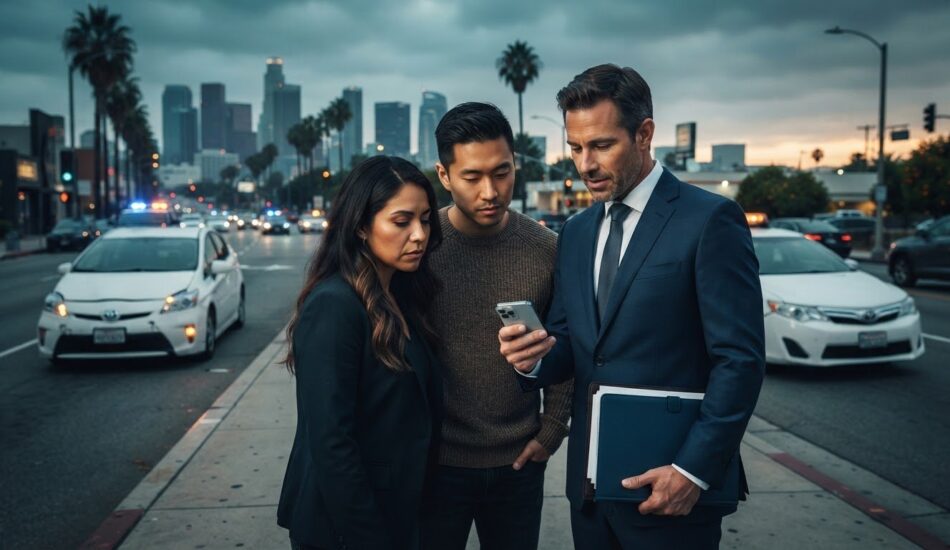
What if a key detail in your Uber accident claim is what the driver was doing in the app at the moment of the crash? If you’re injured, it’s understandable to focus first on medical care, missed work, and bills. But the driver’s app status can affect which insurance coverage may apply, making an Uber claim more complicated than an ordinary collision. An experienced uber accident attorney can help assess the circumstances and preserve important evidence.
This guide explains how California rideshare claims may differ depending on whether the driver was offline, waiting for a ride request, or carrying a passenger. It also covers how app records, crash photos, witness details, medical documentation, and proof of missed income can help establish what happened and how the crash affected you.
The Law Offices of David Davidi, APLC represents people injured in Uber and Lyft accidents across California, including Los Angeles, Fresno, Modesto, Bakersfield, Stockton, Tulare, Visalia, Merced, and Riverside. Clients have direct access to experienced attorneys and individualized attention. The firm works on a contingency basis, with no upfront legal fees and a fee collected only if it obtains a recovery. Here’s what to know before choosing legal help.
Key Takeaways
- An Uber crash claim may involve different insurance depending on whether the driver was offline, waiting for a request, or on an active trip.
- An uber accident attorney can assess fault, injury records, financial losses, and potentially applicable coverage before pursuing a claim.
- After a crash, prioritize safety and medical care. Then document the scene and save trip receipts, driver details, app notifications, and related communications.
- Keep records of treatment, missed work, and changes to daily activities. These details can help explain financial losses and personal impacts.
- The Law Offices of David Davidi, APLC represents Uber and Lyft accident clients throughout California, including Los Angeles, Fresno, Bakersfield, Riverside, Modesto, Stockton, Tulare, Visalia, and Merced, with direct access to experienced attorneys.
Why an Uber Accident Attorney Sees More Than an Ordinary Car Crash
An Uber accident claim is a personal-injury claim involving a rideshare driver or trip. The collision may look like a familiar traffic crash, but working out what happened can involve more than vehicle damage, road conditions, and driver statements. The driver’s conduct, the app’s activity at the time, and the actions of other people involved may all matter.
That complexity can be difficult to manage while you’re dealing with pain, medical appointments, or missed work. Not every collision results in a viable legal claim. Whether someone may pursue one depends on the injuries, available evidence, who was at fault, and applicable law. An uber accident attorney can assess those facts without assuming that Uber is automatically responsible just because its driver was involved.
Uber connects riders with drivers through an app, as described in this overview of Uber company information. For an injury claim, the practical questions are more specific: what was the driver doing, what caused the crash, and which parties or insurance coverage may be involved? Depending on the evidence, a rideshare company, its driver, another motorist, or multiple parties may need to be considered.
Who may have a claim after an Uber crash?
People who may be injured include Uber passengers, the rideshare driver, occupants of other vehicles, pedestrians, and cyclists. Each person’s situation is different. A passenger, for example, may have trip records that help establish the ride. A pedestrian may rely on witness accounts, scene evidence, and medical records to document the collision and resulting injuries.
Being involved in a crash does not by itself establish a claim. The evidence must support relevant facts, including injury and fault, and the law must provide a basis to seek recovery. Responsibility may rest with a driver or another party, and fault may be disputed. An investigation should follow the evidence rather than presume liability from the Uber connection.
Why the Uber app status matters
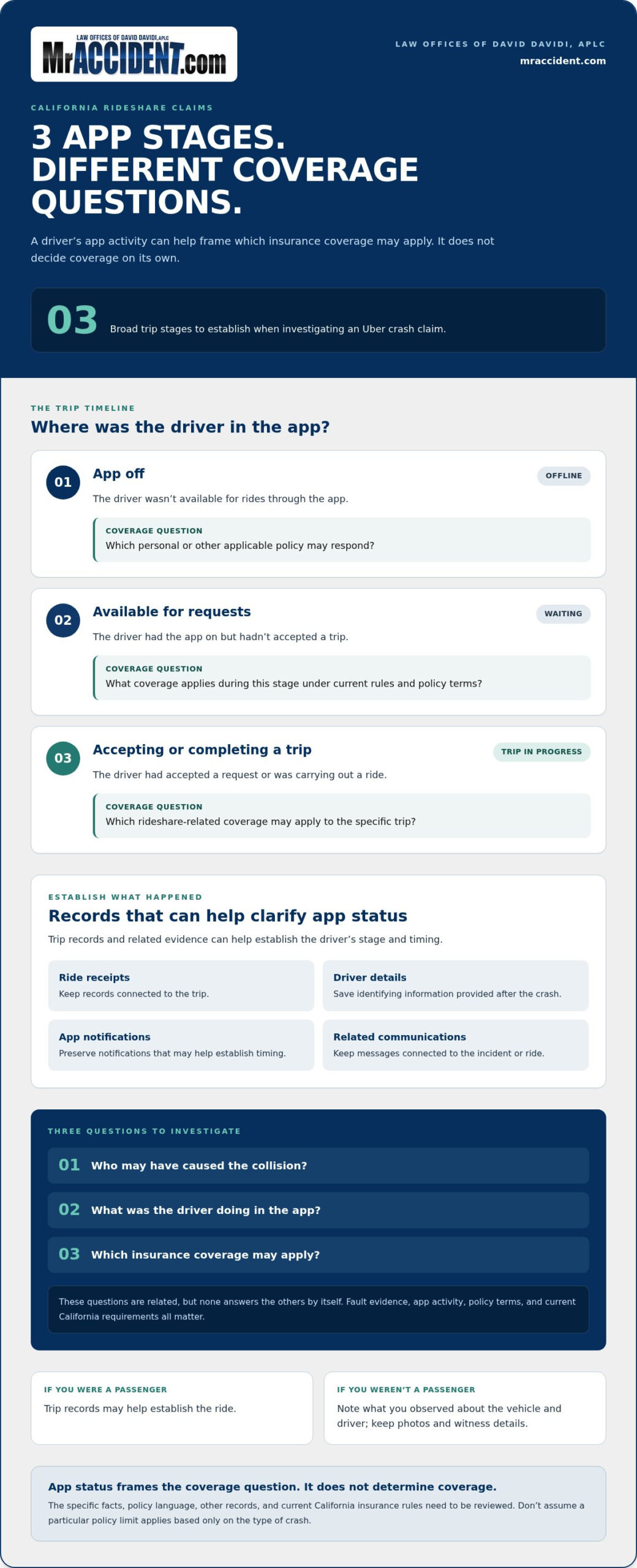
A rideshare driver may be offline with the app off, available for ride requests, or accepting or completing a trip. These broad stages can raise different insurance questions. The coverage that may apply depends on the facts and current California requirements, so don’t assume one policy applies to every Uber-related crash or rely on a guessed policy limit.
Preserve information that may help establish the trip stage. Save ride receipts, driver details, app notifications, and relevant communications. If you weren’t a passenger, write down what you observed about the vehicle and driver, and keep any photos or witness details. An attorney can compare these records with other evidence, such as crash reports and accounts from people involved.
In a rideshare crash, app activity can raise insurance questions that an ordinary collision may not. Reviewing the trip status, driver conduct, and each person’s role can help clarify which issues need to be investigated.
How California Uber Accident Claims Connect Fault, App Status, and Insurance
Three questions often shape a California Uber accident investigation: who may have caused the collision, what the driver was doing in the app, and which insurance coverage may apply? These questions are related, but none answers the others by itself. App activity may help identify the relevant coverage framework, while evidence about the crash helps assess fault. The specific facts and current California insurance rules matter.
How the rideshare trip timeline can shape coverage questions
The timeline may place a driver in one of three broad situations. The comparison below is a starting point, not a coverage determination. Trip records, app data, and other evidence can help establish the driver’s status. Coverage requirements and policy terms should be considered alongside current California rules, including the guidance in the California Department of Insurance’s rideshare insurance guide.
App status frames the coverage question, but it doesn’t decide coverage on its own. A trip receipt or notification can help establish timing, but insurers may also consider policy language and other records. Don’t assume a particular limit applies based only on the type of crash. Current California requirements and the circumstances of the incident need to be reviewed.
How California fault rules may affect a claim
Insurance questions are only one part of the liability investigation. Investigators may examine each potentially responsible person’s conduct: whether the Uber driver’s actions contributed, whether another motorist caused the impact, or whether more than one party played a role. Photos, witness accounts, vehicle damage, available video, and official records can help build a clearer account.
California generally follows comparative fault principles, under which responsibility may be apportioned among parties rather than treated as all-or-nothing. How those principles apply depends on the evidence and current law. Uber’s involvement doesn’t automatically establish the company’s direct liability. That question requires a fact-specific legal basis. An uber accident attorney can assess the timeline, potential sources of coverage, and evidence about fault. For guidance specific to a rideshare collision, explore California Uber accident legal representation.
What an Uber Accident Attorney Evaluates Before Pursuing Compensation
Before pursuing compensation, an attorney needs to understand how the collision happened, what injuries followed, and what insurance coverage may be available. These questions connect. A trip receipt may help establish that a ride was underway, while witness accounts or crash-scene photographs may help explain how the impact occurred. Medical records and work documentation can show how the injuries affected your life.
An uber accident attorney reviews the available evidence as a whole, rather than relying on one document or assumption. The aim is to develop a clear, supportable picture of liability, harm, losses, and potential coverage. No single record guarantees a particular outcome. A claim’s value depends on its facts, supporting evidence, applicable law, and available coverage.
Which evidence can help clarify what happened?
Useful evidence varies from crash to crash, and details may become harder to collect as time passes. Keep materials you already have and note where additional records may be available. Don’t try to access another person’s private account or records without authorization.
- Crash documentation: Keep any police or collision report information, along with photographs of vehicle damage, road conditions, traffic signs, and visible injuries.
- People who witnessed the crash: Record witness names and contact details, if available, and note what they observed while the events are fresh in your memory.
- Rideshare records: Save your trip receipt, driver and trip details, app notifications, and communications related to the ride or incident.
- Other relevant records: Preserve messages, photographs, or other materials that may help establish the timeline or explain what happened.
Comparing records can reveal gaps or inconsistencies. A trip receipt, for example, may help establish the ride’s timing, while a witness may offer an independent account of the collision. If your injuries prevent you from gathering information, focus on your care and keep what is safely available.
How injuries and losses are assessed
Medical documentation can connect the collision to reported injuries and show the care received. Keep appointment records, bills, treatment recommendations, and notes about symptoms or limitations. If a clinician recommends follow-up care, document that guidance and discuss your concerns with the clinician rather than assuming an injury has resolved.
Losses generally include economic and non-economic impacts. Economic losses are financial, such as medical expenses and income missed from work. Non-economic impacts can include pain, limits on daily activities, and emotional effects. These experiences matter, but they aren’t measured by a fixed formula in this overview. Describe changes clearly and keep records that reflect them.
For example, someone unable to perform usual work duties may have income records and medical documentation relevant to the claim. Someone whose injury limits routine activities can keep a dated account of those changes. A careful review considers these details alongside evidence of fault and available coverage. For broader context on car accident attorney representation, explore how injury claims are evaluated beyond rideshare-specific records.
Protect Your Claim After an Uber Accident in California
After a rideshare crash, you may be juggling pain, transportation, and questions about what happens next. Focus on safety and medical care first. Once you can, take practical steps to preserve information that may help explain the crash, the trip, and its effects. You don’t need to determine fault or know which insurance policy applies before keeping useful records.
- Address immediate safety. Move away from danger if you can do so safely, and contact emergency services when needed. Don’t put yourself at risk to collect evidence.
- Seek medical care. Get evaluated promptly, even if symptoms seem manageable. Follow qualified medical professionals’ recommendations and keep records of treatment and follow-up.
- Document the scene when it’s safe. Photograph vehicles, visible injuries, road conditions, signs, and the surrounding area. Note where the collision happened and collect witness contact details if possible.
- Preserve trip details. Save your ride confirmation, receipt, timestamps, pickup and drop-off information, driver details, app notifications, and relevant messages or communications.
Preserve Uber trip information and crash evidence
App records can help establish the trip timeline, so save what’s available to you soon after the crash. Keep original messages and files where possible, and write down details you remember while they’re fresh. If you have photos, note when and where you took them. Don’t try to enter someone else’s account or obtain private records without authorization.
Communication matters, too. Share accurate information with responding authorities and medical professionals. If you’re unsure about a detail, say so rather than guessing about speed, fault, or how serious an injury may be. Symptoms can change, and a careful account is more useful than a confident estimate that later proves inaccurate. Keep copies of relevant communications and documents together.
Get medical care and keep useful records
Keep discharge instructions, appointment information, treatment records, and receipts related to care. You can also maintain a simple dated note of symptoms, activity limits, and changes in your routine. These details may help explain the effects of an injury over time. Follow your clinician’s guidance, and raise new or worsening symptoms with a qualified medical professional.
If an injury affects your work, save relevant absence records and documentation of missed time or changed duties. You don’t need to calculate the value of a potential claim yourself. A review depends on the evidence, applicable law, and available coverage. The questions to ask a personal injury lawyer can help you prepare for a conversation about your situation and next steps.
California filing deadlines can vary based on the claim and the parties involved, and exceptions may apply. Don’t rely on a general timeline to decide how long you have. An uber accident attorney can review the circumstances and help identify which deadlines may apply. For guidance about your Uber accident claim, contact an Uber accident attorney.
What Working With an Uber Accident Attorney at the Law Offices of David Davidi Looks Like
After an Uber crash, you may be managing treatment, work, and insurance questions at the same time. The Law Offices of David Davidi, APLC represents people injured in Uber and Lyft accidents throughout California, including Los Angeles, Fresno, Modesto, Bakersfield, Stockton, Tulare, Visalia, Merced, and Riverside. An attorney can review the circumstances, explain the issues to consider, and help you understand possible next steps.
Representation may include reviewing available records, developing evidence about how the collision happened, communicating with insurers, and guiding you through the claim. The approach depends on the facts of your crash, your injuries, the evidence that can be obtained, and applicable law. No two cases are identical, and no attorney can promise a particular outcome.
What clients can expect from case representation
Your case deserves individual attention, not a one-size-fits-all checklist. The firm emphasizes direct access to experienced attorneys, so you can discuss questions and understand how key decisions relate to your circumstances. An attorney can help identify useful information, explain communications from insurers, and keep the focus on the evidence and issues that matter to your claim.
The firm serves injured clients in communities across California, including Los Angeles, Bakersfield, Riverside, Modesto, and Stockton, as well as Fresno, Tulare, Visalia, and Merced. Whether you were a passenger, rideshare driver, or another person injured in a collision involving an Uber or Lyft trip, your role and the available records help shape the legal analysis.
Taking the next step with a California Uber accident attorney
For an initial discussion, be ready to describe when and where the crash happened, who was involved, what injuries you’ve experienced, and whether you have trip details, photographs, medical records, or insurer communications. You don’t need to organize every document before asking questions. Partial information can still help an attorney understand what may need further review.
The firm handles injury cases on a contingency basis. There are no upfront legal fees, and the firm collects a fee only if it obtains a recovery. This arrangement means you don’t pay legal fees at the outset, while the attorney evaluates the case based on its merits and available evidence.
If you’re considering an uber accident attorney, look for a conversation that helps you understand the process, your responsibilities, and how your case will be handled. The Law Offices of David Davidi, APLC provides direct access to experienced attorneys and individualized attention for Uber and Lyft accident clients across California. Reach out to discuss your crash and the records you have so far.
Take the Next Step Toward Clarity
You don’t have to resolve every question about your Uber accident claim before seeking legal guidance. A focused conversation can help you identify what deserves attention, what information may still be needed, and what options to consider before making decisions about the claim. The Law Offices of David Davidi, APLC has represented injured people in California since 2015.
Choosing an uber accident attorney is a personal decision. Look for guidance that addresses your circumstances and gives you room to make informed choices. If you’re ready to discuss what happened and what you can do next, talk with the Law Offices of David Davidi about your Uber accident.
Your recovery and peace of mind matter. Take the next step when you’re ready, and move forward with a clearer understanding of your choices.
Frequently Asked Questions
Can I pursue a claim if the Uber driver was not at fault?
Yes, an injured passenger or road user may have a potential claim even if the Uber driver didn’t cause the crash. Another driver or party could bear responsibility, depending on the evidence and California law. Whether the collision happened in Los Angeles, Fresno, Bakersfield, Riverside, Modesto, Stockton, Tulare, Visalia, or Merced, preserve available trip details and crash information. A review can help identify potentially responsible parties, but no particular insurer or party is guaranteed to pay.
What if the Uber driver was logged out of the app when the crash happened?
The driver’s app status may matter to the insurance analysis, but being logged out doesn’t determine who caused the collision or settle every coverage question. Investigators may also examine another driver’s conduct, road conditions, and other relevant evidence. Keep any ride-related records you have, note what you personally observed, and avoid assumptions about coverage. A case-specific legal review can help assess how the available facts fit together.
Can I still bring a claim if I was partly responsible for an Uber accident in California?
Possibly. California comparative-fault principles may affect a claim when an injured person shares responsibility, but that doesn’t automatically answer whether a claim can proceed. Evidence may include each person’s actions, witness accounts, and the sequence of events. The effect of shared fault depends on the facts and applicable law, so don’t assume a percentage or outcome. An uber accident attorney can review the circumstances and explain the issues relevant to your situation.
What if an uninsured driver hit my Uber or the rideshare vehicle?
Possible options depend on who was injured, the trip’s app status, the insurance policies involved, and the evidence. Don’t assume a particular policy applies simply because the at-fault driver lacked insurance. Keep any information you have about the other driver and vehicle, including identifying details recorded in crash documentation, and preserve your ride records if you were a passenger. An individualized review can clarify which coverage questions should be investigated.
What if my Uber accident involved a hit-and-run driver?
Prioritize safety and report the collision through appropriate channels. If you can do so safely, note the fleeing vehicle’s description, direction of travel, and any identifying details you observed. Witness accounts, photographs, and trip records may help establish the timeline and circumstances. Potential insurance options depend on the facts and policy terms. Don’t assume a specific policy applies or that recovery is assured. Keep copies of any reports and related communications.
Can an Uber passenger make a claim against more than one party?
Yes, an investigation may consider the rideshare driver, another motorist, or other potentially responsible parties, depending on the evidence and law. Accounts from passengers and witnesses, for example, may help clarify whether more than one person’s conduct contributed to a collision. Identifying multiple parties doesn’t mean there will be multiple recoveries or guarantee a particular result. A careful review can assess responsibility, insurance questions, and which documented losses relate to the crash.
Do I need to give a recorded statement to an insurance company after an Uber crash?
An insurer may request a recorded statement as part of its investigation. Before responding, clarify who is asking and what the statement concerns, and consider getting legal guidance about the request. If you do speak, be truthful and stick to what you know. Don’t guess about speed, fault, or injuries that are still changing. Keep a record of the request and any related correspondence, and don’t ignore lawful obligations.

Law Offices of David Davidi, APLC is a California – based Personal Injury Law Firm, our Attorney’s provide the representation for your personal injury, accident, product liability, premises liability, and other
negligence resulting in injuries. We treat all clients and cases, large or small, with hands-on care.
Practice Area
© Copyright 2026 Law Offices of David Davidi, APLC. All rights reserved.
Digital Marketing By 