
888-529-0707 call 24-7 we service throughout california
Visalia Personal Injury Mediation: 2026 Expectations
What if attending mediation doesn’t mean you have to settle? If you’re searching “mediation for personal injury claim visalia,” it helps to know that mediation can create a path toward resolution, but you decide whether to accept an offer.
It’s understandable to feel uncertain, especially if an insurer is urging you to resolve your claim before you know the full extent of your injuries. Mediation is a structured conversation led by a neutral mediator. Unlike direct negotiation, it gives the parties a facilitated process. Unlike a trial, the mediator doesn’t decide who wins or set your compensation. A settlement happens only if you agree to its terms.
This guide explains what to expect before and during mediation in Visalia, what documents and questions can help you prepare, and how mediation differs from negotiation and court. You’ll also learn how legal guidance can help you assess an offer without feeling rushed. The Law Offices of David Davidi, APLC represents personal injury clients in Visalia, with direct attorney access to discuss concerns and settlement choices.
Key Takeaways
- Learn the stages of mediation, from preparation through possible resolution, while keeping in mind that the format and session length can vary.
- Compare mediation for personal injury claim visalia with direct negotiation and a trial, including who participates and who controls the outcome.
- Prepare treatment records, bills, income documentation, photographs, and relevant communications to help explain the impact of your injuries.
- Describe daily limitations and ongoing effects accurately, without minimizing or overstating your experience.
- Understand how an attorney can organize evidence and assess proposed settlement terms, helping you weigh your choices with direct legal guidance.
What does mediation for a personal injury claim in Visalia involve?
Mediation is a guided settlement discussion where the injured person and the other side explore resolution with help from a neutral mediator. The mediator manages the conversation but doesn’t decide fault, award damages, or force either side to settle. Unlike a trial, there’s no judge or jury issuing a decision. Unlike direct negotiation, a mediator helps structure communication between the parties. The neutral overview of Mediation explains this facilitator-led approach.
Mediation for personal injury claim visalia can take place before a lawsuit is filed or while litigation is underway. In Tulare County civil cases, parties are required to discuss mediation and select a mediator before the first Case Management Conference. This local step doesn’t mean every claim settles or follows the same schedule. The process and attendance arrangements depend on the case and mediation format.
Who attends a personal injury mediation?
Participants commonly include the injured claimant, their attorney, an insurance representative, and the neutral mediator. Depending on the case, other representatives may attend or join remotely. The mediator isn’t either side’s advocate. Their role is to help participants identify disputed issues, communicate positions, and consider whether an agreement is possible. Your attorney can help you follow the discussion and understand questions about any proposal.
Does mediation decide who wins the claim?
No. A mediator doesn’t issue a judgment or determine how much a claim is worth. They may ask questions, clarify areas of disagreement, and help each side assess possible terms, but the parties retain control over whether to settle. You can discuss an offer without accepting it.
Taking part in mediation doesn’t, by itself, require you to accept a settlement. A settlement depends on the parties reaching agreement on terms. If they don’t agree, the claim may continue through negotiation or litigation, depending on its status and the choices available to the parties. Before agreeing to a resolution, make sure you understand what the terms mean for your claim and any future recovery. An attorney familiar with your case can help you consider a proposal carefully instead of feeling pressured to decide on the spot.
How does personal injury mediation work for a Visalia claim?
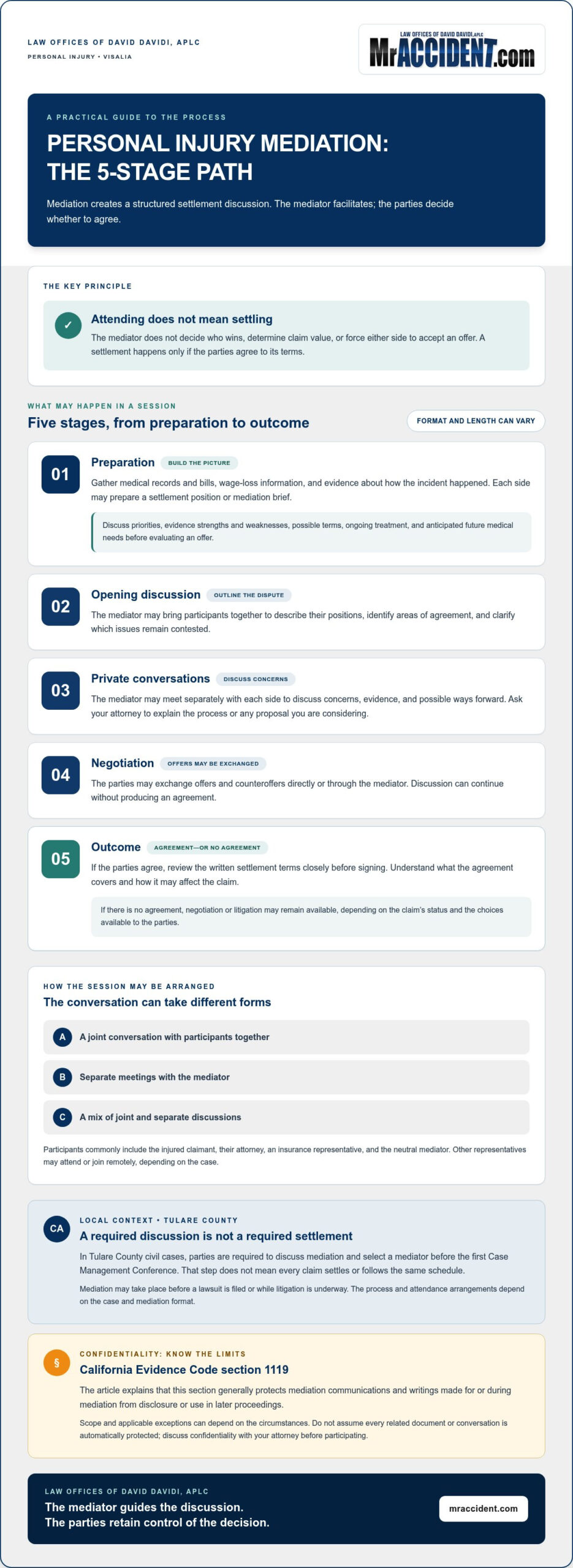
A mediation session follows a general sequence, but the format, participants, and length can vary. It may include a joint conversation, separate meetings with the mediator, or a mix of both. Mediation is one form of alternative dispute resolution, a process for addressing disputes outside a trial. Here’s what the stages may involve.
- Preparation: The claimant and their attorney gather medical records, bills, wage-loss information, and evidence about how the incident happened. Each side may prepare a settlement position or mediation brief. Before the session, discuss your priorities, the strengths and weaknesses of the evidence, and any terms you might consider. If treatment is ongoing, review anticipated care and future medical needs before evaluating a proposed settlement.
- Opening discussion: The mediator may bring participants together to outline the dispute and let each side describe its position. This can help identify areas of agreement and the issues that remain contested.
- Private conversations: The mediator may meet separately with each side to discuss concerns, evidence, and possible ways forward. Ask your attorney to explain the process or any proposal you’re considering.
- Negotiation: The parties may exchange offers and counteroffers, either directly or through the mediator. Discussion can continue without producing an agreement.
- Outcome: If the parties agree, review the written settlement terms closely before signing. Make sure you understand what the agreement covers and how it may affect your claim. If there’s no agreement, other steps may remain available depending on the case.
Confidentiality has limits, and details matter. California Evidence Code section 1119 generally protects mediation communications and writings made for or during mediation from disclosure or use in later proceedings. The scope and applicable exceptions can depend on the circumstances, so don’t assume every related document or conversation is automatically protected. Discuss confidentiality with your attorney before participating.
Thoughtful preparation can help you assess the discussion without losing sight of your medical needs or priorities. If you’re weighing a settlement conversation, personal injury legal guidance can help you understand the evidence and proposed terms.
Mediation vs. negotiation vs. trial: which path fits a Visalia injury claim?
These options differ in who guides the discussion and who decides the result. Mediation for personal injury claim visalia offers a structured settlement conversation, but it doesn’t guarantee an agreement, a faster resolution, or a better outcome. The right path depends on the evidence, disputed issues, and your goals.
| Path | Who participates? | Who controls the result? | Is agreement required? |
|---|---|---|---|
| Direct negotiation | The claimant’s representative and the insurer or opposing party communicate directly. | The parties decide whether to accept or reject terms. | Yes, to settle. |
| Mediation | The parties and their representatives discuss the claim with a neutral mediator. | The parties control settlement decisions; the mediator facilitates discussion. | Yes, to settle. Mediation can end without agreement. |
| Trial | The parties present their cases in court, with a judge or jury involved as applicable. | The judge or jury decides contested issues, subject to applicable court procedures. | No settlement agreement is needed for the court to decide the case. |
How is mediation different from direct settlement negotiation?
In direct negotiation, the claimant’s attorney and the insurer may exchange information and offers themselves. Mediation adds a neutral facilitator who can help clarify disagreements, relay positions, and explore possible terms without advocating for either side. That structure may help move the conversation forward, but it doesn’t ensure that an offer will improve or that the parties will settle.
When might a claim continue toward trial?
A claim may remain unresolved if the parties disagree about fault, the extent of the injuries, damages, or settlement terms. If mediation doesn’t produce an agreement, discussions may continue through negotiation or the case may proceed through litigation. The California Courts’ Self-Help Guide offers general information about court processes. Decisions in a particular Tulare County case require attention to its evidence, deadlines, procedures, and the client’s goals.
Attending mediation doesn’t, by itself, resolve the claim or automatically eliminate every further legal option. A signed settlement, however, may include terms affecting your right to pursue the claim, so review any proposed agreement carefully with your attorney before signing. If you’re weighing your options, personal injury legal guidance can help you understand the issues and consider the next step.
How can you prepare for personal injury mediation in Visalia?
Good preparation helps you explain what happened, how the injury affects your life, and what questions still need answers. For mediation for personal injury claim visalia discussions, organize your records and talk through your priorities with your attorney before the session. The most useful evidence depends on your injury and what the other side disputes. Focus on documents that connect your losses to the incident.
What information should you bring to mediation?
Work with your attorney to gather relevant materials, including:
- Medical information: Treatment records, bills, prescription expenses, and updates about ongoing care or recommended future treatment.
- Income records: Pay statements, employer information, or other documentation of missed work and lost income.
- Incident evidence: Photographs of injuries or the scene, incident details, witness names and contact information, and relevant repair records.
- Related communications: Relevant messages or letters with insurers, employers, or others about the incident, injuries, or losses.
Prepare a short, honest account of how your routine has changed. Note which tasks are harder, what activities you’ve paused, and whether symptoms continue. Be specific without overstating the impact or minimizing difficult days. A clear account helps connect the records to your experience.
How should you evaluate a settlement offer?
There’s no universal formula for valuing an injury claim. Consider documented expenses and income loss alongside unresolved liability questions, the strength of available evidence, and possible future care needs. If treatment is ongoing, discuss how uncertainty about recovery or future medical expenses affects your decision before resolving the claim.
Also ask how the proposed terms would affect your final recovery. The gross settlement amount is not necessarily the amount you take home. Fees, case expenses, medical liens, or other obligations may affect the net amount, depending on the claim. Ask your attorney to explain the written terms, applicable deductions, and any release of claims in plain language.
Before you agree, understand every term in writing. Discuss your priorities, unanswered questions, and concerns about the offer with counsel first. Direct access to an attorney can help you weigh those details without feeling rushed. To discuss preparing for mediation and evaluating proposed terms, speak with a personal injury attorney.
How can a Visalia personal injury attorney support you through mediation?
Mediation can move quickly between evidence, disputed facts, and proposed settlement terms. An attorney can help you prepare a clear presentation of your claim, organize supporting records, and identify gaps or questions that may affect negotiations. For mediation for personal injury claim visalia, preparation should reflect your specific injuries, treatment, losses, and concerns, not a generic estimate of what a claim might be worth.
Your attorney can also explain an offer’s terms, including what claims a written agreement may resolve and how the proposed amount could be affected by case expenses or other obligations. The mediator doesn’t make the decision for you. You retain control over whether to accept a settlement, and you should have room to ask questions before deciding.
What should you discuss with your attorney before mediation?
Review the strengths of your evidence and any gaps, disputed fault, documented damages, and questions about future care. Talk about your priorities and which terms matter to you, rather than focusing only on a proposed total. Ask how an agreement would be documented, what claims it would address, and what decisions remain yours. A guide to questions to ask a personal injury lawyer can help you prepare for that conversation.
At the Law Offices of David Davidi, APLC, clients have direct access to experienced attorneys. You can discuss concerns about the mediation process and settlement choices with counsel who understands your case.
What are practical next steps after an accident in Visalia?
Keep relevant records, including medical paperwork, bills, photographs, and communications about the incident. Follow appropriate medical care, and tell your providers about ongoing symptoms or changes in your daily routine. If you have questions about your legal options, raise them promptly rather than waiting until a settlement discussion is underway. For injuries involving a vehicle, the firm’s car accident attorney guide may offer related information.
The Law Offices of David Davidi, APLC represents personal injury clients in Visalia and across California, including Los Angeles, Fresno, Modesto, Bakersfield, Stockton, Tulare, Merced, and Riverside. If you’re uncertain about preparing for mediation or assessing proposed terms, you can discuss your circumstances with an attorney and consider your options.
Move Forward With Clarity About Your Settlement Choices
Mediation can give you and the insurer a structured opportunity to discuss resolution, but the mediator doesn’t decide your claim. You remain in control of whether to accept a settlement. Preparing relevant records, considering ongoing medical needs, and reviewing every written term can help you approach mediation for personal injury claim visalia with greater confidence.
The Law Offices of David Davidi, APLC represents injured clients in Visalia and throughout California. The firm works on a contingency basis, with no upfront legal fees and payment only if compensation is recovered. Clients also have direct access to experienced attorneys to discuss questions, evidence, and settlement choices.
If you’re weighing mediation or have questions about your injury claim, discuss your personal injury claim with the Law Offices of David Davidi, APLC. The firm serves clients in Visalia, Los Angeles, Fresno, Modesto, Bakersfield, Stockton, Tulare, Merced, and Riverside. Take the next step by discussing your claim with an attorney.
Frequently Asked Questions
Is mediation required for a personal injury claim in California?
Mediation isn’t automatically required for every California personal injury claim. Whether parties must attend or participate can depend on the case, a court order, an agreement, or applicable procedures. In Tulare County civil cases, parties are required to discuss mediation and select a mediator before the first Case Management Conference. That requirement doesn’t mean you must agree to settle. An attorney can explain how applicable local procedures relate to your case.
Can a mediator force me to accept a settlement?
No. A mediator facilitates discussion and helps the parties explore possible terms, but doesn’t decide the claim or impose a settlement. An agreement requires the parties to accept its terms. Before signing, review the written agreement carefully with your attorney and make sure you understand its effect. If the session ends without agreement, other options may remain, depending on your case and its procedural status.
How does personal injury mediation work?
If you’re researching “mediation for personal injury claim visalia,” expect a process that may begin with preparation and an introduction from the mediator. The parties may discuss the claim together or meet separately with the mediator, then exchange offers or counteroffers. Formats vary, and the session may or may not result in an agreement. If the claim remains unresolved, negotiation or litigation may continue, depending on the circumstances.
What happens if mediation does not resolve my injury claim?
If the parties don’t agree, mediation doesn’t settle the claim. Depending on the case, they may continue negotiating or proceed with litigation if a lawsuit is underway. Neither a later settlement nor a trial is guaranteed. The next steps depend on the evidence, disputed issues, and procedural posture. Ask your attorney to review any applicable court requirements and filing deadlines, so you can make informed decisions about how to proceed.
Is mediation confidential in California personal injury cases?
California Evidence Code section 1119 generally protects mediation communications and writings made for or during mediation from disclosure or use in later proceedings. That doesn’t mean every document or conversation connected to mediation is automatically protected. The rules include exceptions, and how they apply depends on the circumstances and applicable law. Before participating, ask your attorney to explain the relevant provisions and any limits that may affect your communications or records.
How long does personal injury mediation take?
There’s no standard duration for every personal injury mediation. The session’s length can depend on its format, the number of disputed issues, participant availability, and how negotiations progress. Some discussions may conclude without agreement, while others may require continued talks. Use preparation time to organize relevant documents and list questions about proposed terms, your priorities, and which decisions remain yours.
Should I have a lawyer for personal injury mediation in Visalia?
An attorney can organize evidence, explain risks and disputed issues, present your claim, and help assess proposed settlement terms. The right approach depends on the facts and needs of your case. The Law Offices of David Davidi, APLC serves clients in Visalia, Los Angeles, Fresno, Modesto, Bakersfield, Stockton, Tulare, Merced, and Riverside. The firm offers contingency-based representation with no upfront legal fees, and payment only if compensation is recovered.

Law Offices of David Davidi, APLC is a California – based Personal Injury Law Firm, our Attorney’s provide the representation for your personal injury, accident, product liability, premises liability, and other
negligence resulting in injuries. We treat all clients and cases, large or small, with hands-on care.
Practice Area
© Copyright 2026 Law Offices of David Davidi, APLC. All rights reserved.
Digital Marketing By 