
888-529-0707 call 24-7 we service throughout california
What Qualifies as Product Liability in California? A 2026 Guide
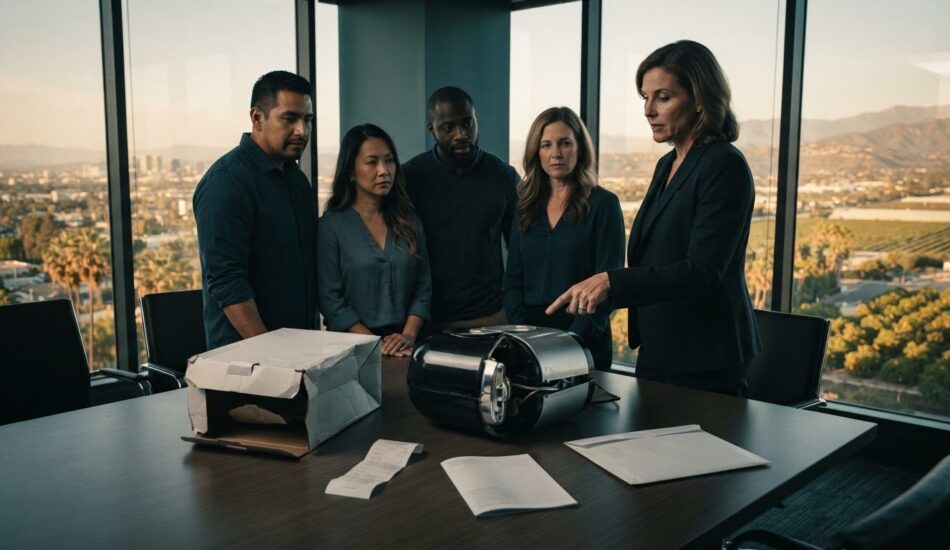
What if using a product in an unexpected way doesn’t automatically end your claim? If you’re wondering what qualifies as product liability in california, the key question is whether a provable defect caused harm during a reasonably foreseeable use of the product. A breakdown, disappointing performance, or recall alone doesn’t necessarily establish a legal claim, but misuse isn’t always a complete bar either.
It can be difficult to know what counts as a defect, who may be responsible, or what to do before a product is repaired or discarded. California product liability claims may involve a manufacturing flaw, an unsafe design, or inadequate warnings or instructions. Depending on the circumstances, responsibility may extend to companies involved in the product’s distribution. The product itself, packaging, receipts, photos, medical records, and a clear account of what happened can help show whether an alleged defect caused an injury.
This guide explains the main defect categories and legal theories, what evidence may matter, and practical steps to preserve information. It also covers foreseeable misuse and recalls, so you can better understand the questions a case-specific review may address.
Key Takeaways
- What qualifies as product liability in california depends on whether a defect caused an injury or other legally recognized harm, not simply whether a product broke or disappointed you.
- California claims may involve a manufacturing flaw, an unsafe design, or inadequate warnings or instructions. The evidence and legal standards differ depending on the alleged defect.
- When safe, preserve the product and packaging. Photos, purchase records, medical documents, and a clear account of what happened may help connect a suspected defect to an injury.
- Misuse or a recall doesn’t automatically determine whether a claim may exist. The product’s condition, how it was used, and the circumstances of the injury matter.
- The Law Offices of David Davidi, APLC handles product liability matters throughout California. An attorney, not an assistant, oversees each case from start to finish. The firm returns calls and messages within 24 hours. SE HABLA ESPAÑOL.
What Qualifies as Product Liability in California?
In California, a product liability claim may arise when a defect in a product causes physical injury or another legally recognized harm. A product having a problem isn’t enough by itself. If it breaks, performs poorly, or falls short of expectations without causing an injury or other qualifying loss, that alone may not support an injury claim.
Product liability connects an alleged product defect to a specific harm through evidence that the defect caused the injury or loss. A product can be faulty without causing the harm in question, and an injury that happens while someone is using a product doesn’t automatically prove the product was defective. The product’s condition, the way it was used, and what happened must be considered together.
Depending on the facts, a claim may rely on strict liability, negligence, or a warranty theory. Strict liability generally focuses on whether the product was defective and whether the defect caused harm, rather than requiring proof that a manufacturer or seller acted carelessly. A negligence theory focuses on alleged unreasonable conduct. Warranty claims concern promises or guarantees associated with a product and may involve different requirements. The general overview of product liability discusses these legal theories, but California law and the facts of a particular case determine how they may apply.
What makes a product legally defective?
Defect analysis depends on the product, its risks, and what allegedly went wrong. A safety-related flaw that causes an injury is different from ordinary wear, inconvenience, or a feature that simply doesn’t meet a buyer’s expectations. For example, an appliance that stops working may be frustrating. If a safety-related failure instead causes a burn, the alleged defect and its connection to the injury warrant closer examination.
Not every malfunction establishes liability. The questions include whether the product had a legally relevant defect and whether that defect caused the harm, considering how the product was designed, made, labeled, and used. A product that breaks after extended wear may raise different issues from one that fails unexpectedly and injures someone during normal or reasonably foreseeable use.
Who may be connected to a product liability claim?
Potentially relevant parties may include a manufacturer, distributor, or seller. One company may have designed or made the product, while another distributed or sold it. Identifying the parties involved means tracing the product’s path and examining each party’s connection to the alleged defect.
That doesn’t mean every company in the supply chain is automatically liable. A seller’s involvement, for example, doesn’t by itself establish that its conduct caused an injury or that it bears legal responsibility. The product, available records, and evidence of how the alleged defect arose and contributed to the harm all matter.
So, what qualifies as product liability in California depends on more than a broken item or an upsetting experience. The central questions are whether a legally recognized defect existed, whether it caused injury or other qualifying harm, and which parties may be responsible under the applicable legal theory. Those answers are fact-specific. Reviewing the product and the circumstances can help distinguish a product complaint from a potential claim.
The Three Main Product Defects Under California Law
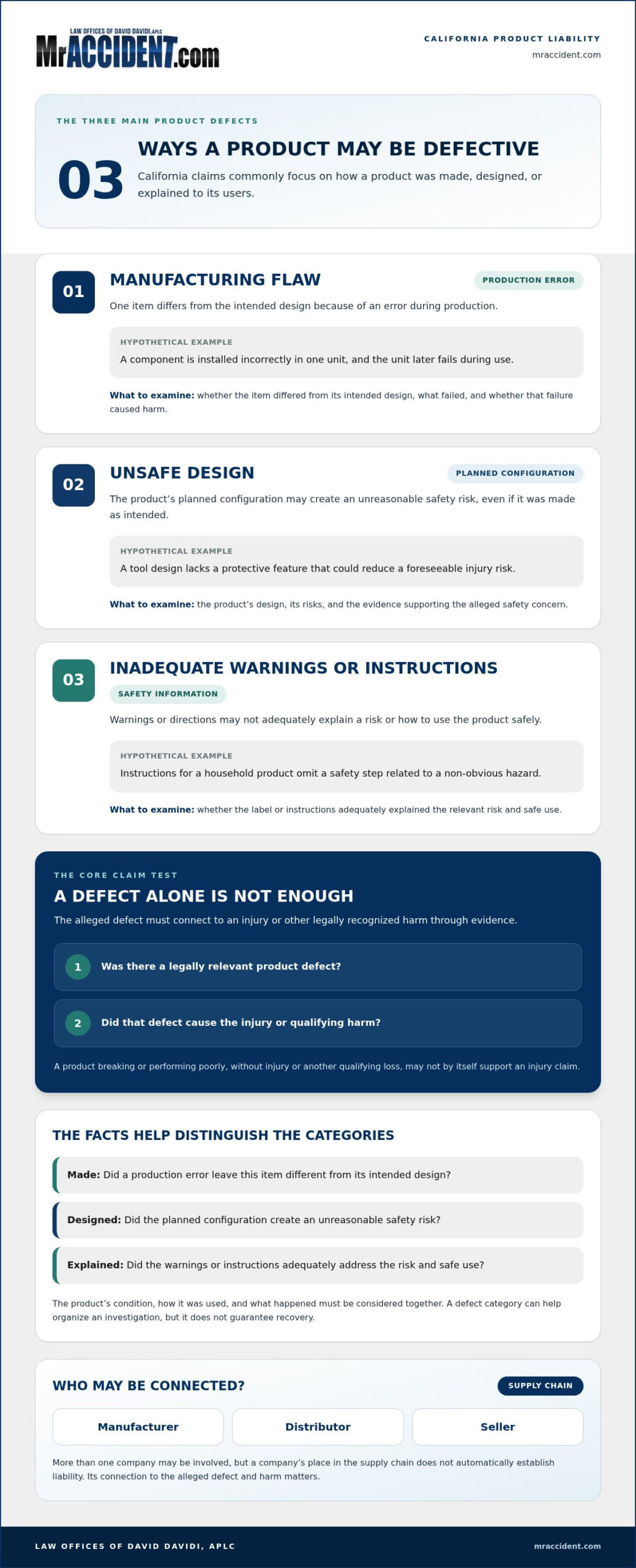
California product liability claims commonly involve one of three alleged defects: a manufacturing flaw, an unsafe design, or inadequate warnings or instructions. Identifying a category helps organize the investigation, but it doesn’t guarantee recovery. The applicable legal test depends on the theory raised and the evidence, including how the product was made, designed, labeled, and used.
| Defect type | Plain-language meaning | Hypothetical example |
|---|---|---|
| Manufacturing | One item differs from the intended design because of an error during production. | A component is installed incorrectly in one unit, and the unit later fails during use. |
| Design | The product’s planned configuration may create an unreasonable safety risk, even if the item was made as intended. | A hypothetical tool design lacks a protective feature that could reduce a foreseeable injury risk. |
| Warning or instruction | Warnings or directions may not adequately explain a risk or how to use the product safely. | Instructions for a hypothetical household product omit a safety step related to a non-obvious hazard. |
Manufacturing defects: when an individual product departs from its design
A manufacturing defect may affect a specific unit or batch. The question is whether an error in production left the item different from what its design and specifications intended. For example, a component might be missing or improperly installed. That possibility alone doesn’t prove a defect caused an injury; the product’s condition and the circumstances of the failure matter.
Inspecting the item may help show what failed and whether it differed from the intended design. Manufacturing records, quality-control documents, and related information may also help establish whether the issue arose during production. Preserve the product in its post-incident condition when safe, since repairs or alterations may make the original condition harder to assess.
Design and warning defects: unsafe design or inadequate instructions
A design-defect allegation concerns the product’s planned configuration, rather than an isolated production mistake. The product may have been made exactly as designed, yet a feature or missing safeguard is alleged to create an unreasonable risk. California design-defect claims involve specific legal standards, so the theory should be evaluated under current California authority alongside the product’s risks, intended use, and available evidence.
A warning or instruction claim focuses on information provided with the product. It may involve a risk that isn’t obvious to a user, or directions that don’t adequately explain safe use. Relevant evidence can include labels, manuals, packaging, and the warnings a consumer actually received. The issue isn’t simply whether more information could have been provided, but whether an alleged warning failure connects to the injury.
Understanding what qualifies as product liability in california often starts with identifying which defect theory best fits the facts. If an injury followed a suspected product defect, an attorney-led assessment of a potential product liability claim can help identify the evidence and legal questions that warrant closer review.
When Does a Product Defect Become a California Liability Claim?
A product breaking isn’t proof by itself that someone has an injury claim. The failure may result from ordinary wear, an accident unrelated to a defect, or a defect that caused no legally recognized harm. A claim requires more than showing that something went wrong: the evidence must connect an alleged defect to an injury or other legally recognized loss.
Evidence must connect the alleged defect to the injury, not merely show that the product failed and the person was hurt. That distinction helps explain why similar incidents can lead to different legal outcomes. The product’s condition, the way it was used, and the cause of the harm all matter.
| Issue | Question to examine | Why it matters |
|---|---|---|
| Alleged defect | What design, manufacturing, or warning problem is claimed? | A specific theory gives the investigation a focus. |
| Product condition | Was the product defective when it left the relevant party’s possession, or did something change later? | Its condition may help show when and how a problem arose. |
| Use | How was the product being used, and was that use reasonably foreseeable? | Use can affect how the defect and the parties’ arguments are evaluated. |
| Injury or loss | What harm occurred, and what evidence documents it? | Proof of harm is distinct from proof of a product defect. |
| Causal connection | How did the alleged defect contribute to that harm? | A claim needs evidence linking the two, not just evidence that both existed. |
How the alleged defect must connect to the injury
Causation means explaining how the alleged defect contributed to the harm. Medical records may document an injury, but they don’t necessarily show what caused it. Likewise, a damaged product may show a failure without proving that the failure caused the injury. Both parts of the picture need support.
Consider a hypothetical folding step stool that collapses while someone is standing on it. If the person is injured, the timing and the stool’s condition may matter. Evidence that a joint failed during use may support further investigation, while signs that the stool was already damaged or altered could raise other questions. Neither circumstance alone settles the issue.
How use, alteration, and misuse may affect the analysis
California’s focus on reasonably foreseeable use means an unintended use doesn’t automatically end the inquiry. Whether a particular use or misuse was foreseeable depends on the circumstances. A change or repair may also affect what the product can reveal about its original condition and may become part of the legal arguments.
Those facts should be assessed rather than treated as automatic reasons a claim fails. If you’re uncertain how a defect, injury, and product use fit together, an attorney can review the details of a California product liability claim. Understanding what qualifies as product liability in california starts with examining the evidence as a whole.
What Evidence Can Help Establish Product Liability in California?
Evidence can help show what happened to a product, how it was used, and whether an alleged defect contributed to an injury. The most useful materials vary by case. Preserve what you can safely, and avoid trying to prove a theory before the facts are reviewed. These steps can help protect information while you focus on your health.
Preserve the product and document what happened
If it’s safe, keep the product in its post-incident condition. Don’t repair, discard, clean, or alter it. Save separated components, packaging, labels, and included instructions together when possible. If the item poses a safety risk, don’t handle it; prioritize safety and ask for guidance on preserving it.
- Secure the product and related materials. Store them somewhere safe where they won’t be used, moved, or damaged. Make a note of who has access to them.
- Take clear photographs. Capture the product from several angles, visible damage, labels, and the location where the incident occurred, if appropriate. Keep original image files and note when the photos were taken.
- Write down the timeline. Record when and how the product was used, what happened just before and after the incident, and when symptoms or damage appeared. Include the names and contact details of witnesses, if available.
- Keep records and communications. Save receipts or other ownership records, manuals, packaging, product-related messages, and repair or service documents. Keep emails, texts, and notices connected to the product.
- Collect injury-related documentation. Keep relevant medical records, treatment instructions, bills, and documentation of other expenses. These materials may help describe the harm and its timing.
Keep records that help connect defect, use, and injury
Organize materials by date, and keep a simple record of where originals are stored. If you don’t know an answer, note that rather than guessing. Ask witnesses to describe what they remember in their own words. Don’t coach them, fill in gaps, or embellish your own recollection. Avoid posting detailed theories or unverified conclusions about the incident publicly; preserve relevant communications instead.
An inspection or expert analysis may be needed to assess the product, its condition, or how it failed. That review may involve technical questions, and it doesn’t guarantee a particular finding or outcome. A fact-specific assessment can help determine which evidence matters and how to protect it.
If you’re unsure what to preserve or how to document the incident, request a product liability case review. The Law Offices of David Davidi, APLC handles product liability matters throughout California. An attorney, not an assistant, oversees each case from start to finish. The firm returns calls and messages within 24 hours. Free consultation. No Win No Fee – we work for free, until we win! SE HABLA ESPAÑOL.
What to Do After a Suspected Product Injury in California
A suspected product injury can leave you shaken and unsure what to do next. Take it one step at a time. Your health comes first, and you don’t need to determine on your own whether a defect caused what happened. A measured response can help protect your well-being and information that may matter later.
- Get medical care. Seek appropriate medical attention for an injury, even if symptoms seem manageable at first. Tell the healthcare professional what happened and keep records of your evaluation, treatment, and follow-up.
- Preserve the product if safe. Don’t use, repair, discard, or alter it. Keep packaging, labels, parts, and instructions together where possible. If the item presents a safety risk, don’t handle it.
- Record the facts. Write down when and how the product was being used, what happened, and who was present. Save photographs, receipts, messages, manuals, incident reports, and repair records. Stick to what you remember, and avoid guessing about the cause.
- Seek legal review. A case-specific review can help assess what the available information shows, what may be missing, and whether further investigation may be appropriate.
These steps can preserve useful information, but they don’t establish that a claim exists or determine who may be responsible. Whether you’re still trying to understand what qualifies as product liability in california or already have records to share, an attorney can consider the full circumstances before advising on possible next steps.
How an attorney-led case review can help
An attorney can review the product’s condition, the incident facts, the reported injury, and available records together. That review may help identify questions about the alleged defect, how the product was used, and the connection between the product and the harm. The Law Offices of David Davidi, APLC handles product liability matters throughout California and accepts only a limited number of cases so the firm can devote its attention to each client.
An attorney, not an assistant, oversees your case from start to finish. That direct oversight means an attorney remains responsible for the case as it moves through review and investigation. It doesn’t guarantee that a claim will be accepted, won, or result in a particular recovery. The firm returns calls and messages within 24 hours.
Contact the Law Offices of David Davidi, APLC
The firm handles product liability matters throughout California, with offices in Encino, Fresno, Modesto, and Bakersfield. A free consultation offers an opportunity to discuss what happened and the information you’ve preserved. SE HABLA ESPAÑOL. No Win No Fee – we work for free, until we win!
Request a free product liability consultation or call 888‑529‑0707. You can also reach the firm at 888‑LAW‑0707.
Take the Next Step With Clarity
You don’t need to have every answer before asking for guidance. If you’re still weighing what qualifies as product liability in california, a conversation about the incident and the records you’ve gathered can help identify which questions deserve closer attention. You can share what you know, including what remains uncertain.
The Law Offices of David Davidi, APLC brings 25 years of experience to product liability matters. The firm is rated by Super Lawyer and has a 5.0 rating based on 200+ client reviews. A case-specific discussion can help you consider a practical path forward without assuming what the evidence will show.
Request a free product liability consultation to discuss your situation. Taking this step can help you move forward with greater clarity.
Frequently Asked Questions
Is a product recall required to bring a product liability claim?
No. A recall isn’t required, and it doesn’t automatically establish that a particular person has a valid claim. A safety notice may help identify a product model, reported hazard, or affected component, so keep the notice and note when you received it. A product without a recall may still warrant investigation if the evidence points to a defect that caused injury. The incident and applicable California law still need careful review.
Can I have a product liability claim if the product still works?
Possibly. A product may function for its ordinary purpose while still presenting a safety risk in a particular use. For example, a hypothetical device might turn on as expected while a component overheats and injures someone. That scenario alone doesn’t prove a defect; inspection and other evidence would matter. What qualifies as product liability in california depends on the alleged safety problem, the injury, and the facts connecting them.
What happens if I was injured while using a product in an unintended way?
Unintended use doesn’t automatically rule out a claim. The circumstances may raise questions about whether that use was reasonably foreseeable, whether the product had been changed, and whether the alleged defect contributed to the injury. For example, an improvised use may prompt closer examination of instructions and product design. Write down what you did and why as accurately as you can, and preserve relevant instructions or attachments so the situation can be assessed fairly.
Can a product liability claim involve a product bought secondhand?
Yes, a secondhand purchase alone doesn’t decide whether a claim may exist. The product’s age, condition, maintenance, and any changes made before the incident may affect the investigation. Keep the purchase listing, messages with the seller, payment record, and identifying details such as a model or serial number, if available. If you know about earlier repairs or owners, record what you were told and distinguish that information from what you personally observed.
How long do I have to file a product liability claim in California?
For personal injury or wrongful death, California generally provides two years from the date of injury or death; property-damage claims generally have a three-year period. The discovery rule and case-specific circumstances may affect how a deadline is calculated. These periods aren’t interchangeable, and an exception may apply. Don’t wait to seek advice: preserve relevant dates and records, then have the deadline assessed under current California law.
Can a family bring a claim if a defective product caused a death?
Potentially. A death allegedly caused by a product defect may raise a wrongful death claim, and the applicable rules depend on the family’s circumstances and California law. Questions can include who is legally eligible to bring the claim, what evidence links the product to the death, and which parties may be involved. Keep purchase and product records, safety notices, and any available incident documentation together for a case-specific review.
Does product liability apply only to products used at home?
No. A product-related injury can happen at home, on a job site, or in another setting. An incident in Los Angeles, Fresno, Modesto, Bakersfield, Stockton, Tulare, Visalia, Merced, or Riverside isn’t automatically covered or excluded because of its location. The product, its use, the injury, and the evidence remain central. A workplace incident may also raise separate factual or legal questions, so consider each issue on its own merits.

Law Offices of David Davidi, APLC is a California – based Personal Injury Law Firm, our Attorney’s provide the representation for your personal injury, accident, product liability, premises liability, and other
negligence resulting in injuries. We treat all clients and cases, large or small, with hands-on care.
Practice Area
© Copyright 2026 Law Offices of David Davidi, APLC. All rights reserved.
Digital Marketing By 