
888-529-0707 call 24-7 we service throughout california
Fear of driving after a car accident: How long can it last
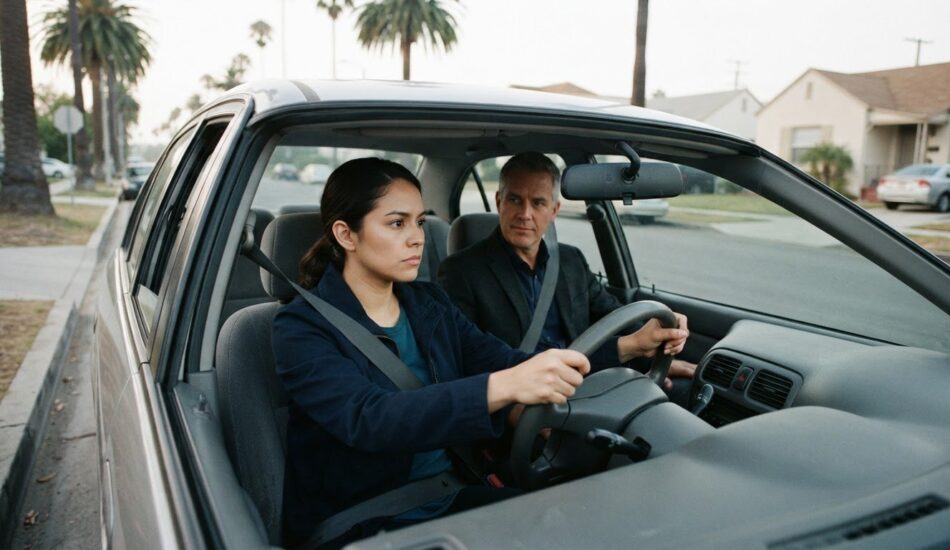
Fear of driving after a car accident may begin to ease within about a month, but it can last longer. A slower recovery doesn’t mean you’re failing. The crash’s impact and how safe you feel behind the wheel can shape your recovery.
It’s understandable to feel tense, avoid certain routes, or worry that anxiety will return when you drive. Gradual practice can help rebuild confidence, while therapy may help if fear keeps disrupting everyday life.
This article explains what can affect how long driving anxiety lasts, how to approach a gradual return to driving, and when symptoms may be related to PTSD. It also covers when professional support may help you take the next step safely.
Key Takeaways
- Recovery time varies, and anxiety that continues to interfere with everyday life is a reason to consider professional support.
- Build confidence gradually, starting with manageable steps rather than forcing yourself into the most stressful driving situation.
- Therapy, including cognitive behavioral approaches, can help address anxious thoughts and responses connected to driving.
- Anxiety after a crash doesn’t automatically mean PTSD; the pattern and impact of symptoms matter when assessing what may be happening.
1. Gradual exposure and safe driving practice
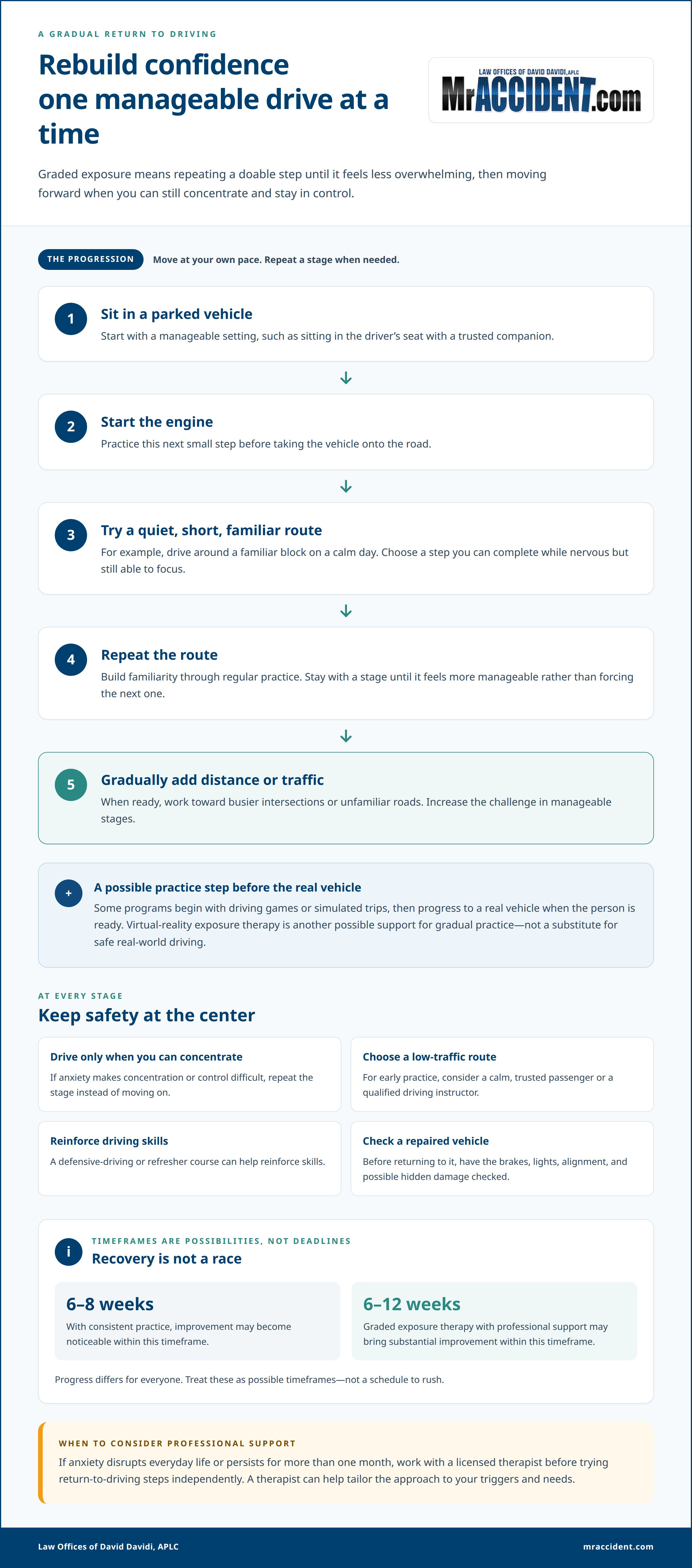
To address fear of driving after a car accident, use graded exposure: repeat manageable steps until each feels less overwhelming. Begin by sitting in a parked vehicle, then start the engine, drive a quiet, short route, and gradually add distance or traffic. This avoids forcing yourself into the hardest situation first.
Choose a step you can complete while nervous but still able to focus. For example, sit in the driver’s seat with a trusted companion, then drive around a familiar block on a calm day. Repeat the route before adding busier intersections or unfamiliar roads. Regular practice can help rebuild familiarity.
Exposure therapy uses the same gradual approach, sometimes with a therapist. It introduces driving reminders in manageable stages, helping you practice responding to fear rather than escaping it. Some programs begin with driving games or simulated trips, then progress to a real vehicle when the person is ready.
Keep safety central at every stage. Drive only when you can concentrate, choose a low-traffic route, and have a calm, trusted passenger or qualified driving instructor accompany early practice. A defensive-driving or refresher course can reinforce skills. Before returning to a repaired vehicle, have its brakes, lights, alignment, and possible hidden damage checked.
Progress isn’t identical for everyone. With consistent practice, improvement may become noticeable within 6-8 weeks; graded exposure therapy with professional support may bring substantial improvement within 6-12 weeks. Treat these as possible timeframes, not a schedule to rush. Repeat a stage if anxiety makes concentration or control difficult.
Virtual reality may also support gradual exposure. A study reported by the National Center for Biotechnology Information found fewer distorted thoughts and lower state anxiety after virtual-reality exposure therapy, alongside a slight quality-of-life improvement. These findings support simulated practice as one possible step, not a substitute for safe real-world driving.
2. Therapy and cognitive-behavioral strategies
A therapist can help you understand how a crash affects your thoughts, emotions, and driving choices. Cognitive behavior therapy (CBT) focuses on how these responses connect and builds practical ways to manage them. In cognitive restructuring, you identify a fearful thought, examine the evidence, then develop a more balanced response. For example, replace “every drive will end in another crash” with “that collision happened, and I can focus on this drive’s conditions.”
CBT can also help you recognize patterns that intensify anxiety. A therapist might help you note what triggers distress, such as a motor vehicle approaching from the side, and what you do next. Tracking the situation, thought, physical response, and action can reveal where a coping strategy may help. A written account of the accident in chronological order may also help you describe the experience and process difficult emotions.
If panic begins, prioritize control of the vehicle. Pull over somewhere safe when possible, then breathe in for 4 counts and out for 6 counts. The 5-4-3-2-1 grounding technique can redirect attention to immediate surroundings: notice things you see, feel, hear, smell, and taste. Don’t try either exercise while driving if it distracts you from the road.
Seek professional help if anxiety leads you to avoid driving, disrupts work, school, or family life, or brings panic symptoms such as sweating, a racing heartbeat, or chest pain. If driving anxiety persists for more than one month, work with a licensed therapist before trying return-to-driving steps independently. That support can help tailor coping strategies to your triggers and daily needs.
Traditional therapy, CBT, professional guidance, and support groups are options for managing post-crash anxiety. A therapist can help you choose cognitive and behavioral strategies, then review how they work for you. If a particular thought keeps returning, bring that example to your next session; it gives you a specific starting point.
3. Is driving anxiety a form of PTSD?
Driving anxiety after a crash can be connected to trauma, but it isn’t automatically post-traumatic stress disorder (PTSD). Under the DSM-5, driving anxiety may fit a specific phobia or anxiety disorder; it isn’t a stand-alone diagnosis. PTSD applies only when a person meets the full diagnostic criteria. A mental health professional can assess symptoms and their effects rather than relying on driving fear alone.
A crash can link memories to particular sounds, places, or conditions. Passing the collision site, hearing tires screech, or driving in heavy rain may bring back distress and trigger avoidance. Changing routes or staying away from vehicles can reinforce anxiety by making those reminders harder to face. Responses vary: one driver may fear highways, while another feels anxious at intersections like the one where the crash occurred.
Physical symptoms can accompany fear. Possible signs include sweating, trembling, nausea, chest pain, tense muscles, quick or shallow breathing, and a faster heart rate. Panic attacks and fear of losing control may also occur. For example, a driver might notice a racing heartbeat when approaching a familiar intersection, then avoid that route. Symptoms vary, so one sign alone doesn’t establish a diagnosis.
Vehophobia describes an intense fear of driving that can cause anxiety and stress behind the wheel. Amaxophobia is fear of riding in or being in a vehicle, so it can extend beyond driving. Hodophobia refers to fear of traveling, while claustrophobia concerns tight spaces with no obvious exit. These terms describe different fears; they don’t by themselves establish PTSD.
If memories, panic, or route avoidance disrupt daily life, discuss the pattern with a licensed therapist. Describe specific triggers, such as a crash site or similar road conditions, and explain how they affect travel. Those details can help distinguish driving-related anxiety from broader trauma symptoms and guide an appropriate assessment.
4. A gradual return-to-driving plan
A written plan can make returning to driving feel more manageable by turning a broad goal into clear steps. Treat the schedule as a sample, not a test: repeat a step if you feel too anxious to concentrate or control the vehicle safely.
- Week 1: Sit in a parked car for 10 minutes with the engine off. Notice what feels difficult, and finish the session before distress disrupts your ability to stay present.
- Week 3: Try a 5-minute drive in a quiet area. Choose a familiar route and a time with less traffic, then return to the parked-car step if driving feels unmanageable.
- Weeks 4-6: Gradually extend distance and traffic complexity. Add one change at a time, such as a slightly longer route before trying busier roads.
Before each practice drive, decide where you can safely pull over if anxiety becomes difficult to manage. For example, identify a safe stopping place along a familiar route rather than planning to stop in a traffic lane. A calm passenger can offer support without taking over your decisions.
Keep a brief record after each attempt: the route, what triggered anxiety, and what felt easier. If a trip through a quiet area feels manageable but an intersection does not, repeat the route before adding that challenge. This helps you track confidence through specific experiences instead of expecting every drive to feel easy.
If fear interferes with work or daily life, seek professional help rather than forcing yourself to drive through distress. A licensed therapist can shape a return plan around your triggers. If anxiety has persisted for more than one month, get support before trying return-to-driving steps independently.
Use your ability to focus as a safety measure, not a deadline. Don’t advance while panic, intrusive memories, or distraction make it difficult to pay attention to traffic. A slower pace can keep practice structured and help you build confidence through achievable trips.
Law Offices of David Davidi, APLC
Law Offices of David Davidi, APLC provides legal representation for people injured in car accidents. If crash-related injuries or other losses raise legal questions while you focus on recovery, an attorney can help you understand your claim and next steps. The firm also represents people injured in truck, motorcycle, and pedestrian accidents.
Legal support doesn’t replace therapy or determine how quickly driving anxiety will ease. It addresses the accident claim, while a licensed mental health professional can help with emotional symptoms and a gradual return to driving. If you have questions about your accident or potential claim, contact Law Offices of David Davidi, APLC.
Take the next step at your pace
Progress doesn’t have to mean taking a long drive or returning to every route at once. Let your next step reflect what feels manageable and whether you can stay focused on the road. If anxiety keeps disrupting daily choices, getting support is a practical step, not a sign of weakness. Fear of driving after a car accident can affect more than travel, and you deserve space to address each concern appropriately.
Mental health support can help with emotional recovery. Legal guidance can address questions about the accident and related injury claim. These are separate needs, and pursuing one doesn’t replace the other. Take time to decide what kind of help fits your situation.
If you’d like to discuss legal questions arising from your accident, contact Law Offices of David Davidi, APLC. Keep moving forward one considered step at a time. Your pace is still progress.
Frequently Asked Questions
How long does driving anxiety last after a car accident?
For many drivers, psychological reactions after a crash begin to ease within about a month, but anxiety can last longer. Fear of driving after a car accident may depend on how the crash affected you, what situations trigger distress, and whether avoidance limits daily activities. Notice whether symptoms are easing or interfering with routine travel, work, or family responsibilities.
Is driving anxiety a form of PTSD?
Not automatically. Driving anxiety alone doesn’t establish PTSD; a diagnosis requires meeting the full criteria. A clinician considers the broader pattern, including how distressing memories, avoidance, and other symptoms affect daily functioning. For instance, anxiety tied to one difficult intersection may differ from symptoms that affect sleep, relationships, and activities beyond driving. A qualified mental health professional can assess these distinctions.
Is it normal to be scared to drive after a car accident?
Feeling scared after a collision is a common response to a frightening event; it doesn’t mean you’re weak or incapable of driving. You might feel uneasy as a passenger, tense at intersections, or reluctant to travel in similar weather. Notice whether your reaction changes over time. If it keeps you from essential activities or brings panic symptoms, seek professional support.
Should I force myself to drive to get over the fear?
No. Don’t jump straight into the route or condition that frightens you most. Pushing too hard can make returning to driving feel overwhelming, especially if anxiety interferes with concentration. Instead, agree on manageable steps with a therapist when needed, and pause if you can’t focus safely. For example, someone uneasy on highways shouldn’t make a highway trip the first challenge.
What Is Vehophobia?
Vehophobia means an intense fear of driving that can cause anxiety or stress while operating a car. It may follow a crash, but the label alone doesn’t explain what is causing your distress. Amaxophobia is different: it refers to fear of riding in or being in a vehicle. A mental health professional can help identify the pattern and its effect on your life.
What if I have a panic attack while driving?
Keep your attention on vehicle control and pull over somewhere safe as soon as you can. Once stopped, breathe in for four counts and out for six, or use the 5-4-3-2-1 grounding technique if it helps you focus. Don’t practice an exercise while moving if it distracts you. If panic attacks recur, or include chest pain or a racing heartbeat, seek professional help.

Law Offices of David Davidi, APLC is a California – based Personal Injury Law Firm, our Attorney’s provide the representation for your personal injury, accident, product liability, premises liability, and other
negligence resulting in injuries. We treat all clients and cases, large or small, with hands-on care.
Practice Area
© Copyright 2026 Law Offices of David Davidi, APLC. All rights reserved.
Digital Marketing By 