
888-529-0707 call 24-7 we service throughout california
Loss of Enjoyment of Life Damages in California: Meaning
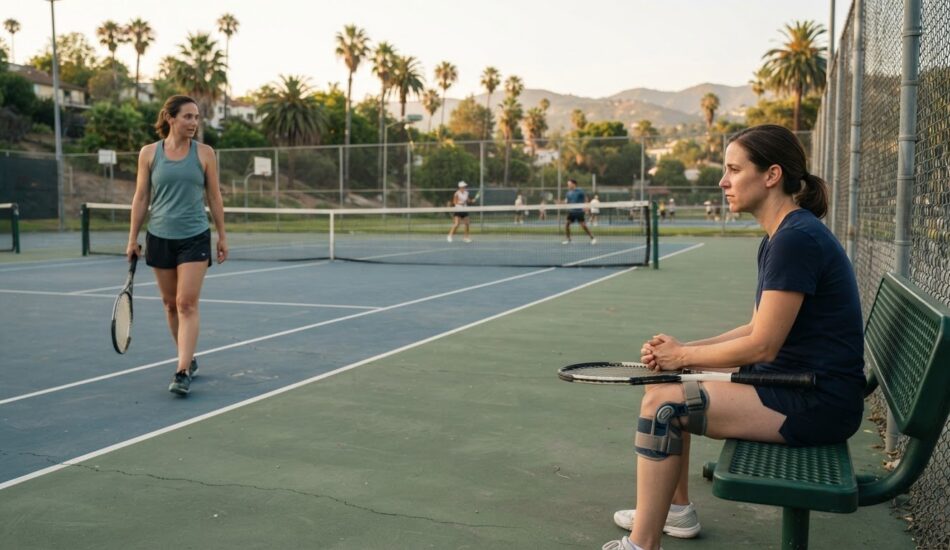
An injury can change more than your health; it can take away parts of daily life that once mattered. In California, loss-of-enjoyment-of-life damages are part of overall non-economic damages, not a separate award, and jurors may consider them under CACI No. 3905A. There’s no fixed formula for calculating their value.
If an injury keeps you from hobbies, family activities, work, or everyday routines, the effect can be hard to put into words. That does not make it any less real. Your testimony and accounts from people who know you can explain what changed and how those limits affect your life.
This article explains the meaning and legal basis of loss of enjoyment of life damages in California, why they are considered non-economic harm, and what jurors may consider when assessing their impact. It also covers how testimony, medical information, and everyday examples can show the difference between life before an accident and what you can do now.
Key Takeaways
- Describe the specific activities and routines an injury has changed, rather than relying on general statements about its impact.
- Testimony from you and people familiar with your life can help show what you did before the injury and what has changed since.
- Medical evidence and personal records can help connect your limitations to the injury and explain how they affect daily life.
- For injury cases against health care providers, the California State Legislature says the non-economic damages cap increases by $40,000 each January 1 until it reaches $750,000.
What Are Loss of Enjoyment of Life Damages?
A claim for loss of enjoyment of life damages in California addresses changes to activities and routines after an injury. These are non-economic losses, unlike medical expenses or lost earnings.
Defining Non-Economic Harm
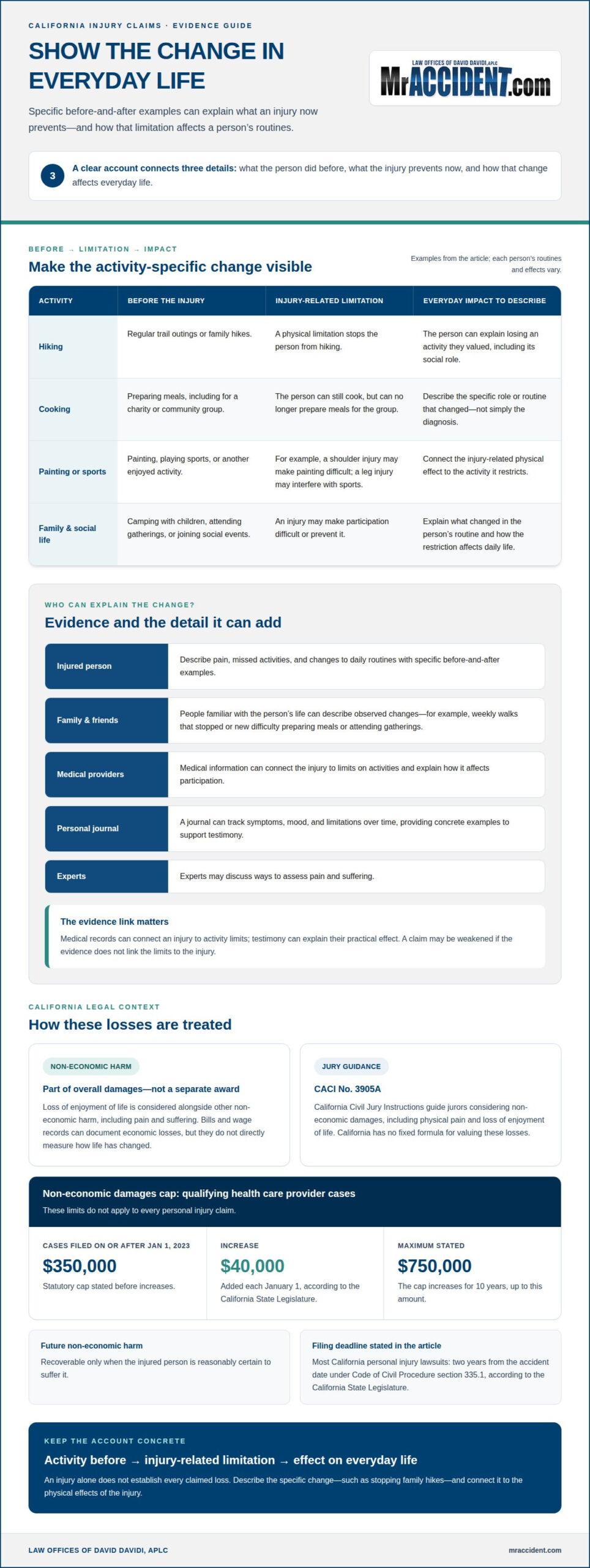
Loss of enjoyment of life is non-economic harm when an injury prevents someone from taking part in activities they previously enjoyed. For example, an injury-related limitation may stop someone from hiking, cooking, playing sports, or joining family outings. These effects matter because financial records can document expenses and lost earnings, but bills alone cannot show how an injury has changed a person’s life.
In a personal injury case, the claim concerns activities the injured person can no longer enjoy. A wrongful death case concerns losses experienced by surviving family members, not the deceased person’s ongoing enjoyment of life. California treats loss of enjoyment as part of overall non-economic damages, alongside pain and suffering, rather than as a separate award.
Medical records can connect an injury to limits on activities, while testimony explains their practical effect. A claim may be weakened if the evidence does not link those limits to the injury. Future non-economic harm is recoverable only when the injured person is reasonably certain to suffer it.
California Caps and CACI Guidance
California Civil Jury Instructions CACI 3905A guides jurors considering non-economic damages, including physical pain and loss of enjoyment of life. California’s non-economic damages cap applies to injury cases against health care providers. For cases filed on or after January 1, 2023, the California State Legislature set the statutory cap at $350,000 annual before increases.
The California State Legislature says the cap increases by $40,000 each January 1 until it reaches $750,000. The California State Legislature also says the statutory cap increases for 10 years, up to $750,000. These limits concern qualifying health care provider cases, not every personal injury claim.
California has no fixed formula for valuing these losses. Jurors weigh evidence about the injury, limitations, and their effects; medical expenses and other economic losses do not provide a direct measure. In most California personal injury lawsuits, the filing deadline is two years from the accident date under California Code of Civil Procedure section 335.1, according to the California State Legislature.
Testimony from the injured person, family, friends, and experts
In an injury case, testimony can show how physical limits affect everyday life. Specific examples from before and after the injury make those changes easier to understand.
Testimony About Quality of Life
The injured person can describe pain, missed activities, and changes to daily routines. A friend might explain that weekly walks stopped after a pedestrian accident, while a family member could describe new difficulty preparing meals or attending gatherings.
Medical providers can explain how an injury affects participation in specific activities. Experts may also discuss ways to assess pain and suffering. A personal journal can track symptoms, mood, and limitations over time, providing concrete examples to support testimony rather than general statements.
Injuries and Affected Activities
Car, truck, motorcycle, pedestrian, and bicycle accidents can cause injuries that restrict movement or everyday function. The effects depend on the injury and the person’s life: a shoulder injury might make painting difficult, while a leg injury could interfere with hiking or playing sports.
Other examples include being unable to camp with children, cook for a charity group, travel, work, volunteer, or attend social events. These details show what changed after the accident. A clear account identifies the activity, the injury-related limitation, and how it affects the person’s routine.
Family members generally seek compensation for their own legally recognized losses, not for the injured person’s loss of enjoyment. In a wrongful death case, surviving relatives may seek damages for their own losses; a spouse’s loss of consortium is addressed separately under California Civil Jury Instructions No. 3920.
These damages may be part of a personal injury claim when an accident causes lasting limitations, but an injury alone does not establish every claimed loss. Testimony is most useful when it connects a specific change, such as stopping family hikes, to the physical effects of the injury.
Meaning of loss of enjoyment of life
In California injury law, loss of enjoyment of life refers to activities an injury has taken away, including those that gave someone pleasure, purpose, or connection. A person who once gardened every weekend may no longer be able to make the movements gardening requires. The claimed loss is that concrete change, not simply the diagnosis or the fact that an accident happened.
This harm is non-economic, so it does not come with a receipt like a medical expense or a wage statement. Compensation addresses the personal impact of living with restrictions, such as missing a child’s soccer games or giving up a regular volunteer role. The same injury can affect people differently because their routines, interests, and responsibilities vary.
To explain the impact, connect three details: what the person did before, what the injury prevents now, and how that change affects everyday life. For example, a former hiker might describe regular trail outings, the physical limitation that stopped them, and the loss of a valued social activity. Someone who can still cook but can no longer prepare meals for a community group can describe that specific change accurately.
California law treats this as part of overall non-economic harm, not as a separate, itemized expense. Lawyers can present examples to explain the loss, but there is no fixed calculation that assigns a set amount to a particular activity. A jury evaluates the evidence and the injury’s effect on the person’s life. Medical records may explain physical limits, while testimony can show what those limits mean in practice.
That distinction keeps the claim grounded: being affected means more than having fewer options in theory. If an injured person stopped traveling because sitting causes pain, the loss includes the trips they can no longer take and the role travel played in their life. Specific comparisons make the change easier to understand.
California legal basis for loss-of-enjoyment damages
California personal injury law treats loss of enjoyment as general, non-economic harm. The legal question is whether another party caused an injury that reduced the person’s ability to enjoy ordinary activities. California Civil Code 3333 provides the basis for compensatory damages in personal injury cases.
California uses a unitary approach to physical pain and loss of enjoyment. Under CACI No. 3905A, jurors may consider physical pain and loss of enjoyment of life when assessing non-economic damages. The instruction helps jurors evaluate the injury’s human effects alongside evidence of medical expenses and lost earnings, which are economic losses.
That approach developed through California decisions and jury instructions. In Huff v. Tracy, 57 Cal.App.3d 939, the appellate court held that a separate loss-of-enjoyment instruction duplicated the standard pain-and-suffering instruction. In Bigler-Engler v. Breg, Inc., 7 Cal.App.5th 276, 300, the Court of Appeal described loss of enjoyment as part of general damages.
California adopted CACI instructions in 2003, including language recognizing loss of enjoyment and other forms of non-economic harm. Earlier, juries used the BAJI pain-and-suffering wording. The practical takeaway is that an injury lawyer should connect the legal claim to specific evidence: the injury, the activity affected, and the resulting limitation. For example, medical records may describe reduced mobility, while testimony explains how that restriction changed a person’s ability to work or participate in family life.
Evidence must also support the claimed harm. Future non-economic losses require reasonable certainty that the injured person will experience them. An attorney can assess how California law applies to the facts of a personal injury case.
Law Offices of David Davidi, APLC
Law Offices of David Davidi, APLC helps injured people assess how accident-related changes to daily life may fit into a personal injury claim. If a car, truck, motorcycle, or pedestrian accident has limited activities you once enjoyed, the firm can evaluate the injury’s effects and the evidence that may support your account.
That can include connecting medical information to specific changes, such as difficulty returning to a routine or taking part in family activities. The firm provides legal representation for accident claims and gives clients direct access to experienced attorneys, not only support staff. A personal review can help clarify how the law applies to your circumstances and what evidence may be relevant.
If you have questions about an injury’s effect on your life, contact Law Offices of David Davidi, APLC.
Take the Next Step With a Clear Account
A practical next step is to record how the injury changed your life. Note activities you stopped or altered, when the changes began, and how they affect your daily routine. Focus on specific impacts you can explain clearly, rather than trying to assign them a dollar value yourself.
A California claim for loss-of-enjoyment-of-life damages depends on the evidence and circumstances of the injury. A lawyer can assess how the facts relate to the claim and what information may support it. Law Offices of David Davidi, APLC represents people injured in car, truck, and motorcycle accidents, among other personal injury matters.
If you’re ready to discuss how an injury has affected your life, contact Law Offices of David Davidi, APLC. A clear conversation about your situation can help you understand the next steps and move forward with greater confidence.
Frequently Asked Questions
How Can I Prove These Damages?
Use evidence to show how your life changed and connect that change to your injury. For example, compare calendars or photos showing regular outings before the accident with treatment records and activity restrictions afterward. A journal can capture changes as they happen, while accounts from people who observed your routine can add context. Consistent, specific details help explain the effect.
What Kinds of Injuries and Accidents Lead to Loss of Enjoyment Claims?
Claims may arise when an accident causes physical or mental injuries that limit activities. A car crash, truck collision, motorcycle accident, pedestrian injury, or bicycle crash may affect mobility or concentration. A slip and fall or product-related injury can also change daily routines. The key issue is how the injury affected the person, for example, by making work, recreation, or family activities harder.
What if I can still do an activity, just not as well?
You may still describe a loss if an injury makes an activity harder, shorter, less frequent, or dependent on help. For instance, you might still garden but need breaks, avoid lifting pots, or rely on someone else for tasks you once handled alone. Explain what changed and how the limitation affects your experience, rather than saying the activity is entirely impossible.
What are loss of enjoyment of life damages in California?
These are non-economic damages related to an injury’s effect on a person’s ability to enjoy life. For example, someone may no longer take part in a regular community activity or may find a familiar routine exhausting. These damages address personal effects that do not appear on a bill or paycheck and form part of the broader assessment of non-economic damages.
How does California law calculate loss of enjoyment of life damages?
California does not use a fixed formula for these damages. Jurors use their judgment and may weigh the injury’s severity, recovery, age, and effect on activities. Medical expenses or lost wages can document financial losses, but they do not determine the value of a non-economic loss. Future harm must be reasonably certain, not merely possible.
What evidence proves loss of enjoyment of life in a California personal injury case?
Useful evidence may include medical records, photographs, videos, personal journals, and physician statements. A dated journal entry explaining why you left a family event early, alongside medical information about your limitation, can make the connection clearer. Expert testimony may explain how an injury affects particular activities. Evidence is most useful when it describes both the limitation and its real-life consequences.

Law Offices of David Davidi, APLC is a California – based Personal Injury Law Firm, our Attorney’s provide the representation for your personal injury, accident, product liability, premises liability, and other
negligence resulting in injuries. We treat all clients and cases, large or small, with hands-on care.
Practice Area
© Copyright 2026 Law Offices of David Davidi, APLC. All rights reserved.
Digital Marketing By 