
888-529-0707 call 24-7 we service throughout california
Fresno Product Liability Attorney for Dangerous Toy Claims
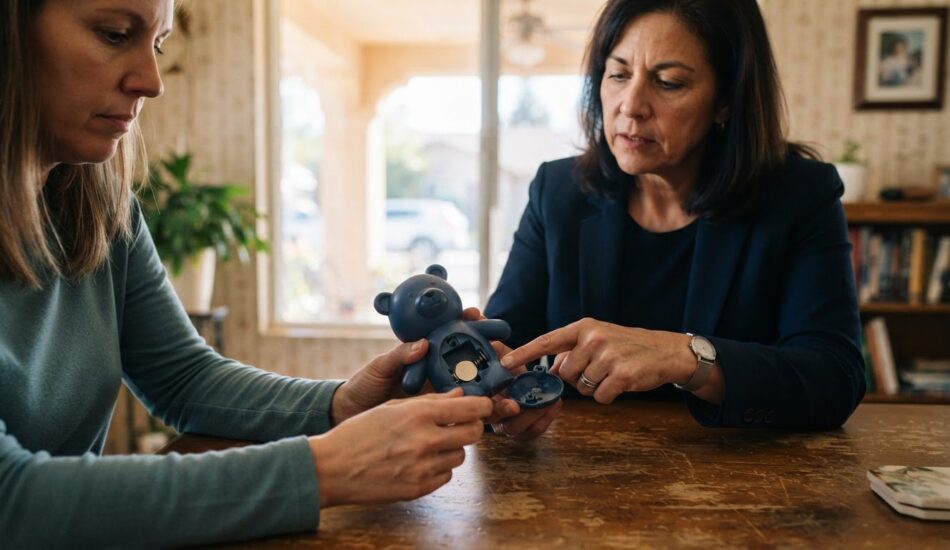
A toy that injures a child may lead to a product liability claim if a design, manufacturing, or warning defect made it unsafe. A Fresno product liability attorney for dangerous toys can assess how the toy failed, who may be responsible, and what evidence may support a claim. In California, an injured person generally has 2 years from becoming aware of a defective product issue to file a personal injury product liability claim, according to the California Legislature.
When a child is hurt by a toy, families need clear answers, especially if the toy’s role in the injury is uncertain. This article explains how California product liability law applies to dangerous toys, how a manufacturing defect may affect a claim, and what filing deadlines mean. It also outlines how an attorney can investigate the injury and pursue a claim against potentially responsible parties.
Key Takeaways
- Learn how a toy’s design, production, or safety information can affect whether a product liability claim may apply.
- Understand why a flaw in an individual toy can matter even when the product was intended to be safe.
- See how California’s filing deadline may shape the timing of a claim.
- Find out how legal representation can help investigate an injury, assess potentially responsible parties, and pursue compensation.
What Is Product Liability?
Product liability allows injured individuals to seek compensation when a defective product causes harm. A Fresno product liability lawyer can assess defects, toy use, injuries, and warnings.
Claims for Injury or Wrongful Death
Product liability claims may address injuries or wrongful death caused by a defective toy or other product. California recognizes design, manufacturing, and marketing defects, including unsafe designs, faulty assembly, or inadequate warnings. An attorney examines the alleged defect, how the product was used, and the resulting harm. In many product cases, strict liability generally means consumers do not need to prove the manufacturer was negligent.
Compensation for Product-Related Injuries
Potential compensation may include medical expenses, lost earnings, property damage, and loss of consortium. The losses that apply depend on the injury and its effects. Treatment bills and missed work, for example, may document medical and income losses. Damaged belongings may support a property-damage claim when the product-related incident caused the loss. An attorney can review records and connect each claimed loss to the harm.
Claims for Children Injured by Toys
Yes. Parents can pursue a product liability claim when a toy injures their child. Examples include a loose part that poses a choking risk, a broken component, or missing safety warnings. The review considers how the toy was used, the alleged defect, and how it caused the injury. Parents can provide the toy, packaging, instructions, and injury records when available. These materials can help identify the product and explain how the harm occurred.
Choose a Fresno attorney who can explain how they will investigate the product, alleged defect, and injury. Ask how they will assess warnings, product use, and evidence connecting the defect to the harm. A focused review can help you understand the claim before deciding how to proceed.
Manufacturing defects
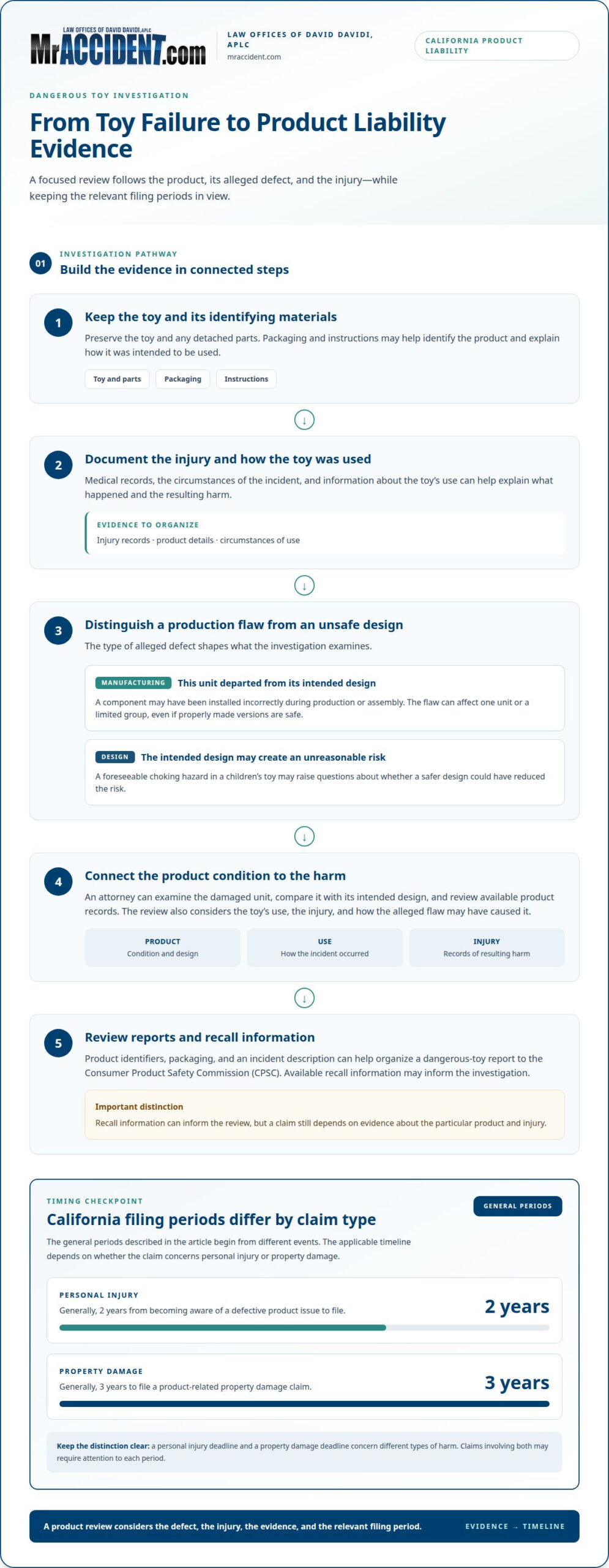
A manufacturing defect occurs when a product departs from its intended design during production or assembly. A toy may be dangerous because a component was installed incorrectly, even if properly made versions are safe. The flaw may affect one unit or a limited group, rather than every toy in the product line.
For example, a toy with a loose component may break during ordinary play. An attorney can examine the toy, packaging, instructions, and available product records to determine how the unit differs from its intended design. Keeping the product and its parts intact can help preserve evidence for that review.
A design defect involves a different issue: the product’s intended design creates an unreasonable risk. A children’s toy with a foreseeable choking hazard may raise questions about whether a safer design could have reduced the risk. The attorney assesses the design, the toy’s expected use, and how the alleged flaw caused the injury. These details can distinguish a design problem from a production mistake.
To help establish that a toy caused an injury, an attorney can connect the product’s condition with medical records, the circumstances of the injury, and evidence of how the toy was used. The review may also compare the damaged unit with its intended design and examine relevant manufacturer records. Together, these details can show what failed and how the harm followed.
An attorney can also help organize a dangerous-toy report to the Consumer Product Safety Commission (CPSC) and review available recall information. Product identifiers, packaging, and an incident description can make the report more specific. Recall information may inform the investigation, but the claim still depends on evidence about the particular product and injury.
A similar investigative approach can apply to defective medical devices or motor vehicle components. An attorney can document the product, preserve relevant records, assess the connection to the injury, and prepare a claim on the injured person’s behalf. Whether the product is a toy, medical device, or vehicle part, the evidence should explain the defect and resulting harm.
California product liability filing deadlines
California sets different filing periods for personal injury and property damage claims. According to the California Legislature, an injured person generally has 2 years from becoming aware of a defective product issue to file a personal injury product liability claim. The California Legislature states that an injured person generally has 2 years from becoming aware of a defective product issue to file a personal injury product liability claim.
For product-related property damage, a person generally has 3 years to file a claim in California. That period concerns damage to property, not the personal injury deadline. A faulty toy that damages furniture, for example, may raise a different filing issue from an injury caused by the same toy. Claims involving both types of harm may require attention to each deadline.
These deadlines make early legal review valuable. An attorney can examine when the injury occurred, when the product issue became apparent, and which records establish those events. Medical records, purchase details, product packaging, and communications about the defect can help clarify the timeline. If a parent learns after an injury that a toy component was faulty, that sequence may matter to the claim’s timing.
California strict liability may allow an injured consumer to pursue a claim without proving manufacturer negligence in many product cases. Filing deadlines still apply, and identifying potentially liable parties does not replace filing on time. An attorney can assess the defect, injury, and losses while tracking the relevant limitation period. The review can also distinguish a personal injury claim from a property-damage claim, since the general deadlines differ.
For Fresno families, a practical first step is to discuss the injury and product history promptly with a product liability attorney. Bring available medical records and information identifying the toy to help establish the timeline and parties involved. An early assessment gives the legal team a clearer basis to evaluate the claim, preserve relevant evidence, and prepare the appropriate filing before the deadline.
Legal representation in product liability cases
Product liability representation helps build a documented claim connecting a product, an alleged defect, and an injury. The attorney first reviews the account, available product information, and medical records. This assessment helps identify the central issue: whether a design choice, manufacturing defect, or inadequate warning caused the harm. A clear account of what happened also helps determine what evidence the claim needs.
Next, the attorney identifies potentially responsible parties in the product’s chain of manufacture or sale. Depending on the facts, these may include a designer, manufacturer, or distributor. For a toy claim, the investigation may compare the child’s toy with its instructions and intended design. The attorney then organizes records showing how the product was used and how the injury occurred.
Legal representation also includes preparing claims and explaining their basis. The attorney can organize medical documentation, product details, and evidence of related losses into a coherent account for the responsible parties. If a manufacturer disputes whether the product was defective or caused the injury, the claim needs evidence addressing those specific issues. Thorough documentation can help consumers pursue compensation based on the harm and available proof.
When choosing an attorney, look for someone who can explain the investigation, identify key evidence, and describe how decisions will be made. Ask who will handle the substantive case work and how the attorney will keep you informed. A thorough review should address the product’s condition, injury records, and parties connected to its manufacture or sale. These steps can clarify how your claim may proceed.
If a defective product caused injuries, discuss your product liability claim and the evidence needed to pursue it.
Law Offices of David Davidi, APLC: Product Liability Legal Representation
Law Offices of David Davidi, APLC represents people injured by dangerous or defective toys. Consider speaking with an attorney when a toy injury raises questions about a product flaw, responsibility, or potential compensation. The firm’s attorneys can review the circumstances and explain possible next steps.
An attorney oversees each case from start to finish, and the firm handles a limited number of cases to give each client focused attention. The firm offers a free initial consultation and works on a No Win No Fee basis. This approach can help families understand the legal process while focusing on a child’s recovery. The firm also represents people injured in car, truck, and motorcycle accidents.
To discuss a dangerous toy injury, contact Law Offices of David Davidi, APLC for a free initial consultation.
Take the Next Step Toward Clarity
After a toy-related injury, families may be balancing a child’s recovery with questions about what happened. You do not need every answer before discussing your concerns with an attorney. A clear conversation can help you understand how the facts may shape possible next steps and what information may be useful to review.
A Fresno product liability attorney for dangerous toys can assess the legal issues and explain the process in straightforward terms. Start with a discussion focused on your family’s circumstances, concerns, and priorities, without assuming what the outcome will be.
If you’re ready to talk through your situation, contact Law Offices of David Davidi, APLC. You can take things one step at a time and make informed decisions with support.
Frequently Asked Questions
When Is a Product Considered Defective?
A product may be considered defective if it fails to perform as intended or poses an unreasonable risk of injury when used correctly. For example, a toy part that detaches during ordinary play may raise concerns about its design or manufacture. A claim also examines whether the alleged defect caused an actual injury, rather than relying on a safety concern alone.
How Long Do You Have to File a Claim in California?
In California, an injured person generally has 2 years from becoming aware of a defective product issue to file a personal injury claim, according to the California Legislature. Noting when the injury occurred and when the product concern surfaced can help clarify the timeline. Keep dated treatment and product-related records together for an attorney’s review.
What Qualifies as a Dangerous or Defective Toy Under California Law?
A toy may be defective if its design is unreasonably dangerous, its manufacture departs from the intended design, or its warnings omit a relevant risk. The assessment considers whether the toy was used as intended or in a reasonably foreseeable way. The key issue is whether the alleged defect contributed to the injury, based on the circumstances and available evidence.
What Compensation Can Be Recovered for a Toy Injury in California?
Potential compensation in a California toy injury claim may include medical expenses, lost earnings, property damage, and loss of consortium. The applicable categories depend on the losses connected to the incident. Treatment bills and records of missed work, for example, can document different effects. An attorney can organize those records and explain how each claimed loss relates to the injury.
What Is California’s Statute of Limitations for a Toy Injury Lawsuit?
The general California limitation period for a personal injury toy lawsuit is 2 years from becoming aware of the defective-product issue, according to the California Legislature. This is the personal injury timeframe, not a universal deadline for every product-related loss. Because the starting point depends on awareness, an attorney can assess the chronology and distinguish injury damages from property damage.

Law Offices of David Davidi, APLC is a California – based Personal Injury Law Firm, our Attorney’s provide the representation for your personal injury, accident, product liability, premises liability, and other
negligence resulting in injuries. We treat all clients and cases, large or small, with hands-on care.
Practice Area
© Copyright 2026 Law Offices of David Davidi, APLC. All rights reserved.
Digital Marketing By 